Andrew Sheng, Distinguished Fellow at the Asia Global Institute at the University of Hong Kong
Xiao Geng, President of the Hong Kong Institution for International Finance
Jan 07, 2022
The year 2022 will mark 50 years since US President Richard Nixon traveled to China to meet with Communist Party of China Chairman Mao Zedong and Chinese Premier Zhou Enlai – a major step toward restoring relations after decades of estrangement and hostility. A half-century later, the progress they launched has been all but lost, and US President Joe Biden is partly to blame.
Tao Wenzhao, Honorary Member of the Chinese Academy of Social Sciences; Fellow, CASS Institute of American Studies
Nov 05, 2021
Worries by the United States that China will take over its leadership role are based on a serious strategic misunderstanding. The road ahead for the international power structure as it shifts to a multipolar pattern may be long and difficult, but the prospects are promising.
Zhang Monan, Deputy Director of Institute of American and European Studies, CCIEE
Oct 18, 2021
A series of policies in the U.S. has made life much more difficult for China concepts stock companies. CCS listings in the U.S. are emerging as the next big risk, and the adoption of the variable interest entity structure, or VIE, is storing up trouble.
Chen Jimin, Guest Researcher, Center for Peace and Development Studies, China Association for International Friendly Contact
Sep 06, 2021
Maintaining strategic security and its stature as a major global power are the country’s priorities. While its economy is relatively weak, Russia’s military power, its experience and its influence in global affairs means that it will continue to be an important player in shaping the international landscape.
Wu Zhenglong, Senior Research Fellow, China Foundation for International Studies
Aug 12, 2021
For the United States, the Nord Stream 2 gas project is a reminder of its waning global hegemony. Its ability to control its allies has declined. Bilateral relations have deteriorated. Attempts to block construction have failed. America has become a shadow of its former self.
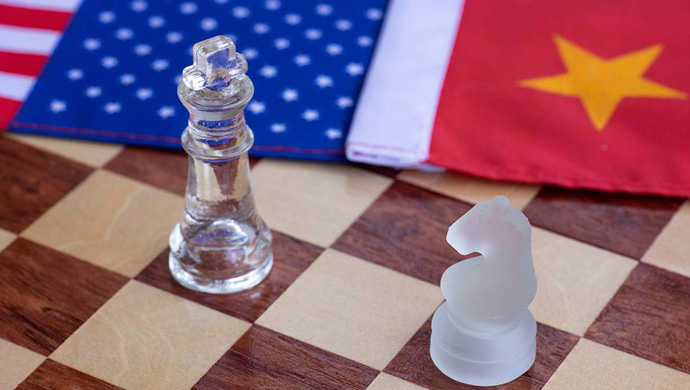
Ma Xiaoye, Board Member and Founding Director, Academy for World Watch
Aug 10, 2021
China and United States should distinguish between strategic competition and a struggle for supremacy, as doing so would help avoid stepping over a boundary line beyond which competition turns into a drive for hegemony and world domination.
Brian Wong, Assistant Professor in Philosophy, HKU and Rhodes Scholar
Jul 22, 2021
The narrative on China’s influence is polarizing and provocative - is it based on fact or fiction?
Tao Wenzhao, Honorary Member of the Chinese Academy of Social Sciences; Fellow, CASS Institute of American Studies
Jan 21, 2020
International politics in this century won’t be a simple story of U.S. decline and China’s rise to become a new global hegemon. That describes the history of past centuries, but it’s an obsolete concept today.
Xiao Bin, Deputy Secretary-general, Center for Shanghai Cooperation Organization Studies, Chinese Association of Social Sciences
Sep 30, 2019
The duo can team up against the U.S. power advantage, but they need to know their limitations.

He Yafei, Former Vice Minister of Foreign Affairs
Aug 14, 2019
Drawing upon the past 70 years of Chinese global engagement, Vice-Minister He shines light on how multilateralism has benefited the Chinese nation as well as how China has played an important role — and can continue to play such a role — in the success of this ideology across the world. With the chaos brought by the new US regime and the rise of global populism, He emphasizes the need for China as an emerging power to support and help maintain multilateralism domestically and internationally.