
Climate action could provide common ground for BRICS as the grouping struggles to bridge geopolitical differences among its increasingly diverse membership. Greater cooperation through climate financing, technology-sharing, resilient supply chains, and disaster preparedness could turn sustainability into a substantive pillar of future BRICS cooperation.
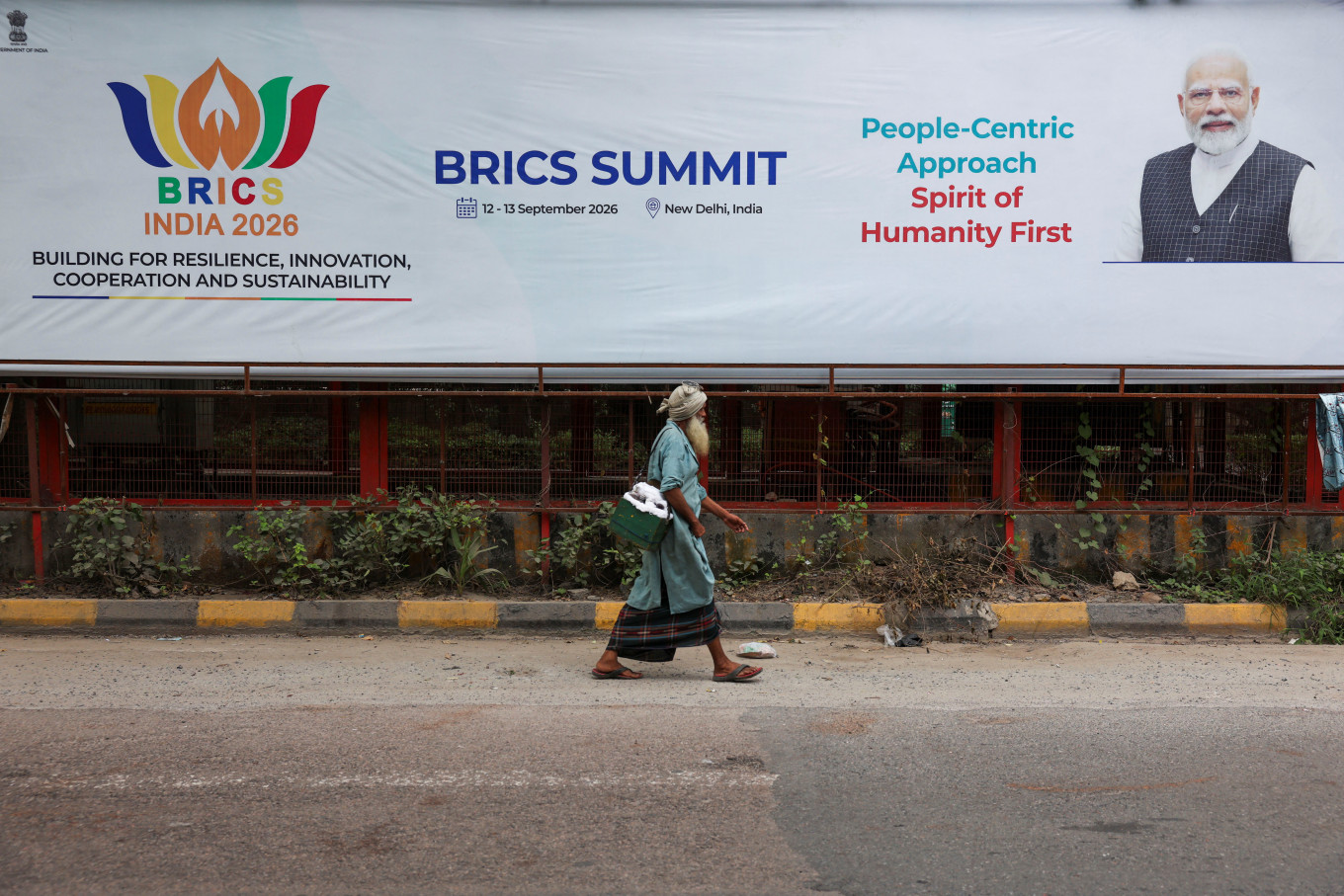
A man walks past a board featuring Indian Prime Minister Narendra Modi on Sept. 3, 2026, ahead of the upcoming BRICS Summit in New Delhi. (Reuters/Bhawika Chhabra)
On September 12, leaders from BRICS countries will gather in New Delhi for their annual summit. The 11-member grouping, which represents half of the world’s population and 40% of global GDP, meets at a time when it faces stark challenges in coming up with a unified response to pressing geopolitical, economic and climate crises that its member-nations are confronting.
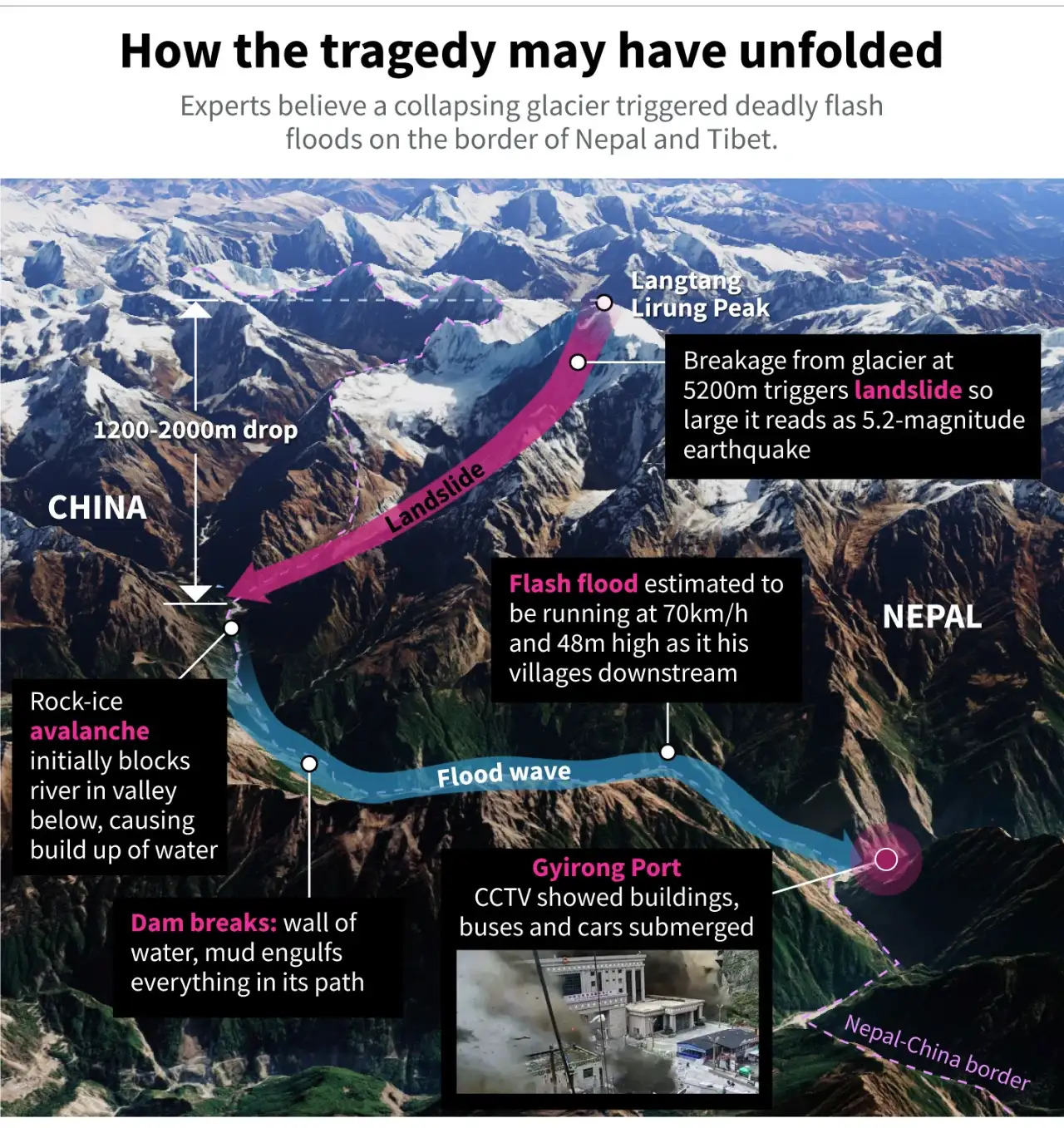
The meeting in New Delhi also takes place less than three weeks after the devastating August 26 flash floods and mudslides on the Nepal-China border. The disaster, which has claimed hundreds of lives, has wrought destruction in Nepal, washing away homes and entire villages and uprooting infrastructure that will take years to rebuild.
The disaster has also directly impacted two of Nepal’s neighbours, China and India, which are both BRICS members. China has also suffered casualties, and is still grappling with a challenging rescue and recovery effort in Gyirong county. India has counted several hundred of its citizens among those feared dead or unaccounted for, and remains concerned about the prospects of downstream flooding in states that border and share rivers with Nepal.
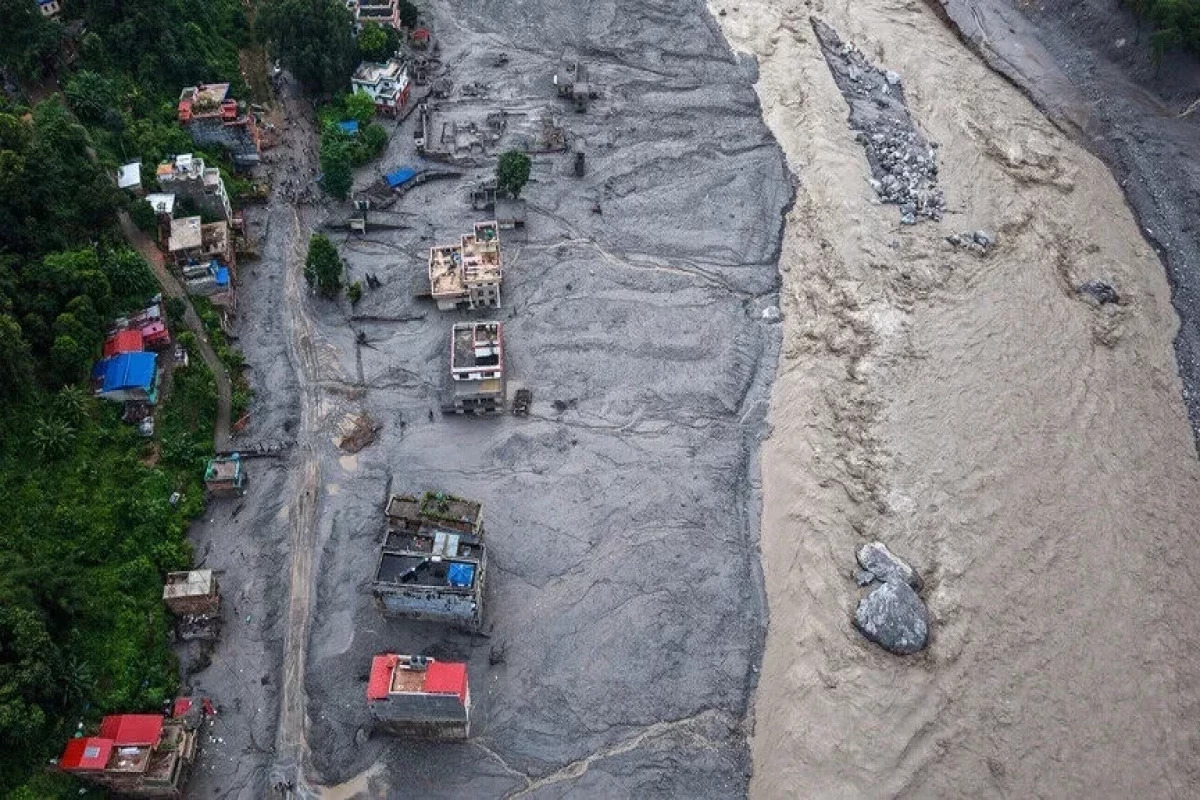
Massive mudslide strikes Nepal-Tibet Border on August 26, swallowing villages and destroying Infrastructure in Gyirong and Rasuwa.
Climate action is one of many issues where BRICS finds itself at a crossroads. In the lead-up to the summit, attention has largely been focused on geopolitical matters – chiefly, the Iran war – that have severely tested BRICS unity. The expansion of the Brazil, Russia, India, China and South Africa grouping in 2024, which now counts among its members Egypt, Ethiopia, Iran, Saudi Arabia, the United Arab Emirates and Indonesia, has added complexity to the already challenging task of arriving at a common stand on geopolitical issues. On the Iran conflict, some of the group’s members find themselves on opposing sides. A meeting of the foreign ministers in the lead up to the summit saw Tehran and Abu Dhabi contesting the language in an outcome document intended to reflect the group’s unified stand on the war.
Given these geopolitical differences, India, the current chair, has understandably emphasised the importance of accelerating economic cooperation. The upcoming summit will offer an opportunity to make progress on two issues that the group has been wrestling with for some time: reforming global economic governance, including in multilateral financial institutions to give emerging nations a greater voice, and secondly, expanding the scope of the New Development Bank, the BRICS-backed financial institution based in Shanghai.
The summit is also likely to yield concrete outcomes on measures that the members have been debating to bolster intra-BRICS economic and trade ties. These are likely to include agreements to expand the use of local currencies and cross-border digital payments, as well as efforts to promote greater usage of central bank digital currencies of BRICS members. A customs co-operation agreement to make trade more free-flowing is also being discussed.
This push for greater intra-BRICS trade has sometimes been wrongly framed as an attempt at de-dollarization. Even U.S. President Donald Trump has warned of punitive trade measures should the BRICS pursue that path. In truth, de-dollarization is neither a realistic prospect for BRICS countries, most of whom have substantial trade and investment relations with the U.S., nor an outcome its members want. The broader aim of the BRICS economic agenda is to create an environment that facilitates greater trade amongst the BRICS countries while reducing the costs of doing business.
India, as this year’s BRICS host, has identified resilience, innovation, cooperation and sustainability as the four themes of this year’s summit. The first three themes speak to an increasingly diverse economic agenda. This includes promoting resilience in energy and supply chains; innovation in technology cooperation, digital public infrastructure and Artificial Intelligence; and cooperation in reforming global governance institutions.
The sustainability focus at this year’s summit involves promoting clean and renewable energy, climate action and adaptation, as well as sustainable consumption. The summit is expected to adopt voluntary principles for climate resilient urban infrastructure, aimed at incorporating climate adaptation and disaster preparation into how BRICS countries plan and run their cities. It will also adopt guidelines for disaster management early warning systems that could pave the way for greater sharing of risk assessments and forecasts – a need underscored by the tragic recent events in Nepal.
Besides framing common, albeit voluntary, guidelines, a second track involves facilitating knowledge-sharing through proposed centres of excellence on agro-ecology, with the idea of working together on more climate-resilient agricultural practices. The idea is to have principles and guidelines rooted in the experience of developing nations - as opposed to those transplanted from western contexts - such as principles for promoting climate resilience through community-based adaptation that also draws on local knowledge systems.
These are promising initiatives, but they are just a beginning. The next step is for BRICS to translate shared principles into mechanisms that can actually deliver tangible outcomes on climate action. The Shanghai-based New Development Bank (NDB), created by BRICS, offers the vehicle to enable this vision, at a time when the bank, which began operations in 2015 with great promise, has struggled to find relevance under the shadow of the larger Beijing-based Asian Infrastructure Investment Bank (AIIB), which began its operations the following year.
The NDB, like the AIIB, is indeed already supporting green projects, but it can consider a more ambitious program aimed at mobilizing badly-needed financing for climate resilience and disaster prevention. A lack of unity has hamstrung the Global South’s efforts in pushing the West to do more to bridge the yawning deficit in climate financing. BRICS can create a platform to do precisely that.
BRICS can, beyond finance, also consider creating a more structured technology-sharing platform among its members to make green transitions more accessible and affordable. The on-going dialogue on resilient supply chains can be scaled up into a mechanism that fosters a complete green energy supply chain, pooling the best resources and capabilities of its members.
While the scientific community will continue to examine the causes behind the recent devastating glacial collapse and flash floods, there is little doubt among most experts that this event is, unfortunately, unlikely to be an isolated one. Discussions on sustainability often tend to appear in the eyes of geopolitical analysts as an afterthought to the “hard agenda” of economic and technological cooperation in multilateral groupings such as BRICS. Yet, taking forward ambitious initiatives on climate actions offers the potential to shape a forward-looking BRICS agenda – one on which its diverse members can find common cause, and one that can anchor the future of BRICS cooperation.
