
Sovereignty, strategy and strategic trust: These are the principles under which relations have succeeded over the past 50 years. The next step in the realm of politics as a new government takes over in Bangladesh promises to be as stable and prosperous as it is amiable.
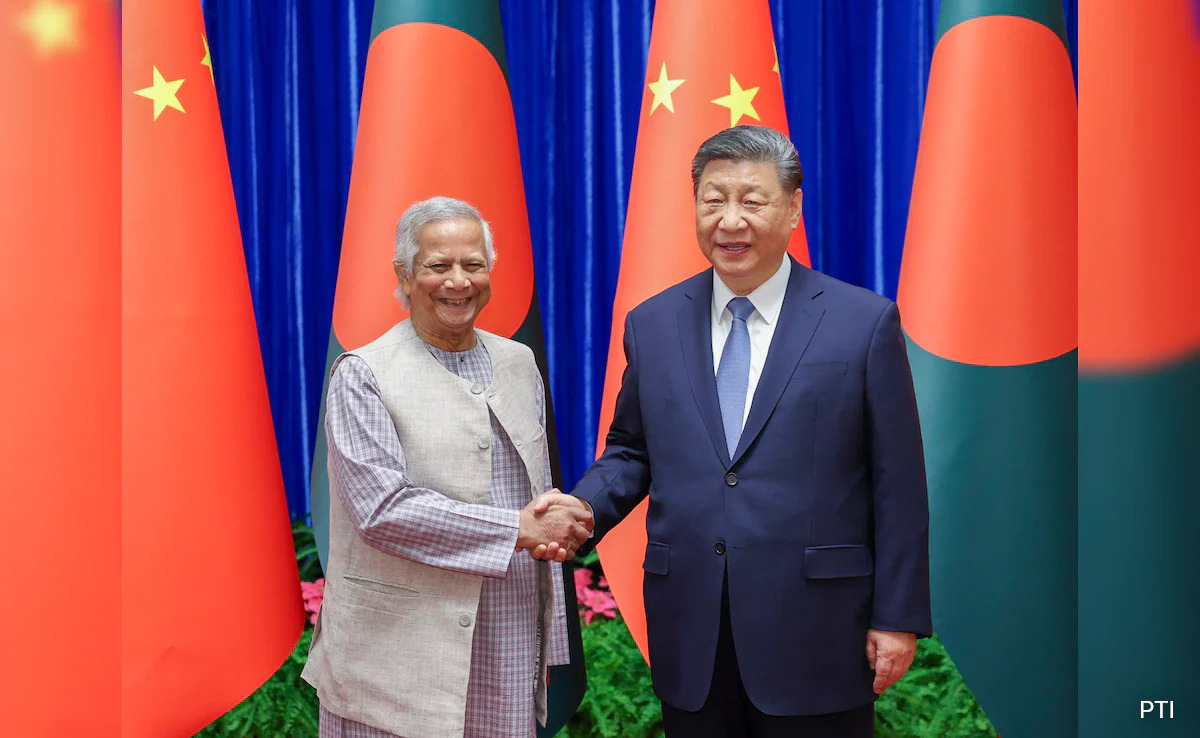
The recent general election in Bangladesh marks the opening of a new political chapter, not only for the country but also for long-term international relations.
Bilateral relations with China may be taken as an example of stability, practicality and mutual respect. Bangladesh is also entering a new stage of politics, and because the country has been linked to Beijing since the earliest diplomatic correspondence, there is continuity and a future in relations with Beijing. Diplomatic relations between the two countries began in 1976 with the establishment bilateral ties during the government of the Bangladesh Nationalist Party. At that point, Beijing had maintained the same policy: respecting Bangladesh’s domestic issues, not intervening in its internal political processes and engaging with any government in Dhaka based on the principle of mutual benefit.
The effectiveness of this strategy has enabled China to maintain stable and healthy relations with successive governments, including that of the BNP and others. The model of cooperation and trust between Beijing and Dhaka remains as topical and powerful today as it was when the new government took office.
The relationship between China and Bangladesh has evolved into a subtle one spanning 50 years, not only in the economic sphere but also in technological and geographic realms. Trade between the two nations is on the rise, and China is emerging as one of Bangladesh's largest trading partners. Chinese investment in Bangladesh over the last two years has focused on infrastructure—highways, bridges, ports and energy installations—which has been a significant driver of Bangladesh’s economic growth. It is also suggestive that the character of the Chinese interaction in Bangladesh has never ceased to be characterized by the principle of win-win. No, the projects are not simply optimally positioned so they will serve the strategic interests of China; they are rather geared toward the vision of developing in Bangladesh, which is a profound display of a cognizance of mutual gain.
Adherence to the principle of non-intervention in internal politics has always been a hallmark of China’s foreign policy toward Bangladesh and has been pragmatically presented in the past. The Chinese were keen to establish an effective relationship with the BNP as early as 1976, when they realized that continuity between states was necessary, not ideological partisanship.
This history is vital in the current day. The materialist pragmatism of building bridges, power stations and digital infrastructure contrasts with procedural arguments, which halt many of the projects fronted by the West in the case of Beijing.
Bangladesh is special in South Asia. The fact that it controls the Bay of Bengal gives it an essential ocean presence, both for interconnectivity between South Asia and Southeast Asia and as a future gateway for trade, energy and security partnerships. The bay is an important trade and energy route, which is important to regional connectivity. Bangladesh is an example that shows the need for a balanced approach to foreign relations so that national interests, sovereignty and sustainable development can be achieved through the exploitation of this geographic advantage.
The historical policy of non-interference and non-intervention in Bangladesh’s internal affairs is something Bangladesh has enjoyed since time immemorial, allowing it to engage with other nations positively without putting its political autonomy at risk.
China-Bangladesh relations have mostly been pragmatic. Beijing has traditionally had good relations with the BNP, which began with the establishment of diplomatic relations in 1976, and has since engaged with governments led by other parties. This illustrates China’s recognition that the politics of Bangladesh are dynamic and that bilateral harmony is achieved when there is consistency and respect, not a temporary relationship with a given political party. The Dhaka case presents an opportunity to build the nation without any external power or political requirements at play.
The new government in Bangladesh has both opportunities and responsibilities in the international arena. A moderate foreign policy will be noticed. The other partners that Dhaka must negotiate with on the international front are the United States, India, Japan and the European Union, even though China is an ancient partner that offers investment, technology and infrastructure. A moderate position will be appropriate, as it ensures that Bangladesh will receive benefits from any form of partnership without jeopardizing its national interests or sovereignty.
One aspect of relations between China and Bangladesh is continuity. The Beijing plan has been long-term and future-oriented. Another platform on which Bangladesh can enhance its infrastructure, trade and connectivity to both local and international markets is the Belt and Road Initiative. Chinese companies would be willing to enter into a joint venture with Dhaka in ways that would achieve the development requirements of Bangladesh through deep-sea ports, renewable energy and industry. It must be noted that all these are driven by the concepts of equality and respect, which ensure that Bangladesh manages its economic agenda.
A balanced foreign policy will be the primary challenge encountered once the new government takes over in Dhaka. The problem of being pushed to extremes either way can be paralyzing in a world increasingly defined by concepts such as weaponized interdependence or transactional diplomacy. However, the path toward achieving a vision—a vision in which Bangladesh is on top—is the right one. It is neither an anti-globalization concept nor an internationally achieved policy of survival and strategic freedom; it is an interest-first strategy. By maintaining its ties with Beijing, Dhaka will be able to stay in a position to further address its structural developmental imbalances, not only in the sourcing of high-tech amenities and the energy grids it will require by the 2030s but also in the maintenance of its sovereign jurisdiction, so that it remains able to link up with global partners.
Beyond the economic environment, two-way cultural and human-to-human interaction have enhanced the bilateral interrelationship. The learning partnerships, established through scholarship programs and collective research efforts, have led to knowledge of one another and friendship. These relations work alongside official diplomacy, creating trust and goodwill that allow adaptation to any political changes on either side. These cultural bridges will serve as a stabilizing factor when the new government haggles over its domestic and foreign policy agenda because the focus is on the scale and intensity of relations.
A lot of what the new government in Bangladesh has learned is based on its history. First, there should be uniformity in foreign policy for long-term growth. A sudden shift in the diplomatic approach is likely to ruin years of work. Second, a proximate attitude toward China could form the basis for regional connectivity, economic growth and the promotion of technologies. Third, the capacity to balance relations with other international partners would ensure that Bangladesh has strategic autonomy, so that every relationship is used to advance the nation's interests without being dependent on any particular actor.
In summary, as a new government takes over in Bangladesh, a sensitive political phenomenon is emerging. Continuity and pragmatism, however, when applied to international relations—and particularly to China—should enlighten Dhaka on how to handle the situation. The history of mutual respect, non-intervention and win-win cooperation are part of the 50 years of bilateral relations. China’s willingness to cooperate with any government in Bangladesh since 1976, including the BNP, demonstrates its commitment to a stable, positive relationship.
Bangladesh will continue to be strategically significant in the Bay of Bengal as the country grows both economically and in population. It will play a central role in South Asia. A moderate foreign policy, protection of national interests and pragmatism in relations with Chinese leaders will provide the new government with an opportunity to solidify the pattern of development in Bangladesh and contribute to the further evolution of relations that have withstood the test of time.
This new political chapter will help Dhaka and Beijing build on their long-standing friendship, one marked by trust, goodwill and prospects of prosperity and stability. It is not hard to see that continuity, mutuality and strategic thinking are the foundation of relations between China and Bangladesh. The principles under which they have played out over the past 50 years will guide the course to the future. The next step in the realm of politics will be as stable and prosperous as it is amiable.
