
The risks of unintended maritime and aerial incidents triggered by more frequent and complex military activity are no longer confined to the China-U.S. relationship. They are extending into a more complicated and less predictable multilateral environment.
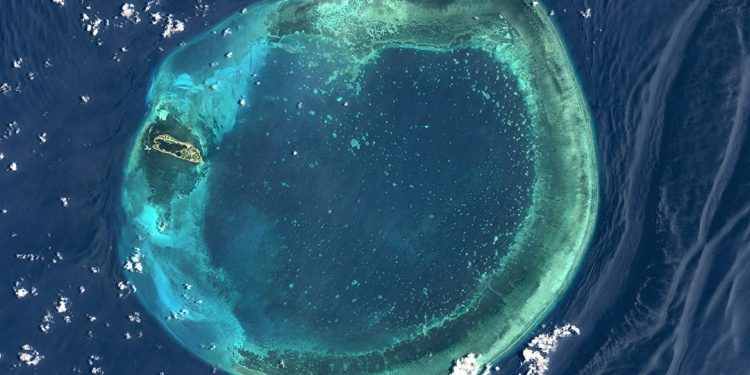
EU, 14 countries reaffirm South China Sea claims illegal under 2016 ruling on July 12, 2026. China maintained that the decisions "gravely infringe upon China’s legitimate rights as a sovereign state and state party to UNCLOS and are unjust and unlawful."
In May, the presidents of China and the United States met in Beijing and agreed to build a “constructive relationship of strategic stability.” They jointly declared 2026 a “historic, landmark year” for bilateral ties. A series of major events, including the APEC Economic Leaders’ Meeting and the G20 Summit, are scheduled for later this year, marking a period of steady improvement in China-U.S. relations. History, however, reminds us that the more promising the window of opportunity, the more fragile it often proves to be.
A review of China-U.S. relations since the late 1970s shows that nearly every effort to stabilize the relationship has been vulnerable to disruption by an unexpected incident, with military encounters and unplanned maritime and aerial incidents proving particularly consequential. In 1999, shortly after Premier Zhu Rongji concluded his visit to the United States, and as negotiations over China’s accession to the World Trade Organization entered their final stage, NATO bombed the Chinese embassy in Yugoslavia, bringing negotiations to a halt for several months. In 2001, just over two months after the new U.S. administration took office, and while its China policy was still taking shape, the EP-3 air collision over the South China Sea occurred. In 2023, U.S. Secretary of State Antony Blinken was scheduled to visit China to advance the Bali consensus on stabilizing bilateral relations, but the trip was postponed for several months because of a Chinese high-altitude balloon that drifted into U.S. airspace.
Although these incidents differed in nature, some stemming from intelligence misjudgments and others from technical failures, they shared two important characteristics: Each occurred during a period when stability in China-U.S. relations was especially critical, and each was subsequently imbued with political significance far exceeding the incident itself.
This pattern of critical diplomatic junctures colliding with unexpected incidents is not coincidental. High-level diplomatic engagements inevitably attract intense public attention in both countries, making even minor developments susceptible to heightened scrutiny and over-interpretation. At the same time, the policymaking systems of both China and the United States are highly complex: The executive, legislative and military branches, as well as local governments and allied partners, each operate according to their own timelines and priorities, and these are not always synchronized. Coupled with the influence of multiple actors and competing political currents, it has become almost routine for diplomatic engagement to proceed alongside disruptive incidents. It cannot be ruled out that, on occasion, one side seeks dialogue while the other works to undermine it.
Such dynamics are by no means new. What warrants particular attention this year, however, is an emerging variable that has received relatively little discussion in the past: The risk of military and unintended maritime and aerial incidents is no longer confined to the China-U.S. relationship but are increasingly spilling over into a more complex and less predictable multilateral environment.
This shift is first reflected in the expanding number of actors involved. In the past, freedom of navigation operations in the Taiwan Strait and the South China Sea were conducted primarily by the U.S. Navy. Starting this year, however, the operations have exhibited two notable trends: increasing multinational coordination and a higher operational tempo. Participation now extends beyond Washington’s traditional Indo-Pacific allies, such as Australia and Canada, to include European and Pacific countries such as the United Kingdom, New Zealand, and the Netherlands. At the same time, the roles of regional actors, particularly Japan and the Philippines, have become increasingly prominent.
Second, offensive weapons systems are being pushed closer to the front lines through rotational deployments conducted under the guise of military exercises, while the growing number of operators has significantly heightened regional geopolitical risks and uncertainty. The High Mobility Artillery Rocket System (HIMARS) has already been deployed to forward locations in the Philippines near the Taiwan Strait and the South China Sea. Meanwhile, America’s Typhon ground-based intermediate-range missile system has remained in the Philippines following military exercises and is gradually transitioning to a normalized pattern of forward rotational deployment. This model of deploying weapons through exercises has not only undermined an already fragile strategic balance but has also heightened the risks of miscalculation and operational error by increasing the number of participating actors.
Third, emerging technologies, particularly unmanned systems, are being introduced into the region at an accelerated pace, further increasing unpredictability in the security environment. In June, the Philippine Navy received four U.S.-made Ocean Aero Triton unmanned underwater vehicles. During the “Balikatan” joint military exercises in April, U.S. Special Operations Forces employed unmanned surface vessels modified along the lines of Ukraine’s Magura platform to conduct simulated asymmetric suicide attacks against designated targets. Compared with traditional naval and aerial standoffs, incidents involving unmanned systems, whether collisions, unauthorized incursions, or electronic interference, make it far more difficult to determine responsibility and assess intent. At the same time, they dramatically compress the window for effective crisis management.
Finally, low-altitude contingencies involving third parties have become the type of incidental risk most likely to trigger broader regional instability. As maritime control and enforcement activities continue to intensify, all sides have correspondingly increased the frequency of aerial deterrence and reconnaissance operations. Japan’s Self-Defense Forces now routinely dispatch fighter aircraft to conduct close-range monitoring of Chinese maritime and aerial activities. The Philippines has repeatedly flown light manned aircraft carrying Western journalists at low altitude over islands and reefs in the South China Sea, while countries such as the Netherlands and Australia have conducted frequent coordinated ship-aircraft operations.
Compared with naval confrontations on the ocean surface, aerial encounters unfold at much higher speeds and within far more compressed operating space, making them inherently more complex and hazardous. Midair collisions, aircraft crashes or involuntary emergency landings could all give rise to highly sensitive legal and sovereignty-related disputes. Search-and-rescue operations, wreckage recovery and potential competition over downed aircraft at sea—as well as negotiations over the detention and repatriation of personnel involved in emergency landings—would all be conducted under the intense scrutiny of an emotionally charged international media environment.
At the same time, China has stepped up its rights-protection and law enforcement activities in the relevant maritime and aerial domains, resulting in more frequent and broader interactions between front-line forces on both sides. These newly emerging multilateral interactions take place amid an already dense pattern of military activity, further increasing the overall risk of friction.
The greater the number of participants and the less uniform their patterns of behavior, the higher the likelihood of unintended incidents, even in the absence of any deliberate intent. After decades of interaction, the Chinese and U.S. militaries have developed relatively mature operational practices and communication channels. However, as third-party forces with varying levels of equipment and training enter a broader maritime and aerial theater with increasing frequency, the objective risks of miscalculation, friendly fire or accidental collisions will rise significantly.
To address the growing risks posed by complex third-party contingencies, the first priority should be to build on the major milestones in the China-U.S. agenda this year by strengthening high-level communication and ensuring that both sides exercise effective restraint. On the basis of existing technical arrangements, such as the rules governing maritime and aerial encounters between the Chinese and U.S. militaries, the two sides could explore the establishment of reciprocal communication channels for third-party contingencies, complemented by scenario-based mechanisms for advance communication.
For more complex and emerging risks, particularly those associated with unmanned systems and low-altitude operations, all relevant parties should engage in technical discussions at an early stage on basic protocols for identification, warning and emergency response. Through such joint efforts, they can help preserve the hard-won stability in China-U.S. relations and provide greater certainty for building a constructive China-U.S. relationship of strategic stability.
