
The region’s future will be shaped less by formal claims of presence than by the practical capacity to operate and govern in a difficult environment. It is moving into a more operational phase in which capability will become the currency of influence.
Recent developments in the Arctic point to a subtle but important shift. The region is no longer defined only by who is present but, increasingly, by who has the capacity to operate, govern, finance and shape outcomes there.
Allied live-fire exercises off Andoya in northern Norway, along with Canada’s renewal of its Arctic patrol fleet, South Korea's legislative push on Arctic shipping, renewed energy interest in Greenland, Norway’s effort to preserve expertise on Russia and the emerging case for a Canada-Nordic defense and governance alliance all suggest that Arctic politics are entering a new phase. This is not simply a story of militarization. It is a broader story of capability politics.
For much of the post-Cold War period, Arctic governance was framed through the language of cooperation, scientific exchange, environmental protection and institutional restraint. The Arctic Council embodied that approach, keeping military security outside its formal mandate while providing a platform for circumpolar cooperation. That framework has not disappeared, but the conditions around it have changed.
Russia's war in Ukraine, NATO enlargement to include Finland and Sweden, concern over critical infrastructure and renewed interest in Arctic shipping and resources have all pushed Arctic actors to think less in terms of symbolic presence and more in terms of operational capacity.
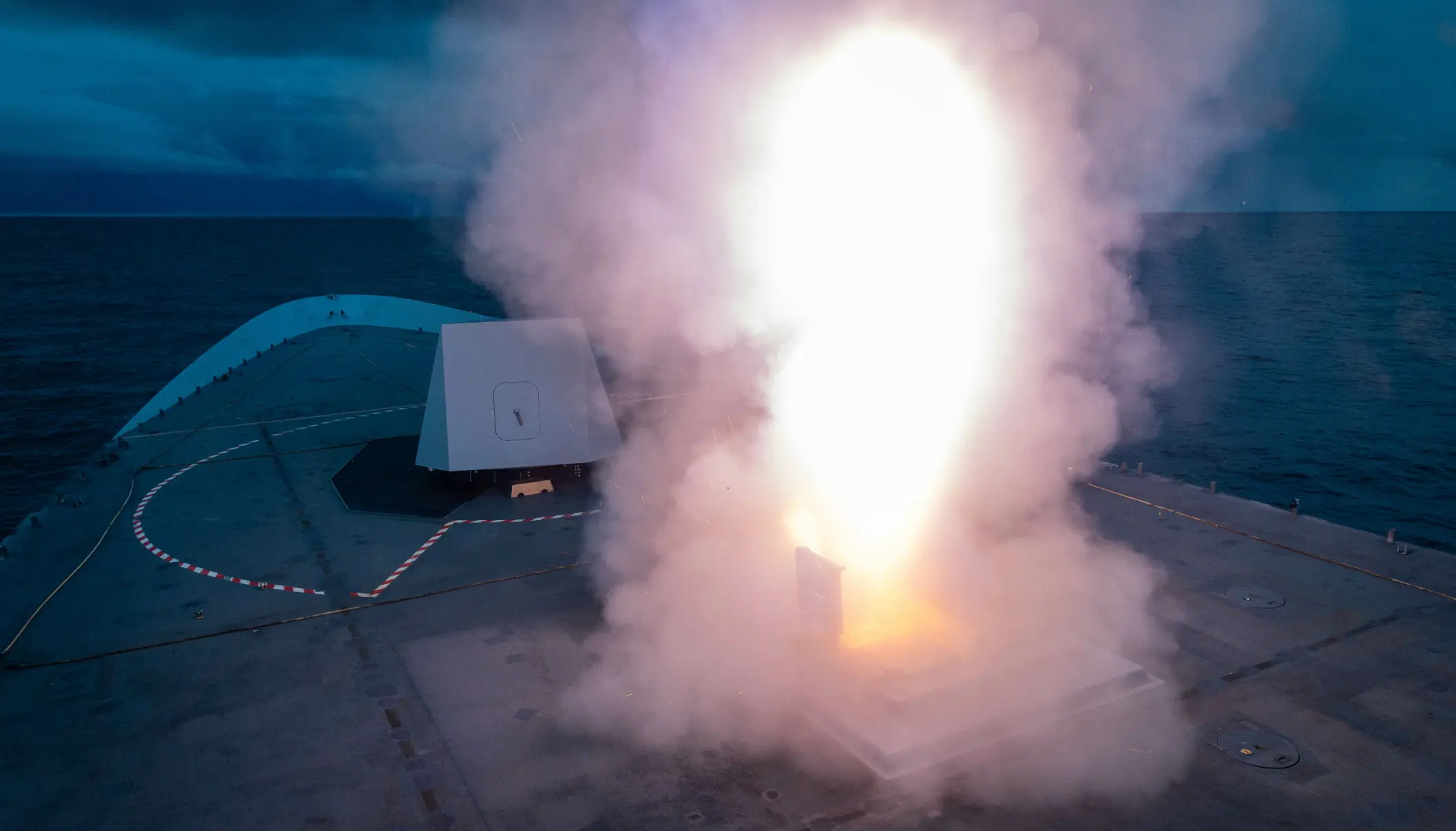
The Mjolner 2026 exercise off Andoya illustrates this shift. The exercise ran from May 1 to May 8 and involved around 2,500 soldiers from Norway, Germany, Denmark, the Netherlands and Belgium, with eight naval vessels from Norway, Germany and Denmark operating at sea. Its focus on credible air and missile defense in the Norwegian Arctic was especially revealing. The point is not only the scale of the exercise, but what it revealed about the changing security logic in the High North.
European allies are increasingly integrating northern Norway, the Barents Sea, the North Atlantic and Russian Northern Fleet activity into a broader northern-flank security framework.
Yet the Arctic should not be reduced to a simple story of militarization. Military capability is only one dimension of this emerging competition. The deeper trend is that states are investing in the practical tools needed to make Arctic strategies credible. The decisive question is whether a state can deploy ships, maintain situational awareness, support communities, manage emergencies, finance projects, shape legal frameworks and provide public benefits.
Canada's launch of the CCGS Donjek is a clear example. As Canada’s first Coast Guard Arctic and offshore patrol ship, the vessel translates Arctic sovereignty into practical governance capacity through fisheries enforcement, search and rescue, scientific research, humanitarian operations, community support and sovereignty patrols. But hardware is only one side of the story. The proposed Canada-Nordic defense and governance alliance points to another form of capability: strategic coordination. The idea is to link deterrence, infrastructure resilience, economic security, legal standards and northern and Indigenous partnerships into a more coherent Arctic framework. In other words, capability now means not only assets in the field, but also the institutional architecture that allows Arctic middle powers to act collectively.
South Korea offers a different but equally revealing example. It is not an Arctic state, yet it is moving to position itself in the emerging Arctic shipping economy through legislation, port planning and governance design. That reflects concern about supply-chain resilience and geopolitical risk in traditional maritime corridors. Geography still matters, but capability increasingly determines relevance. Non-Arctic stakeholders do not need to claim Arctic identity in order to have Arctic interests. They can participate through shipping, research, technology, environmental protection, logistics and supply-chain planning.
Resource development in eastern Greenland adds another layer to this politics of capability. An American energy company has raised $70 million to fund two exploration wells in Jameson Land, a remote and largely undrilled basin on Greenland’s eastern coast. The Arctic is often discussed through the language of climate vulnerability and energy transition, yet interest in hydrocarbons and critical minerals has by no means disappeared.
This creates a governance dilemma. Arctic development may bring investment and infrastructure to remote communities, but it also raises difficult questions about environmental risk, local consent, regulatory capacity and the credibility of climate commitments.
Norway's response to Russia’s designation of the Norwegian Barents Secretariat as an "undesirable organization" points to another form of capability: knowledge. Norwegian officials have stressed the importance of preserving expertise on Russia and retaining the capacity to navigate possible cooperation with independent Russian actors. In a region where geography enforces proximity even when politics produces distance, the ability to understand Russia remains essential. Deterrence requires military capacity, but stability also depends on institutional memory, technical expertise and carefully managed communication channels.
These developments suggest that the Arctic is moving from a period of competition by physical presence to one of capability. In the earlier phase, attention often focused on who had issued Arctic strategies, opened research stations, joined forums, sent delegations or announced interest in Arctic shipping and resources. In the new phase, declarations matter less than implementation. Capability now includes military readiness, icebreaking and patrol capacity, port infrastructure, financing tools, legal planning, scientific data, environmental monitoring, knowledge of Russia and the ability to provide public benefits.
This shift has important implications for China, which is not a polar state. But it is a legitimate stakeholder in Arctic shipping, climate research, energy transition and global maritime governance. Its Arctic interests do not rest on sovereignty claims, but on interdependence.
Changes in Arctic ice conditions affect the global climate system. Debates over Arctic shipping shape the long-term prospects for maritime connectivity between Asia and Europe. Arctic energy and mineral projects have implications for global supply chains. And the way the Arctic is governed matters for the credibility of international law and multilateral cooperation.
For China, the goal should not be to pursue Arctic presence for its own sake. A more constructive approach would be to contribute capabilities that are credible, non-threatening and oriented toward public goods. This means strengthening polar science, climate data collection, environmental monitoring, safer shipping practices, emergency-response cooperation and support for rules-based governance. South Korea’s example is useful in this regard: Arctic relevance can be built through ports, shipping, legislation and industrial capacity rather than through claims of identity.
But this logic should not be read only as a lesson for non-Arctic actors. If capability-building by Arctic states and their allies becomes merely a tool of exclusion, the Arctic risks hardening into a closed strategic club. Capabilities are necessary, but they should reinforce governance rather than replace it.
The Arctic’s future will be shaped less by formal claims of presence than by the practical capacity to operate and govern in a difficult environment. That capacity is increasingly measured through concrete tools: ships and ports, data and standards, financing and environmental safeguards, diplomatic channels and coordinating frameworks. The region is not entering a simple new Cold War, but it is moving into a harder and more operational phase in which capability is becoming the currency of influence.
For China, the most prudent path is responsible participation grounded in public goods rather than claims of geopolitical entitlement. That offers a more credible foundation for long-term influence than presence alone.
