
The formal revocation of the U.S. environmental agency’s greenhouse gas “endangerment finding” undermines a foundational pillar of the government’s climate policy and will significantly impede the regulation of domestic emissions.
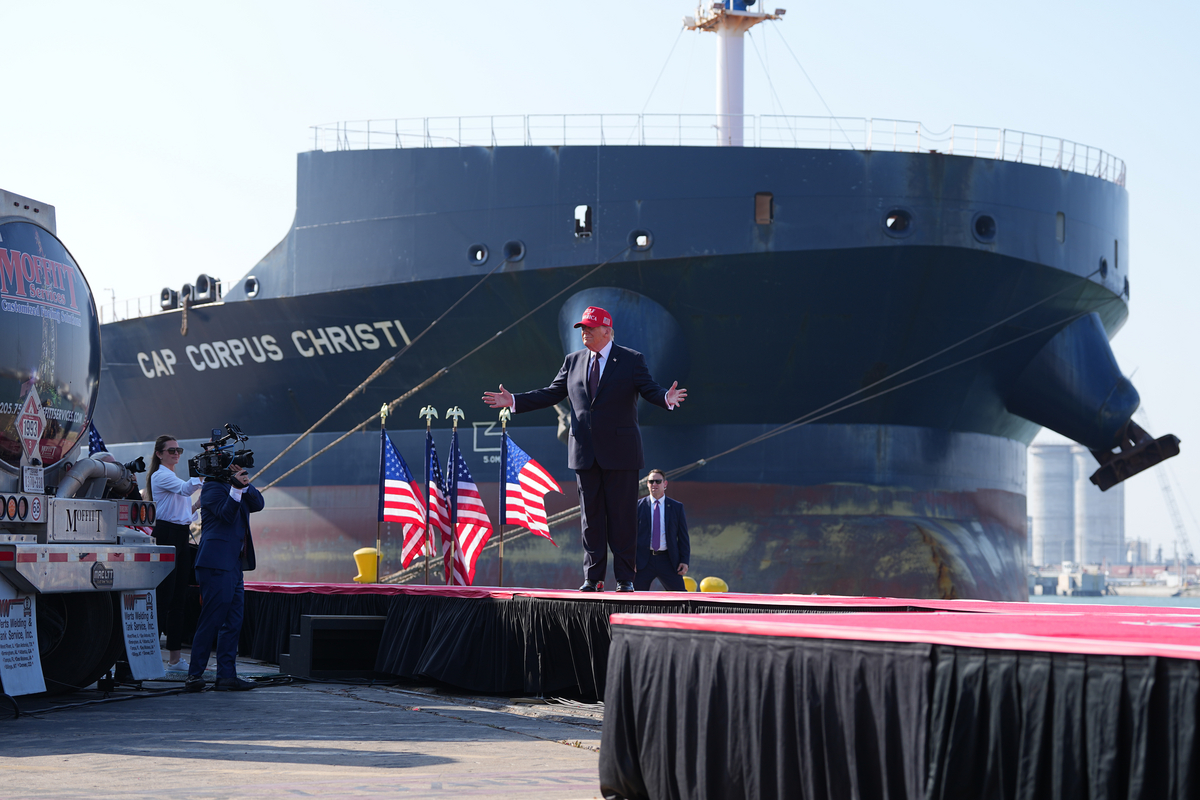
U.S. President Donald Trump promotes fossil fuels in Corpus Christi, Texas, on Feb 27, the same day his administration moved formally to leave the world's overarching climate treaty.
In February, U.S. President Donald Trump and Environmental Protection Agency Administrator Lee Zeldin announced the formal revocation of the 2009 “endangerment finding” on greenhouse gases issued by the EPA. This decision erodes a foundational element of federal climate policy and will significantly impede regulatory efforts to ion over-emissions.
With this move, national-level climate policy has been substantially dismantled, leaving subnational measures, diminished fiscal instruments and some fragmented mechanisms as the remaining structural supports. The underlying scientific consensus remains unaltered, but the policies and actions against climate change have been effectively nullified—suggesting a swift and full retreat of the climate policy of the United States.
In 2007, the U.S. Supreme Court ruled in Massachusetts v. EPA that greenhouse gases qualify as air pollutants under the Clean Air Act; if the EPA determines they endanger public health or welfare, it may regulate them accordingly. Acting on this ruling, the EPA issued its formal “endangerment finding” in 2009, establishing that six greenhouse gases—including carbon dioxide and methane—contribute to climate change and threaten the health of current and future generations of Americans. This finding serves as the central legal basis for the EPA’s regulation of emissions from motor vehicles, power plants, industrial facilities and other sources. It should be noted that while the endangerment finding is not enacted, it carries statutory force. The White House cannot revoke it by executive order alone, but must instead navigate a protracted administrative review process to overturn it.
Trump initiated the revocation process on day one of his administration. On Jan. 20, 2025, he signed Executive Order 14154 “Unleashing American Energy,” directing the EPA to submit a review of the endangerment finding's legality and soundness within 30 days. In March 2025, the EPA announced its reassessment of the finding; by July, it formally proposed revocation and solicited public comment; and on February 12, the agency issued its final report withdrawing the previous findings. The Trump administration’s rationale rests on two principal grounds. First, that such rule making by an executive agency constitutes an overreach of authority; regulation of greenhouse gas emissions, it argues, should be determined by congressional legislation rather than administrative fiat. Second, Trump’s longstanding position that climate change is a “hoax” that jeopardizes American national strength and public interests and must be halted.
The EPA touted the decision as “the largest deregulatory action in American history”. With the “endangerment finding” revoked, a cascade of federal regulations predicated upon it now collapses. The agency will abolish federal greenhouse gas emission standards for vehicles, eliminating mandatory efficiency improvements for automakers, and has determined that the Clean Air Act does not confer statutory authority to set such standards. While mandatory vehicle emission regulations are standard governmental practice in most nations and broadly accepted as conventional wisdom, the Trump administration's approach defies both precedent and consensus, and runs counter to mainstream policy positions.
In fact, the revocation of the endangerment finding represents merely one component of a broader retreat from climate policy under Trump. Since taking office, the administration has pursued a sustained, intensive campaign to systematically dismantle the climate governance architecture established during the Obama and Biden eras. These measures include a second withdrawal from the Paris Agreement, the revocation of the electric vehicle mandate, the freezing and rescission of remaining Inflation Reduction Act funds and the removal of the LNG export ban, among others.
At present, the United States no longer bears international emission reduction obligations, while domestic climate governance relies primarily on subnational actors. The Climate Alliance, led by California and comprising more than 20 states, continues to enforce its own emission standards. Texas, traditionally a Republican stronghold yet also a leader in renewable energy deployment, sees continued investment in and use of low-emission technologies by numerous businesses and consumers. Furthermore, since many manufacturing facilities and investments under the Inflation Reduction Act are located in Republican congressional districts, some GOP lawmakers oppose complete elimination of these tax credits—leaving certain fiscal incentives still in effect. The future trajectory of U.S. domestic climate policy will hinge on more political maneuvering.
