
Many countries in the North appear to be justifying the action by the U.S., while most in the South are condemning it. It is especially important now that political leaders be aware of the true aspirations and hardships of their people and address them urgently before these can escalate into dissent.
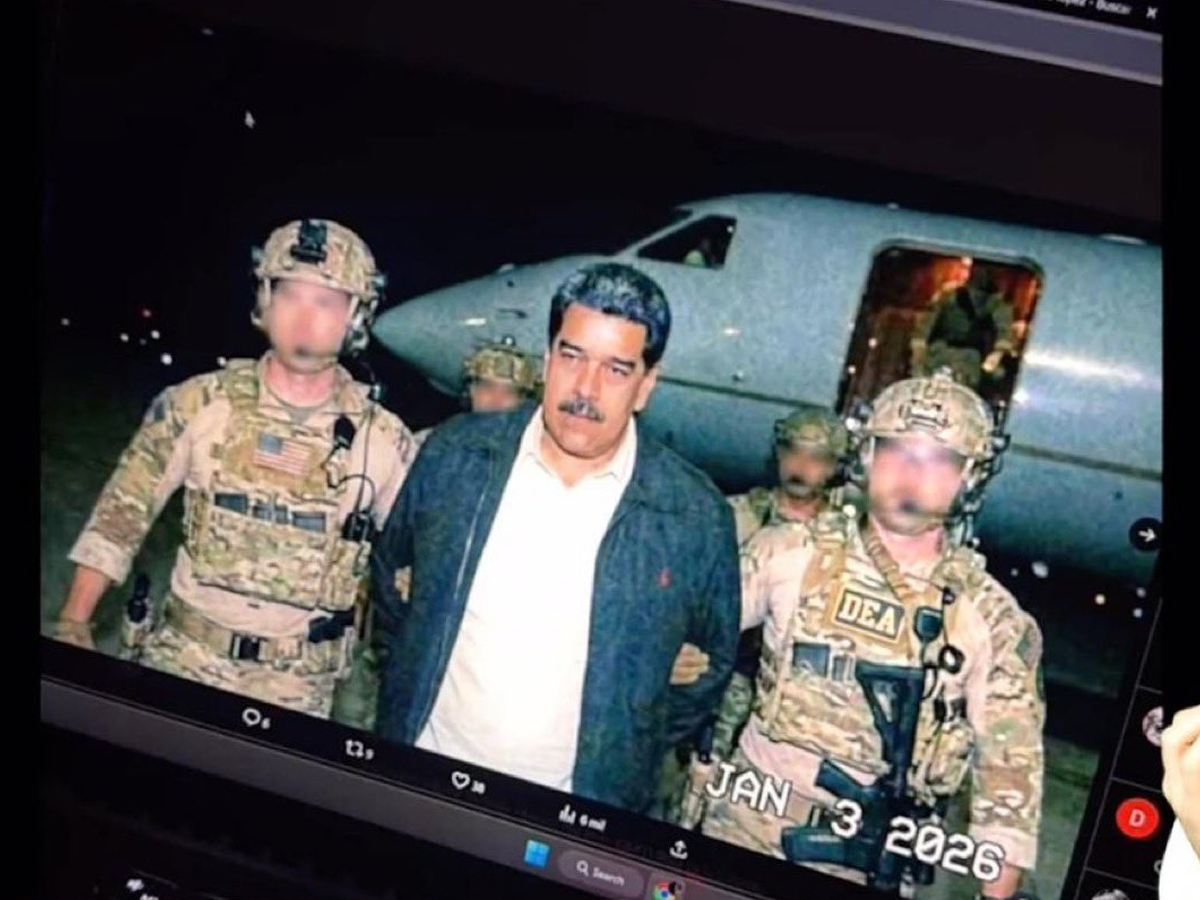
U.S. Delta Force detained Venezuelas President Nicolas Maduro.
The U.S. armed forces carried out one of the most brazen operations in recent history, using surgical precision to kidnap, arrest and extract the president of Venezuela, Nicolas Maduro, early on Jan. 3. The United State used around 150 different types of aircraft, including fighter jets, bombers, helicopters and uncrewed aerial platforms, as well as 1,500 military and non-military personnel.
This operation shocked the entire world and sparked a major debate about the motivations of the U.S. Was its regime change? Oil? Expanding spheres of influence? Message to other nations? Was it really to stop illegal narcotics coming to the USA? Clearly, President Donald Trump ordered this action and watched the entire operation.
The reactions and repercussions surrounding this illegal act by the U.S. are yet to be seen. This was no doubt an act of war carried out unilaterally and a clear case of kidnapping and a violation of federal and international law. Trump ordered the kidnapping without the approval of Congress. Now, a clear divide can be seen between the global North and South. Many countries in the North appear to be justifying the action by the U.S., while most in the South are condemning it.
A special session of the United Nations Security Council under the agenda item “Threats to International Peace and Security” was convened on Jan. 5. The council’s emergency session was to address the historic capture—which included not only Maduro but also his wife, Cilia Flores. The U.S. called the action a law enforcement operation, not part of a war, stating that it was conducted to fulfill long-standing federal drug trafficking and narco-terrorism indictments. But the US did not offer conclusive, verifiable evidence to support this assertion.
The UN secretary-general cautioned that the U.S. was setting a “dangerous precedent” for the international order. He noted that the UN charter explicitly prohibits the threat or use of force against the territorial integrity or political independence of any state. Widespread international condemnations said the action was a clear threat to the international order, a violation of international law and violation of the sovereignty of an independent country. It was also a violation of the UN Charter.
There was regional condemnation of the U.S., too. But Venezuelans living in the country and elsewhere seemed to be divided. Some are relieved that Maduro is gone, as he was seen as a tough dictator and held responsible for the poor economic state of the country. Trump clearly alleged that the main reason for the surprise was the linkage of Maduro with cocaine shipments to the U.S. from Venezuela.
However, oil appears to be a major factor for the United States. Venezuela has the largest reserves of crude oil in the world, with huge market potential. Although the world is determined to reduce the use of hydrocarbons, the U.S. administration does not accept that global warming is related to the burning of fossil fuels. Trump is now claiming that the Venezuelan government will be supplying 30 to 40 million barrels of crude oil at market prices to the U.S. annually and that the profits will be used to rebuild Venezuela.
Interim President Delcy Rodriguez, however, has stated that she will not surrender the sovereignty of Venezuela to the United States. It will be interesting to observe how this game unfolds.
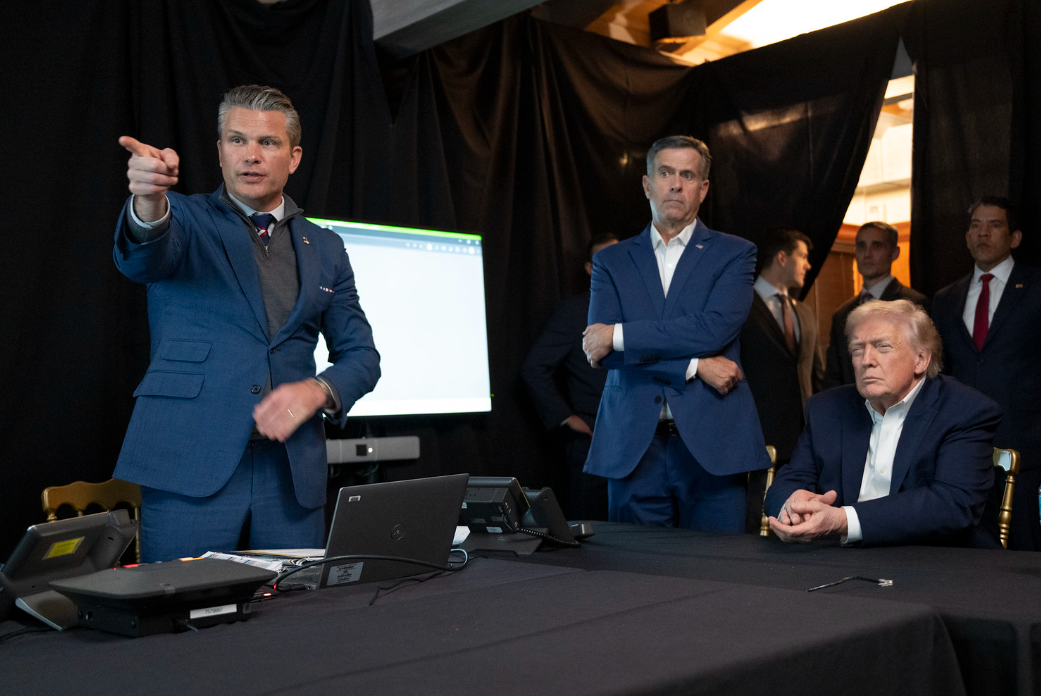
President Donald Trump monitors U.S. military operations in Venezuela, from Mar-a-Lago Club in Palm Beach, Florida, on Saturday, January 3, 2026. (Official White House Photo by Molly Riley)
The U.S. was unhappy with the former Venezuelan president, Hugo Chavez, for nationalizing oil-production facilities that once belonged to U.S. companies. That was 1976, and since then the U.S. has wanted to take revenge. The kidnapping of Maduro was only one stage of that. First, the U.S. narrative blamed Maduro for continued narcotics shipments to America. There were many aerial attacks carried out by the U.S. at sea to interdict or destroy boats purportedly carrying narcotics across the Caribbean. This was just a prelude to the special military operation. Those attacks were also cited as violations of international law.
This extraction of Maduro to face charges under the American legal system sends many other messages to the world, too. This was a classic demonstration of American military superiority and capabilities. It showcased the power of the American intelligence apparatus, deep penetration capabilities, superior tactics and capabilities of U.S. special forces, such as SEALS or Delta Force; excellent coordination; and seamless synchronization and system integration of intelligence agencies, special operations forces, air assets, cyber operations, electronic warfare capabilities, logistics and diplomatic maneuvering.
This action demonstrated that American military systems, integration, command and control and joint operations are at a high level that no other country can replicate it at this moment. It is believed that Russia was providing security to Maduro with its air-defense systems, electronic warfare equipment, cyber operation systems and close protection within Maduro’s inner circle. Also, Maduro was protected by a special group of Cuban military personnel.
So how was it possible for U.S. forces to achieve total success without suffering any noticeable loss of life or assets, given the tight security measures for Maduro. That’s an intriguing question. This indicates that either there was a major security breach in Venezuela or that American intelligence had penetrated every level of Venezuelan security. It sends a chilling message to many other Latin American and African countries in which Russia is providing security to high-level leaders. And it sends a message to China not to interfere with U.S. dominance, especially in the Western Hemisphere. Unlike Russia, which is engaged militarily in at least one global hot spot, China’s approach is economic engagement with countries in South America and Africa.
The U.S. operation, though successful in military terms, could lead to vulnerabilities in the international domain. The U.S. has violated international law unilaterally, and this could severely damage American credibility. The country will be labeled a revisionist and hegemonic power, not a global peacemaker.
Previous military operations and regime changes in Iraq, Afghanistan and Libya are cited as failures of U.S. policy. The recent operation has also drawn questions about the role of the UN and about the rule-based international order. Venezuela has now become the responsibility of the United States. If it descends to chaos, or if American companies get involved in oil exploration, the U.S. will be blamed. It will be interesting to observe how Venezuela moves toward the future. Will the legitimate aspirations of its people be met, or will they become puppets of America?
Then there are messages to other countries. Cuba, Mexico, Panama, and Greenland (Denmark) need to be concerned about how they respond to U.S. policies. The Maduro seizure is a precedent for great-power competition in other theaters. But nuclear-capable countries such as Russia and China need not worry too much. China may have to recalibrate its strategy for Taiwan and for facilities in the South China Sea. But it needs to be mindful of its people and assets in Africa and Latin America, and of Chinese interest globally.
The U.S. operation could also encourage more balancing behaviors and alternative alliances, as well as the need to look at different models, such as GSI and GGI now that the UN system has been compromised. The operation could also be seen as a last-ditch effort by the Trump administration to make America the unparalleled superpower internationally and to influence the midterm elections by telling the American people that they are winning supremacy in the world again under their current president.
This operation is also proving that the true multi-polarity has not yet arrived, nor are we in a transition period from a unipolar world to a multipolar one. Still, the U.S. has sufficient superiority to breech protected security environments and take advantage of its asymmetric strengths. It is also a fact that the U.S. is benefitting from intelligence networks built over decades, alliance structures that provide basing and special operations capabilities cannot be matched by anyone.
The world reacted to this affront—and reacted forcefully—if the independence and sovereignty of state systems are to be maintained. If the U.S. is not checked, it will continue to act unilaterally against other sovereign nations for the sake of its own national interests.
Further, military academies, research institutes and think tanks should study the Maduro operation in detail from many different angles—military, technology, political, strategic and economic—to try to understand how the U.S. was able to carry out this special operation. What were the loop-holes that it exploited? How did it compromise Maduro’s security and gather intelligence? How did it coordinate all the necessary assets? How did it neutralize Venezuela’s air defenses and other security measures including close protection? Then further studies need to be carried out based on the responses of world leaders and the divide between global North and South.
It is especially important that political leaders be aware of the true aspirations and hardships of their people and address them urgently before these can escalate into dissent. Leaders should also understand that real action is much more important than mere rhetoric. People need food at affordable prices, good education, health care, housing and public utilities. When the economy of a country is weak, it become susceptible to outside interference.
