
For China-U.S. relations today, the realistic question is not how to construct a G2 but how the two countries can find a workable mode of coexistence under conditions in which cooperation and competition can coexist.
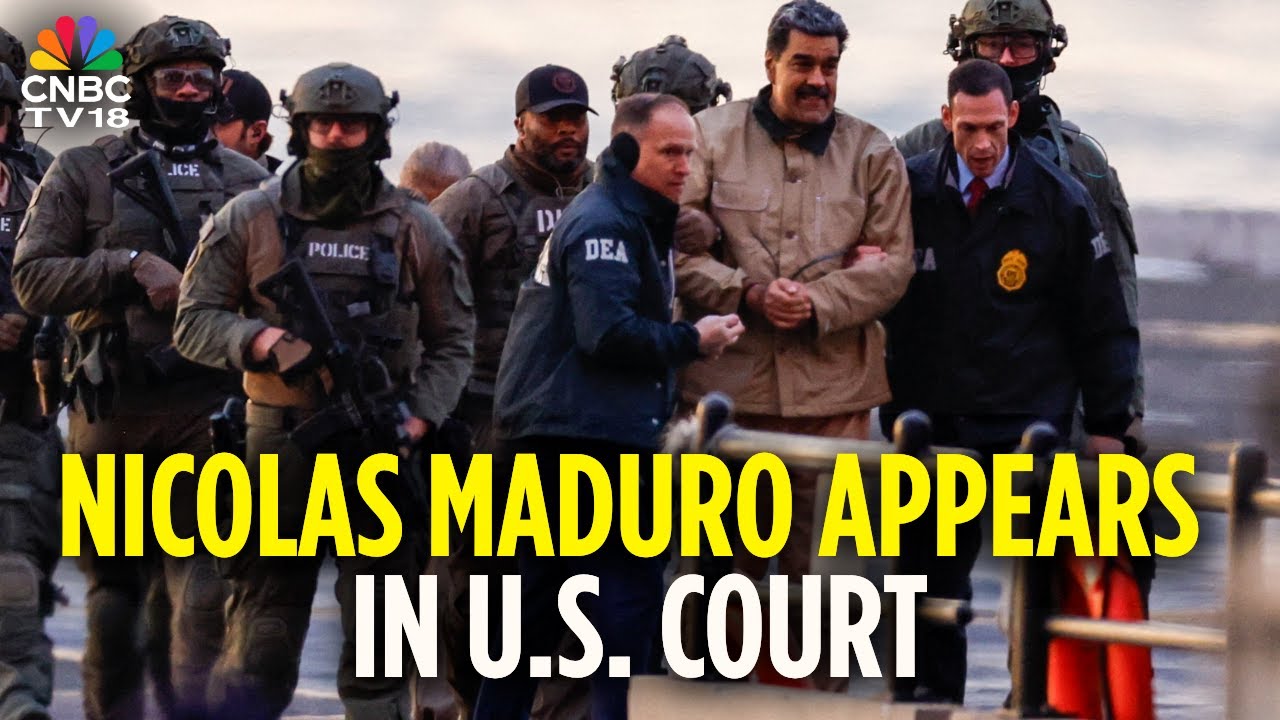
Recently, U.S. President Donald Trump announced that American forces had captured Venezuelan President Nicolas Maduro in a surprise operation and transferred him to the United States to face judicial proceedings. The announcement sent shockwaves through the international community and triggered strong reactions across Latin America.
Regardless how Washington chooses to frame the operation—as an effort to combat drug trafficking or to restore democratic order—the action goes well beyond the conventional boundaries of diplomacy, sanctions, or proxy competition in global governance. It represents a direct attempt to redirect another country’s political trajectory through the use of military and law-enforcement power. In this sense, the Venezuela episode is not merely a regional political crisis but a revealing indicator of the structural tensions now shaping China-U.S. relations.
Last year, Trump invoked the idea of China and the United States jointly managing global affairs under a so-called “G2” framework, prompting renewed speculation. Some observers argue that, as the world’s two most influential powers, China and the U.S. will eventually move toward a functional division of labor and shared responsibility in global governance. The Venezuela episode, however, highlights a fundamental flaw in this assumption. The differences between China and the U.S. extend beyond interest-based competition; they reflect deeper divergences in how each side understands the nature of international order. A G2 is not simply about comparable power or frequent policy coordination. It presupposes a high degree of shared understanding regarding rules, boundaries, legitimacy and responsibility—conditions that are currently lacking.
From Washington’s perspective, Trump 2.0 has been marked by a global strategy that is increasingly de-institutionalized and instrumental in character. Compared with earlier approaches that emphasized maintaining order, shaping rules and coordinating with allies, U.S. policy now places greater emphasis on the direct linkage between sovereignty, security and domestic political returns. Under this logic, international law, multilateral mechanisms and regional institutions are no longer treated as binding frameworks that must be upheld. Instead, they are increasingly viewed as tools that can be employed selectively, or even bypassed altogether.
The Venezuela episode illustrates this approach clearly. Rather than working through the United Nations, regional mediation or multilateral negotiations, the U.S. opted for direct military and law-enforcement intervention in another country’s internal political affairs, even openly discussing the possibility of interim governance and political transition. Such actions not only cross traditional sovereignty boundaries but also significantly weaken the predictability of regional and international expectations.
For China, this conception of order is fundamentally difficult to accept. It has long emphasized sovereign equality, non-interference in internal affairs and the resolution of disputes through political dialogue. Its primary concern is not the ideological orientation of particular governments but the risk that power politics could become a normalized method of managing international affairs. Seen from this perspective, the signal sent by the Venezuela episode is not an isolated one; it carries clear demonstration effects.
If major powers can unilaterally define “legitimacy” based on their own judgments and resort directly to coercive measures, the rules-based foundations on which the international system depends will crumble. Under such conditions, any form of “great-power coordination” —let alone “great-power co-governance”—would lose the institutional basis required for stability.
When placed within a broader geopolitical context, the structural significance of the Venezuela episode becomes even more apparent. The Trump administration has reinforced a “Western Hemisphere first” strategic orientation and revived a highly exclusionary vision of regional order within its security narrative. Latin America is no longer viewed primarily as a space for development cooperation or economic exchange but increasingly as a front line of major-power competition. Political forces that Washington deems “unstable,” “unfriendly” or likely to invite external influence are more readily placed within the scope of strong intervention. At its core, this logic constrains regional sovereignty and autonomy and stands in sharp contrast to China’s emphasis on long-term cooperation, development-oriented engagement and non-alignment.
It is precisely under these policy conditions that China-U.S. interaction in Latin America—and by extension globally—has become increasingly incompatible with the G2 vision articulated by Trump. For the U.S., regional order centers on exclusive security arrangements and suppression of influence. For China, regional stability derives from inclusive participation, shared development gains and risk management. This is not a simple divergence in policy preferences but a direct collision between two fundamentally different understandings of international order. Against this backdrop, any expectation that China and the U.S. could form a G2-style framework for coordinated global governance lacks a realistic foundation and underestimates the long-term tensions generated by such differences.
More important, the Venezuela episode does not reflect exceptional treatment of a single country. Rather, it points to a broader strategic choice made by the U.S. amid rising uncertainty about its own development trajectory. Confronted with domestic political polarization, a declining willingness to sustain global commitments and pressure from competition on multiple fronts, Washington has increasingly relied on direct, highly visible actions that yield immediate domestic political returns to offset its strategic anxiety. While such measures may produce short-term deterrent effects, over time they accelerate the fragmentation of the international system and further narrow the space for structural cooperation between China and the U.S. in global governance.
At a deeper level, the Venezuela episode demonstrates that even under the highly personalized and non-institutionalized diplomatic style favored by the Trump administration, a so-called relationship of “co-governance” between China and the U.S. remains out of reach. A G2 implies not only coordination of positions, but also mutual respect for behavioral boundaries and shared responsibility for external consequences. By choosing unilateral action to directly reshape the political dynamics in Venezuela, the U.S. effectively rejects the existence of such boundaries. From China’s perspective, this signals a world in which rules can be rewritten at will, commitments lack durability and cooperation offers little in the way of stable expectations.
For these reasons, the Venezuela episode is unlikely to propel China and the U.S. toward a G2 defined by shared responsibility. Instead, it more clearly exposes the differences between the two sides in their respective conceptions of order, intervention boundaries and responsibility. For China-U.S. relations today, the realistic question is not how to construct a G2 but how the two countries can find a workable mode of coexistence under conditions in which cooperation and competition coexist—a mode that prevents the international system from sliding toward greater disorder and instability. Recognizing this reality may do more to illuminate the nature of today’s changing world than continued indulgence in Trump-style visions of a G2.
