
Sourabh Gupta
Senior Fellow, Institute for China-America Studies
Jun 05, 2017
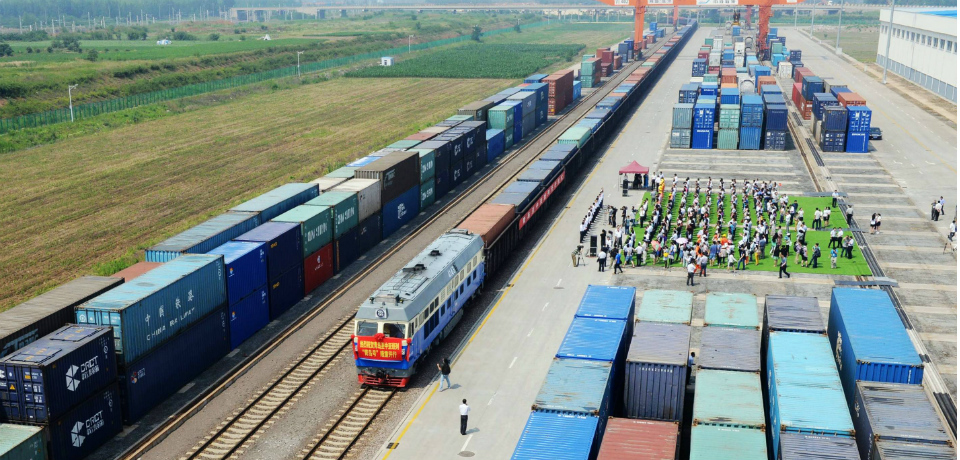
Much as the relocation of East Asia’s labor-intensive industry to lower-wage China stirred a virtuous economic cycle that went much beyond mere capital accumulation, so also China-Africa production capacity cooperation and transfer can create a sum bigger than its parts. Far from being a new form of colonialism, as the critics have panned it, the transfer of industrial capacity and world-class infrastructure will reduce transaction costs in Africa. But success abroad must first begin at home.
Feb 17, 2017
Mr. Tillerson betrays a lack of understanding of the U.S. position on the sovereignty claims in the South China Sea. As a matter of policy, the U.S. takes no position – and hasn’t for decades – on these rival claims. If the Secretary of State has the chance to encounter 96-year Li Jingsen on his next visit to Beijing, he might learn that the warships sent by China to recover the islands in 1946 were even provided by the United States.
Nov 30, 2016
Donald Trump’s unabashed pandering to an aggrieved white voter base as well as the long-standing consistency of his (much less-noticed) anti-trade convictions bear implications for Washington’s China policy. As the disillusioned, blue-collar nativist element within slowly defects from a party that remains bound and determined to cater to the interests of its 1% backers, including under the incoming Trump Administration, U.S. politics will enter a period of flux.
Oct 31, 2016
The current international monetary order is failing to provide the necessary tools to cope with episodes of capital flow volatility. In the short term, the BRICS countries should step in and take steps to address this issue. In the long run, they should seek to reform the monetary system and promote international financial stability.
Aug 22, 2016
The arbitral panel had an opportunity to chart a constructive approach to one of the foremost legal questions of the Asia-Pacific. However, where it should have chosen to foster mutually cooperative tendencies on ill-understood provisions of the law, the award performed a disservice with consequences that will reverberate for a considerable time to come.
May 24, 2016
The U.S. Treasury department has released a report on currency policy and trade between its major partners, selectively picking rules from the IMF’s list of currency manipulations actions to its advantage. To fix the porous global currency system, the Obama Administration should sit down with China and re-write multilateral rules and create a diverse supply of safe globally traded assets.
Apr 14, 2016
From time immemorial, traditional Chinese fishermen have continuously, reasonably and with certainty plied their trade in the semi-enclosed waters of the South China Sea. These traditional fishing practices date back a long time, have been invariable and unbroken, and conform to basic principles of justice and utility.
Dec 31, 2015
The IMF’s decision to formally include the renminbi as one of five hard currencies in its SDR basket, and the half-decade or so of liberalizing reforms leading into it, is likely to be recorded by economic historians with the corresponding level of attention that is devoted to the establishment of the Federal Reserve System almost-exactly a century ago.

Nov 26, 2015
Manilla’s arbitration requests in the South China Sea concern the standing of “historic rights”; the status of certain land features in these waters and the maritime entitlements they are capable of generating; and the lawfulness of certain Chinese land reclamation and law enforcement actions. Likely neither Beijing nor Manilla will walk away dejected, however.

Aug 18, 2015
Shrill forebodings of a return to ‘currency wars’ and irremediable U.S.-China trade quarrels are overblown – although the prognosis on this front is somewhat mixed. A small step backwards (the yuan devaluation on August 11th) might yet come to reflect the biggest leap forward in Asian economic, trade and financial regionalism in the years and decade ahead.
