
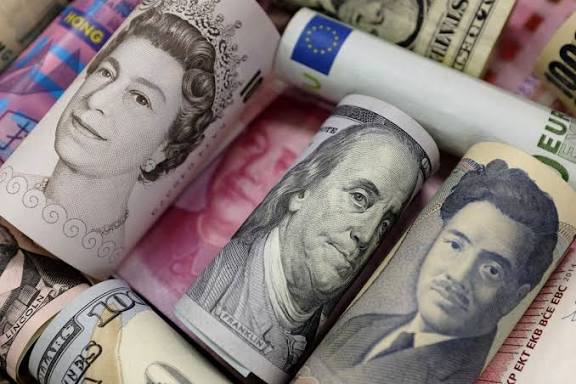
The U.S.-Iran conflict and Trump’s tendency to weaponize the dollar are hastening attempts by China to de-dollarize oil and gas markets, boosting the use of the ‘petro-yuan’, while pushing the EU to resurrect plans to strengthen the euro on the global stage. A tripolar monetary order is emerging, in which the dollar would be ‘first among equals’ and the renminbi, and the euro, would have their rightful place, commensurate with their importance in the global economy.
Since U.S.-Israeli attacks on Iran began at the end of February 2026, Tehran has used the Strait of Hormuz – possibly the world’s most critical maritime energy chokepoint – as a bargaining tool in its tug-of-war with Washington, closing the Strait to enemy vessels, while allowing the passage of container ships only from friendly countries on which Iranian authorities seek to impose fees payable in Chinese yuan or cryptocurrency, a move opposed by U.S. President Donald Trump who responded by imposing a naval blockade.
Iran’s choice of payments is an indication of the emergence of China’s monetary power. The Chinese yuan, or renminbi, is already used by Saudi Arabia and other Gulf countries when selling their oil and gas to Beijing. The so-called ‘petro-yuan’ – first introduced in 2018 through the creation of yuan-denominated oil futures on the Shanghai International Energy Exchange – has seen its adoption accelerated following the U.S.-Iran war.
While Tehran uses the Chinese currency to bypass Western sanctions – which increase settlement risk for companies - other Middle East countries use the petro-yuan, alongside the dollar, to diversify their risk exposure and reduce dependency on U.S.’ economic and political decisions. By encouraging their firms to seek alternative payment systems, a growing number of oil and gas producing countries make yuan invoicing more attractive, and ultimately contribute to reserve diversification – a trend facilitated by the development of China’s Cross-Border Interbank Payment System (CIPS), a clearing and settlement network launched by the People’s Bank of China (PBOC) in 2015 to handle cross-border renminbi transactions to provide an alternative to the Western-dominated Society for Worldwide Interbank Financial Telecommunication (SWIFT).
Middle East countries have become an important lynchpin of the CIPS. For instance, Abu Dhabi Bank joined the CIPS as a direct participant in mid-2025 and in late October of the same year became an official renminbi clearing bank. This development was hastened by the ‘mBridge’ project – a cross-border payments platform launched by central banks in China, Hong Kong, Thailand, the United Arab Emirates and Saudi Arabia as an alternative to dollar-dependent global payment systems.
Before the renminbi, the euro was tested to challenge the petrodollar. Following the creation of the European common currency in the late 1990s, some members of OPEC tried to use it as an alternative to the dollar in energy markets. At the end of 2000, Iraq under Saddam Hussein had begun asking for payment of its oil sales in euros instead of dollars – a move that was not followed through by EU leaders, due to structural weaknesses within the Eurozone, such as the absence of a common European safe asset and the limited integration of financial markets. It did not help either that Europe continues to depend on the US for its security. Greater use of the euro in international payments and as a reserve currency remains linked to Europe’s capacity to become autonomous from Washington in the security and defence fields, since the connection between international monetary usage and military capabilities is well established.
The current Middle East crisis, coupled with growing EU fallout with the traditional American ally under Trump, is pushing EU leaders to press ahead with plans to integrate financial markets and expand the supply of euro safe assets, including support for strengthening Europe’s defence capabilities, The aim is to address the euro-area structural weaknesses, accelerate the promotion of greater use of the euro, and lessen Europe’s dependency on Washington. Fears are growing in Brussels that an unpredictable U.S. administration could use the dollar as a tool of coercion to achieve foreign policy goals – a trend that has led the European Commission to resurrect plans to strengthen the euro on the global stage.
Yet, it will take time to address the euro-area structural weaknesses, not to mention the difficulty to reach consensus among the 21 member states of the European Union that have adopted the European common currency. In these circumstances, some Eurozone officials are advocating collaboration with other major powers, particularly China, to advance a multipolar currency system that would reduce dependency on the dollar.
Beijing has laid out plans for greater use of the renminbi in international exchanges and the creation of a multipolar monetary order. In an article written for the February 2026 issue of Qiushi Journal – the official publication of the Central Committee of the Communist Party of China – Chinese President Xi Jinping argued about the necessity to accelerate the building of a modern financial system with Chinese characteristics, lessen the reliance on the US dollar, and create a “strong currency” – an idea initially outlined in a speech at the opening of a study session at the Central Party School on 17 January 2024.
For Chinese leaders, the aim is not to replace the dollar, but rather to create an alternative system through which trade and payments can flow with less dependence on dollar-based platforms, and still operate within China’s capital-control framework, as the renminbi continues to be non-convertible. In China’s plan, the European common currency is an essential pillar of a multipolar currency system in which the dollar would be ‘first among equals’ and the renminbi, and the euro, would have their rightful place, commensurate with their importance in the global economy.
Eurozone leaders too have advocated in favour of monetary multipolarity and supported China’s monetary ambitions. In 2015, Christine Lagarde, International Monetary Fund (IMF) managing director from 2011 to 2019, supervised – and approved – the renminbi’s inclusion in the basket of currencies making up the Special Drawing Right (SDR), a synthetic reserve currency that includes the U.S. dollar, the euro, the British pound and the Japanese yen. Last year Lagarde, who is currently the President of the European Central Bank (ECB), spoke of Europe’s “global euro” moment, while the Governor of the Bank of France, François Villeroy de Galhau, has been even more explicit, calling for the euro to openly challenge the dollar.
The EU is the world’s largest trade bloc in terms of goods and services combined accounting for around 16% of world trade (based on 2024 data). If only goods are considered, the EU's share in global trade is 13.4%, after China (15.4%) and slightly ahead of the US (13.3%). Yet, of all global payments made via SWIFT, around 45% are in US dollars, while only one-third is in euros, and those in yuan represent 3.5%, according to the ECB and the Deutsche Bank which track these developments. While China still uses SWIFT, the bulk of payments in yuan currently transits through the CIPS, leading the People’s Bank of China to claim that the renminbi is now the world’s second largest trade finance currency (after the dollar) and third largest payment currency (after the dollar and the euro).
The dollar remains the world’s main reserve currency, accounting for around 56.8% of allocated foreign exchange reserves for the fourth quarter of 2025, while the euro’s share hovers around 20.3% and the renminbi slightly below 2%, according to IMF data. Yet, there is widespread recognition by central banks’ portfolio managers that the share of renminbi is destined to grow in the coming years. Moreover, China, which holds the world’s largest reserves, is already operating an internal diversification away from the dollar. Under the second Trump administration Beijing has been cutting further its holdings of U.S. Treasury debt, buying more gold and other sovereign debts, including those of the Eurozone.
In turn, most of Europe’s central banks, chief among them the ECB, have accepted China’s currency as a viable reserve and signed swap agreements with the PBOC. Last September, the two central banks extended their bilateral euro-renminbi currency swap arrangement (maximum size of 350 billion yuan and 45 billion euros) for another three years until 8 October 2028.
A tripolar currency system, based on the world’s three major economies, is thus emerging. Hopefully, the U.S. will not oppose this trend, but rather accompany it, building also on the Xi–Trump Beijing Summit where the two sides appear to have found a shared framework for managing competition through constructive strategic stability. There is need to extend this framework to the monetary realm and include Europe in the picture, to ward off currency wars and allow the orderly emergence of a China-U.S.-Europe tripolar monetary order.
