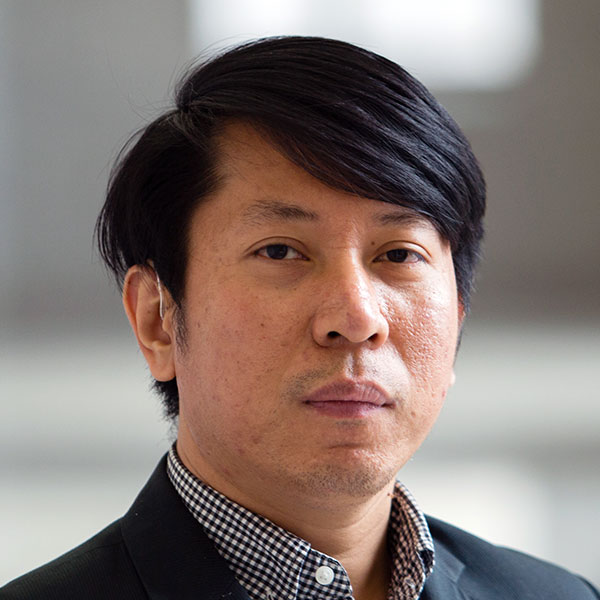
China's sanctions on Philippine Defense Secretary Gilberto Teodoro threaten to disrupt a recent improvement in bilateral relations, casting uncertainty over diplomatic dialogue, security cooperation, and economic ties. While tensions in the South China Sea persist, sustained dialogue and more measured diplomacy remain essential to managing disputes and keeping open the possibility of future resolution.
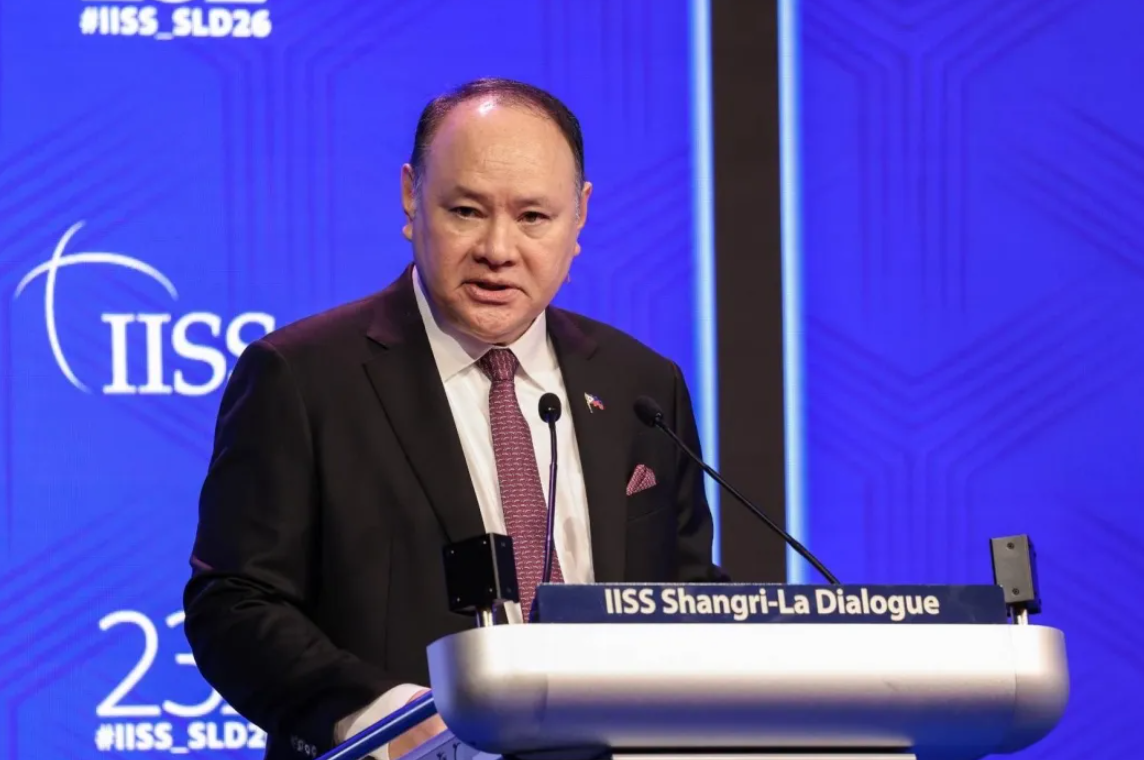
Philippines’ Secretary of National Defense Gilberto Teodoro delivers a speech as he attends the 23rd Shangri-La Dialogue summit in Singapore on May 31, 2026.
China’s travel and business ban on Philippine Defense Secretary Gilberto Teodoro and his family introduces new uncertainty into bilateral ties, which had shown some signs of improvement in recent months, amid renewed political dialogue and growing Chinese tourist arrivals. While he is not the first Filipino official to face such sanctions, he is likely the highest incumbent Filipino official and the first sitting foreign defense chief to get such treatment. Last year, former Senator and now Labor Secretary Francis Tolentino was also barred from entering China, Hong Kong, and Macau. In 2019, former Foreign Affairs Secretary Albert del Rosario and ex-Ombudswoman Conchita Carpio-Morales were denied entry into Hong Kong. This makes the Philippines one of the few non-Western countries to have had senior officials repeatedly sanctioned by China.
However, the latest development was ill-timed. It happened two days after the Philippines-China Friendship Day, coinciding with the 51st anniversary of official ties, and a day before the 128th Philippine Independence Day. It also arrived three days before the defense chief's 62nd birthday. As such, it only increased opposition to China’s actions in the West Philippine Sea, resulting in a new wave of Filipino nationalism, a phenomenon that will deepen distrust and complicate diplomacy. The prohibitions also came a month before the tenth anniversary of the 2016 South China Sea arbitration award, a ruling Beijing continues to reject.
The trigger for the sanctions was Secretary Teodoro’s remarks at the 23rd Shangri-La Dialogue in Singapore last May. The defense chief said that based on the Philippines’ experience with the PRC, negotiations are “not a path to conflict resolution but a means of gaining advantage.” The statement may be anchored in previous incidents in which bilateral negotiations failed to achieve the desired outcome. For instance, in 1995, when the Philippines discovered structures built by China in Mischief Reef, a low-tide elevation in the Spratlys within the country’s exclusive economic zone, talks to dismantle them proved fruitless. Instead, the structures, initially described as fishermen’s shelters, were even later upgraded. As this was the first time Beijing occupied a feature within the Philippines’ EEZ, the episode left a deep imprint. Days before the Singapore conference, Manila also reported the presence of a floating Chinese platform in Scarborough Shoal, another flashpoint feature.
Nevertheless, seeing negotiations as a mere instrument to buy time or to surreptitiously take contrary actions while discussion is underway is an oversimplification. Negotiations can create off-ramps to climb down from the precipice of hostilities. After a violent incident in Second Thomas Shoal in June 2024, discussions led to a provisional arrangement that facilitated unimpeded resupply missions to BRP Sierra Madre, Manila’s beached outpost in the hotspot feature, going forward. It can help insulate an incident from broader ties and avert a diplomatic crisis or breakdown in official contact. Ex-solon Antonio Trillanes IV, tapped by former President Benigno Aquino III, claimed that he was able to reduce the number of Chinese ships in Scarborough Shoal to ease a tense standoff in 2012. Negotiations may get protracted and even frustrating, but its absence is riskier. The current dearth in regular security talks between Manila and Beijing is not sustainable as it only increases the chances of accidents and miscalculation. Resuming normal and necessary military dialogue and exchanges between the two sides had been a struggle in recent years. The sanctions on Teodoro only compound the situation.
In contrast, Manila’s treaty ally, the United States, and China are stabilizing their competitive relations, resuming military communications and high-level meetings. U.S. Secretary of War Pete Hegseth met Chinese Defense Minister Dong Jun in Kuala Lumpur in October on the sidelines of the ASEAN Defense Ministers Meeting Plus. Top military officials also convened in Washington last December for the 19th annual U.S.-China Defence Policy Coordination Talks. Hegseth and Dong saw each other again in Beijing last May as the former accompanied President Donald Trump in his visit to the Chinese capital. Trust deficit is not an impediment in establishing and keeping sturdy defense contact platforms. In fact, regular channels are established to help improve trust and avoid security frictions from getting out of hand.
Teodoro made another point that likely stirred Chinese sensitivity. In reference to China’s fuel and fertilizer provisions, Teodoro said that: “No matter how they sugarcoat their assistance to us, it doesn't cut the mustard.” China delivered 260,000 barrels of diesel to the Philippines as the latter deals with a national energy emergency due to the war in West Asia. In 2023, Beijing donated 20,000 metric tons of fertilizer as Manila faced supply disruptions due to the Russia-Ukraine War. Perceptions of being ungrateful creates a new low for bilateral ties. It is one thing to downplay assistance in times of great need. It is another to say it is not good enough or may be driven by ulterior motives. Even President Ferdinand Marcos Jr., in a Bloomberg interview last March, said that Beijing has not leveraged investments, projects or critical fertilizer supplies in any way. Whether Teodoro’s remarks dissuades future Chinese aid or supplies of crucial goods like fuel and fertilizer to the Philippines remains to be seen.
While it is China’s prerogative to do so, the sanctions will likely break the diplomatic thaw. It may cast a shadow over bilateral dialogue mechanisms and ongoing efforts to conclude the Code of Conduct in the South China Sea under Manila’s Chairmanship of ASEAN this year. Talks to restore communications and re-establish a Joint Coast Guard Committee between the two neighbors may also be affected.
Potential economic fallout from the sanction is a serious cause for concern. Since a visa-free policy was implemented last January, Chinese tourism to the Philippines has increased by 63% compared to last year. Direct flights between Cebu and Fujian province and between Manila and the Chinese cities of Chongqing and Hangzhou were recently opened, with future plans to link the Southeast Asian metropolis with Haikou, capital of the island-province and free trade port of Hainan. The sanctions may dampen a promising start and present challenges in marketing Philippine holiday destinations in the world’s biggest tourist market.
In addition, the participation of the Armed Forces of the Philippines in the raid of a Chinese-owned steel plant in Misamis may spook investors. Teodoro personally visited the facility.
After a two-week detention, 64 Chinese workers, who were flown to Manila, were eventually released after the Justice Department found insufficient evidence of immigration, labor, and nuclear safety violations. The deployment of the military for a mission that police and relevant civilian regulatory agencies can perform may stir unease among Chinese enterprises.
Such news undermines Manila’s effort to position itself as a suitable investment destination for Chinese outbound capital, which many ASEAN countries are vying for. For instance, Chinese mining and industrial firms looking for alternatives to Indonesia, amid changes in the country’s tax and regulatory environment, are skipping the Philippines due to bilateral tensions, among other factors.
The South China Sea is a multiparty dispute, and coastal states are taking measures to secure their interests, whether through more defense procurement, building structures on their occupied reefs, extracting oil and gas in choppy waters, and growing security partners. Much of this is done matter-of-factly without drama or fanfare. With aerial reconnaissance and satellite technology, it has become impossible to hide what one is doing or attempting to do in the maritime flashpoint. Publicly calling it out, especially in regional or international venues, has become a deliberate choice most parties eschewed from taking because: 1) they still get what they want without resorting to it, and 2) they want to keep ample room for maneuver, including giving the other party a face-saving exit. And discreet, but astute and effective diplomacy is not the sole preserve of small or middle powers. Even Secretary Hegseth, in the same Shangri-La conference, said that America’s focus is “strong, but quiet, big stick, speak softly.” Manila should refrain from doing the opposite. It should not trade potentially irreversible losses at sea for rhetorical jabs.
Cautious and calculated language is not deference but dexterity. The goal is to preserve maximum space for dialogue. Dialogue, in itself, will not necessarily resolve the conflict. But without dialogue, resolving the conflict is impossible. Dialogue may help prevent hostilities, de-escalate tensions, manage incidents, and even open pathways for practical cooperation. If sustained, dialogue may even lead to resolution. That said, diplomacy does not preclude defense from doing what it should do.
