
As the Philippines assume the ASEAN chairmanship in 2026, President Ferdinand Marcos Jr. is seeking to de-escalate tensions with China while deepening defense cooperation with the United States and other partners amid rising frictions in the South China Sea. The strategy reflects Manila’s effort to bolster deterrence without undermining ASEAN consensus or provoking broader regional instability.
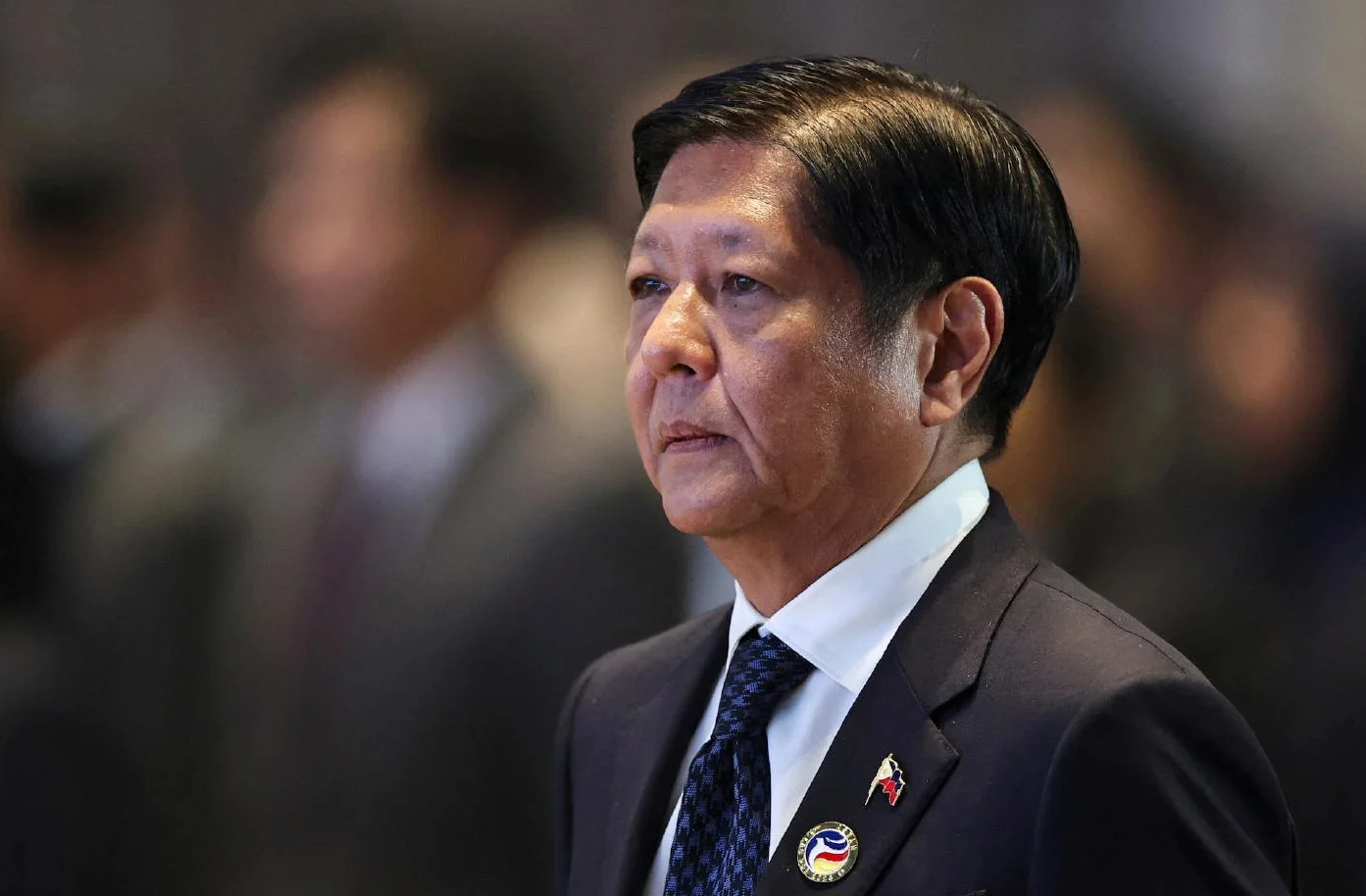
Ahead of the Philippines’ assumption of the rotational chairmanship of the Association of Southeast Asian Nations (ASEAN) in 2026, Philippine President Ferdinand Marcos Jr. faces a serious strategic dilemma. On one hand, the Southeast Asian nation is seeking to de-escalate tensions with China in the South China Sea. This is not only crucial for avoiding unwanted confrontation in the disputed waters, but also providing Manila the diplomatic space to fulfill its duty as the incoming leader of ASEAN.
Unlike the Philippines, the majority of Southeast Asian nations have friendly and robust strategic ties with China, which is not only a top trading partner, but also an increasingly key source of investment aid. As chairman of a consensus-based organization, the Philippines can’t act unilaterally without taking into consideration sentiments and shared interests of the broader Southeast Asian region. Accordingly, Marcos Jr. personally reached out to Chinese paramount leader Xi Jinping on the sidelines of the Asia Pacific Economic Cooperation (APEC) summit in South Korea.
Meanwhile, the Philippines is also deeply troubled by the direction of the maritime disputes in recent months. Aside from near-collisions between Philippine and Chinese maritime forces, the Marcos Jr. administration is also perturbed by the possibility of Chinese construction activities over the hotly-disputed Scarborough Shoal, which lies just over 100 nautical miles from Philippines shores and key military facilities in the Subic Bay. Accordingly, the Southeast Asian nation continues to double down on its defense ties with traditional allies. In early November, Philippine Defense Secretary Gilbert Teodoro Jr met his counterparts from the United States, Australia and Japan for the latest so-called “Squad” meeting on the sidelines of the concluding ASEAN Summit in Malaysia.
The four allies vowed to enhance military cooperation under a joint defense council, and directly criticized China’s assertive posture in the South China Sea. The U.S. Defense Chief Pete Hegseth accused the Asian superpower of engaging in “destabilizing actions” and, accordingly, vowed to provide military assistance to frontline allies such as the Philippines. The challenge for the Philippines, therefore, is to strike a delicate balance between diplomatic de-escalation with China, on one hand, and enhancing its own deterrence capabilities in tandem with Western allies, on the other.
Hard Choices
Although shunning the more confrontational rhetoric of former Filipino presidents amid the decades-long disputes in the South China Sea, the soft-spoken Marcos Jr. has also diverged from the Beijing-friendly posture of his immediate predecessor, Rodrigo Duterte. Following his early-2023 visit to China, Marcos Jr. has steadily adopted a more assertive stance on Philippine claims in the South China Sea. This was partly designed to boost his patriotic credentials at home, especially given his earlier alliance with the Duterte family. But Marcos Jr. also took some inspiration from his late father, who built military facilities in and deployed soldiers to disputed land features in the South China Sea at the height of the Cold War. Instead of choosing between superpowers, Marcos Sr., the former Philippine strongman, simultaneously developed ties with all major powers in the Indo-Pacific.
By reviving ties with traditional Western allies as well as Asian powers of Japan, India and South Korea, Marcos Jr. has sought to enhance his country’s strategic position vis-à-vis China. But his more assertive stance, including the so-called “Transparency Initiative,” has enraged Beijing, which has accused Manila of stoking tensions in an otherwise stable regional environment.
The upshot is a series of near-clashes between Philippine and Chinese maritime forces near disputed land features such as the Second Thomas Shoal and Scarborough Shoal, thus raising fears of military confrontation between a US treaty ally and Asia’s leading power. In September, Beijing approved plans for the creation of a 3,500-hectare nature reserve at the northeast rim of the shoal.
For China, the new plan is aimed at preserving ecological diversity given the delicate environmental situation in the area after years of overfishing. For critics, however, this is likely a prelude to reclamation and construction activities on the hotly-disputed land feature. Given the Philippines’ limited defense capabilities, it has instinctively leaned on its alliance with Western powers to enhance its strategic position.
In the words of the Philippine defense chief, “We need to think of ways to rally the world as our ally to stop this.” Accordingly, the Philippines has emerged as the pivot of a new network of security partnerships with an eye on China’s rise. The most consequential is the so-called “Squad” alliance of Australia, Japan, the United States and the Philippines.
"We need to develop our joint capabilities to respond, and this includes being able to monitor maritime conduct and develop the tools that allow us to respond quickly,” the U.S. defense chief said during his recent quadrilateral meeting with counterparts from Canberra (Richard Marles), Tokyo (Koizumi Shinjiro), and Manila (Gilbert Teodoro). "We need to develop our joint capabilities to respond, and this includes being able to monitor maritime conduct and develop the tools that allow us to respond quickly ... ensuring that whoever is on the receiving end of aggression and provocation is then, therefore, by definition, not alone," he added.
The Big Picture
It remains to be seen if the Philippines will push for transformation of the Squad into, potentially, a de facto ‘Asian NATO’. But Manila has welcomed the full participation of Japan and Australia in the next U.S.-Philippines annual Balikatan exercises, among the largest multilateral drills in Asia annually. For now, the four allies are aiming to establish the Indo-Pacific Chiefs of Defense Cooperation Council to institutionalize closer military cooperation akin to the better-known Quadrilateral Security Dialogue (Quad).
Earlier, the Philippines had also conducted joint naval drills with fellow Squad partners as well as with Canada, which finalized a new Visiting Forces Agreement (VFA) with Manila. European powers and even New Zealand are likely next in line amid booming maritime security ties with the Philippines. While the ‘Squad’ and similar security arrangements potentially enhance the Philippines’ strategic position, they also run the risk of provoking China and, more broadly, undermining Manila’s ability to win over more ‘neutral’ fellow ASEAN states.
Beijing has vehemently denied any accusation of wrongdoing in the South China Sea, with China’s Defence Minister Dong Jun vowing to work closely with other ASEAN nations to "pool Eastern strength" in order to safeguard regional stability.
During a forum at British think tank Chatham House in London, former Singaporean Prime Minister Lee Hsien Loong articulated the more pragmatic strategic position of the majority of Southeast Asian states vis-à-vis China.
“[W]e see China as a big power in the region – present, a geographical reality. They are here; we do a lot of business with them; we have prospered because they have prospered, and we want to prosper more,” argued Lee at the influential think tank, when discussing tensions between China and some of its neighbors over Taiwan and the South China Sea. “But even while you have the bilateral issues, you do not frame it as an existential thing – you want to do business and you want to be able to manage the relationship,” he added.
As the incoming ASEAN chair, the Philippines will not only have to ensure relatively stable ties with China, but also a degree of strategic alignment with the rest of Southeast Asia. This means it will have to, inter alia, calibrate its defense cooperation with Western powers as well as explore creative diplomatic initiatives to de-escalate tensions in the South China Sea. It remains to be seen how Manila leverages its ASEAN leadership to steer the region towards cooperation rather than confrontation.
