ASEAN’s leadership has now been passed onto the Philippines during a time when traditional world powers like the U.S. and China are courting new relationships in rising regions.
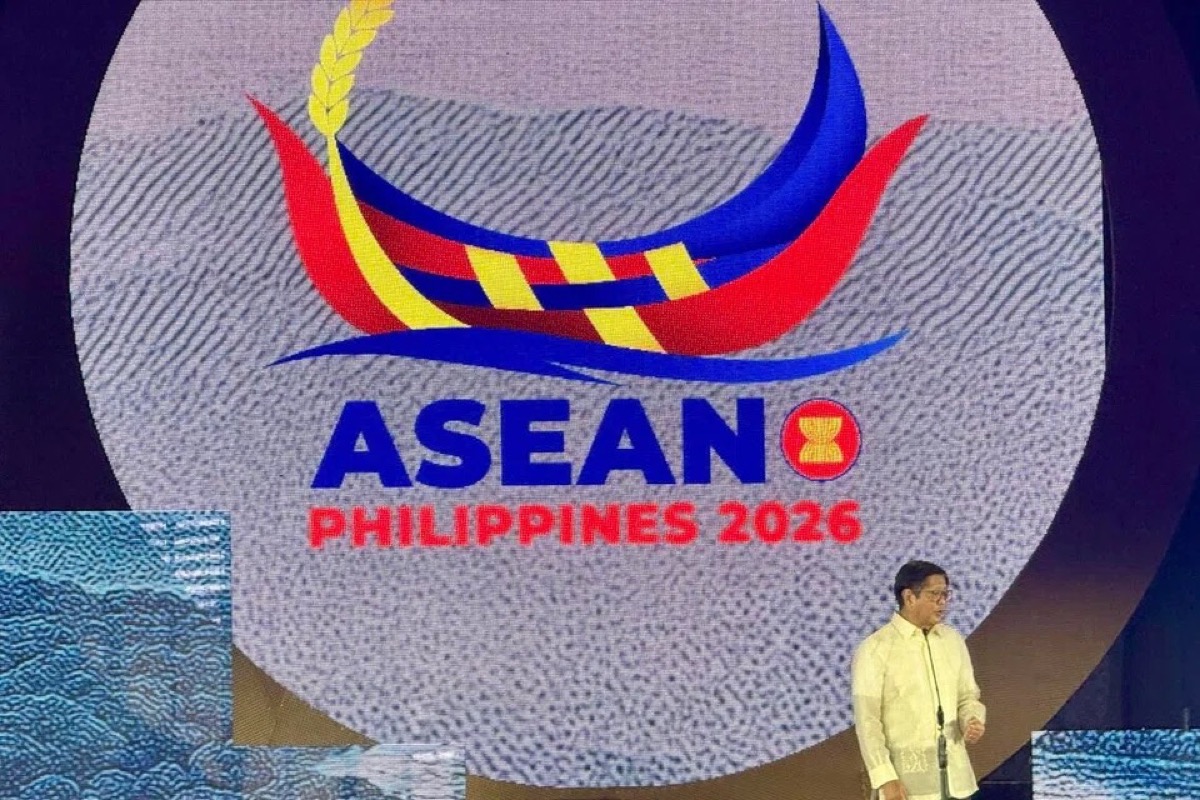
Philippine President Ferdinand Marcos Jr delivering a speech at the launch of the country’s chairmanship of Asean for 2026, at a ceremony in Manila on Nov 14. (Photo: The Straits Times)
The Philippines takes on the rotating ASEAN Chairmanship at a critical time for the region. Its term coincides with the 50th anniversary of the 1976 Treaty of Amity and Cooperation, the foundational treaty of ASEAN. Upholding ASEAN values in a more turbulent regional and global landscape has become more difficult but all the more indispensable.
Headwinds and rough waves
Disturbing developments and trends have given cause for alarm. Rising protectionism, the weaponization of economic interdependencies, the erosion of multilateralism, and the bifurcation of supply chains are upsetting globalization and trade liberalization that long benefited the region. A bias toward bilateral trade deals may diminish ASEAN's collective weight and make individual members easy targets for major trade partners. This may lead to opaque, less advantageous deals in which eleven members try to undercut each other rather than negotiate as a bloc, which can give them more bargaining power to set some basic minimums. The emergence of disruptive technologies and the lack of agreed standards and norms for their use may privilege technologically advanced countries and make ASEAN a mere rule-taker rather than a rule-shaper.
Attempts to upset the status quo in long-running regional flashpoints like the South China Sea, border spats leading to violence and displacement, and the persistence of conflict and instability in Myanmar that bred industrial-scale transnational crimes like fraud and illegal gambling call into question ASEAN’s responsiveness. The adverse effects of climate change on agriculture and how it amplifies natural disasters require serious, sustained, long-term measures, including accelerating the adoption of green energy and mobility. Increasing the share of renewable energy, such as solar and wind, and switching to electric vehicles can help reduce greenhouse gas emissions. Escalating great power competition, the expansion of strategic and security groupings like BRICS+ and Shanghai Cooperation Organization, and the progress of security minilaterals like Quad test the cohesion, centrality, and relevance of ASEAN.
Given this context, will ASEAN be just one of the many options for its members, rather than the default fundamental one to begin with? Will it be just one of several hats that parties can wear when it suits them, and set aside if it does not? If member states are stars, ASEAN may just be one of several competing constellations out there in the evening sky, not necessarily the brightest and most appealing all the time. Such a view may raise questions about the commitment each member has to the organization. Frustration with the ASEAN Way and its gradual consensus-based approach may sow contempt, but ASEAN is one of the most enduring and successful regional bodies, and that should not be taken for granted as members hedge and diversify their options in an increasingly complex and uncertain world. ASEAN’s ability to withstand internal and external pressures and remain a key architect in the region’s evolving security and economic landscape will be tested.
Reforming, recommitting to, and reinforcing ASEAN processes and mechanisms are crucial in weathering the storm. Reaching out to and expanding its pool of partners and network should be continued. The ASEAN-led Regional Comprehensive Economic Partnership (RCEP) is growing, with Hong Kong, Bangladesh, Sri Lanka, and Chile showing interest. Under Indonesia’s leadership in 2023, ASEAN entered into cooperation agreements with the Pacific Islands Forum and the Indian Ocean Rim Association. This year, during Malaysia's stint as Chair, the first ASEAN-China-Gulf Cooperation Council Summit was convened. Such efforts should be sustained.
Sailing together
As the 2026 ASEAN Chair, the Philippines adopted the theme, “Navigating Our Future Together.” It is a fitting theme, recognizing the challenges ahead and the need to stay together to reach a unified success. The opportunity to elevate its national priorities is too good to pass up. However, Manila understands it is unwise to allow a single issue to dominate its stint. It cannot host friends from near and far and hold a banquet with only seafood on the table. Hence, rightfully, it set a broader agenda centered on 3Ps: Peace, Prosperity, and People. These correspond to ASEAN’s three Community Pillars – Political-Security, Economic, and Socio-Cultural. The country aims to fortify peace and security anchors, strengthen prosperity corridors, and advance people empowerment.
In the realm of peace, the country will promote dialogue and cooperation on regional security. It will advocate for the responsible and ethical use of emerging technologies, including artificial intelligence. It will push for strengthening ASEAN’s capacity to respond to new and evolving challenges, leveraging tools such as AI for early warning, maritime domain awareness, humanitarian assistance, and disaster response. The conclusion of the Code of Conduct will be an aspiration. For that, relations with key coastal states will be crucial. The nature of the COC also matters. There is already a non-binding 2002 Declaration of Conduct (DOC) that has been overtaken by so many developments, and can no longer maintain order and stability in the hotspot. Manila and other littoral states may not be keen to see another similar instrument.
On the situation in Myanmar, Philippine President Ferdinand Marcos Jr. appointed Secretary of Foreign Affairs Maria Theresa Lazaro as Special Envoy. She got instructions to pursue a “constructive, principled, inclusive approach to supporting the people of Myanmar” to reach “peace, stability and reconciliation” anchored in her mandate and the Five Point Consensus. Instability in one member afflicts the entire neighborhood. Scam and fraud hubs in border areas undermine ASEAN's international reputation, cast doubt on the organization’s ability to deal with transnational non-traditional security threats, and adversely affect tourism. Such cross-border criminal enterprises target victims in ASEAN, China, and beyond. More law enforcement cooperation has to be done to address this common scourge.
For the second P, Prosperity, the Philippines aims to deepen economic integration through innovation and sustainability. Manila seeks to build a digitally empowered community by promoting the adoption of AI for trade facilitation, digitalization, and innovation. The country will champion more support for micro, small, and medium-sized enterprises (MSMEs). Unlike big multinationals or regional conglomerates, MSMEs are less familiar with new and complex trade rules opened by RCEP or ASEAN-China Free Trade Agreement (ACFTA) 3.0 upgrade. Capacity building is important to help them become more confident in subscribing to these rules, so they can better benefit from these multilateral trade pacts. If under Malaysian Chairmanship, ASEAN upgraded its FTA with China to cover new areas like the green and digital economies and MSMEs, the Philippines may target the signing of the ASEAN-Canada FTA. A regional framework on semiconductors and critical minerals is also on the table, as these two sectors got enmeshed in geopolitical contestation. Another expected deliverable is the signing of the Digital Economy Framework Agreement (DEFA). This may help set the stage for expanded cross-border digital transactions using local fintech solutions and local currency to mitigate exchange volatility. Platforms and rules should be harmonized to facilitate this.
For the third P, People, the Chair hopes to uplift the lives and resilience of the ASEAN people. It will champion the responsible use of AI to enhance healthcare, education, youth empowerment, access to essential services, and promote creativity. Technology should serve humanity, help improve governance, boost commerce and ease people’s lives. At the same time, the risks they carry demand investments in cybersecurity and regulation.
As a founding member, the Philippines hopes to be a responsible Chair. It wants to contribute to achieving the ASEAN Community Vision 2045, a Southeast Asia that is economically vibrant, resilient, connected and integrated, people-centered, and actively pursuing sustainable development.
*Remarks delivered during the International Seminar on “Reimagining ASEAN for the Future: Navigating Regional and Global Dynamics in a Multipolar World” held in Jakarta last November 27, 2025 and organized by The Habibie Center
