
Quotas may seem appealing to EU politicians under domestic pressure. In reality, however, they are a counterproductive move that will hurt European consumers, damage multilateralism and deliver none of the lasting industrial security Europe claims to seek.
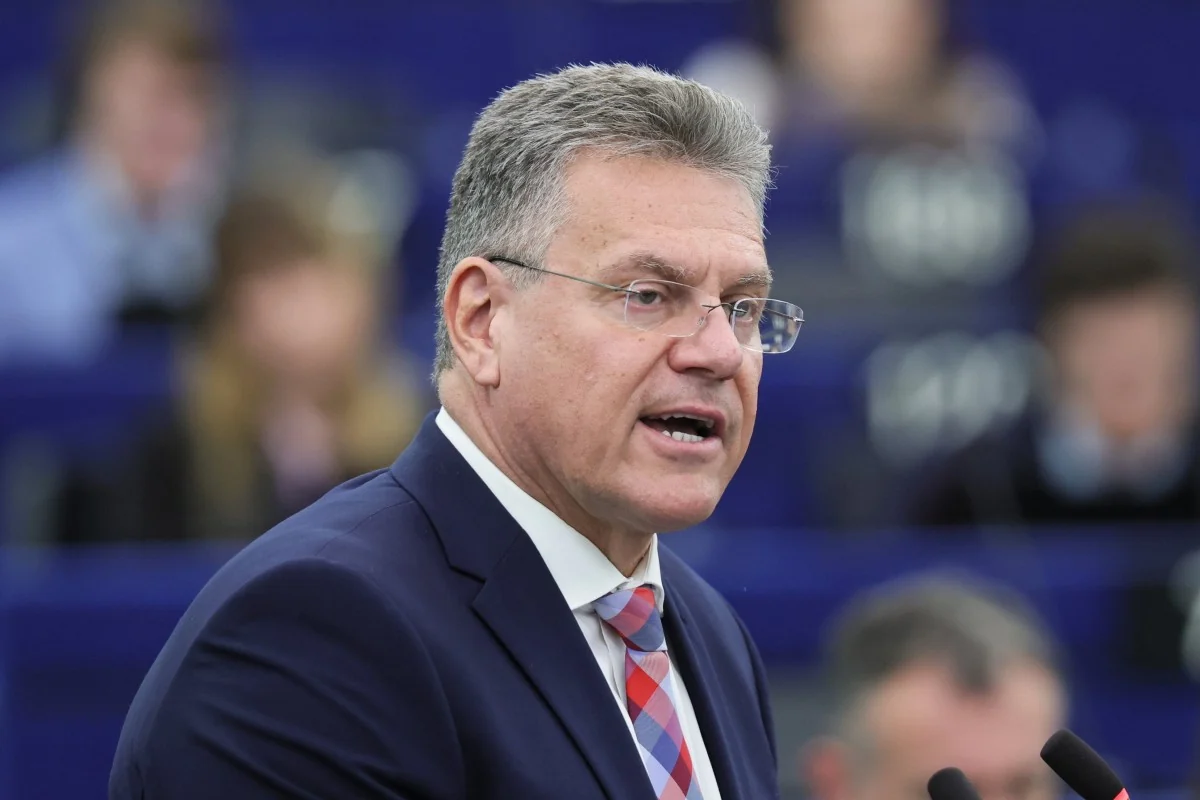
EU trade commissioner Maros Sefcovic says the bloc could impose quotas or tariffs on more Chinese industries before further negotiations with Beijing. (Photo: EPA)
Against a backdrop of global frictions, the European Union is rolling out a sweeping trade-containment strategy aimed at China.
Taking its recent deal on Chinese hybrid-vehicle exports as a template, the EU plans to push targeted country-specific import quotas covering chemicals, industrial machinery, plastic products and a wide range of other Chinese manufactured goods—with chemicals and industrial machinery singled out as priority sectors for protection.
At the same time, it is advancing a so-called trade kill switch—a French-German-driven mechanism, endorsed in principle by EU leaders, that would allow rapid, unilateral curbs on imports and even bring on the rejection of Chinese companies from the bloc’s market and without the procedural safeguards mandate by the World Trade Organization.
The public case of Brussels rests on three arguments:
First, the measures are framed as a response to structural trade imbalances and alleged overcapacity. They point to a goods deficit with China of more than $1 billion a day. Under this view, state-backed Chinese industries are flooding European markets at prices that domestic producers cannot match, and quotas serve as a containment instrument to cap market-share gains before European sectors enter irreversible decline.
Second, quotas are preferred to anti-dumping duties as a lower-risk lever to force China into bilateral talks and to give Chinese companies an incentive to shift assembly onto EU soil. This turns the bloc’s market access into a bargaining chip that could reshore jobs.
Third, the agenda is folded into an economic security narrative with supply-chain diversification. Paired with the kill switch, quotas would enable the bloc to reduce concentration risks quickly, even before any unfair trade evidence is presented.
Politically convenient as all these justifications may be, the EU framework, as it is intended, blatantly three rules of the World Trade Organization:
First of all, it reverses the verified material-injury principle. Under the WTO Safeguards Agreement, any quota or tariff increase must be preceded by a full, transparent, evidence-based investigation proving that surging imports have directly caused serious injury to domestic industry—in other words,” injury first, restriction second.” However, the EU's proposed mechanism flips this logic by imposing preemptive caps on Chinese goods without completed injury verification, relying instead on unsubstantiated claims of "overcapacity threats.” That removes the procedural bottom line of multilateral trade remedies, turning rules-based governance into arbitrary political intervention.
Second, it breaches the most-favored-nation principle, the cornerstone of the global trading order. WTO rules, notably GATT Articles I and XIII, explicitly prohibit targeted suppression of individual members. Import restrictions must apply equally to all foreign suppliers. Yet China-specific tariffs—the use of the EU’s new playbook, for example, —which is designed to curb Chinese industrial goods while leaving competing sources unrestricted. This sets a dangerous precedent of selective trade suppression disguised as safeguard action.
Third, it violates the proportionality principle. because WTO discipline requires trade remedies to be limited to the minimum scope necessary to offset proven injury and prohibit their use as long-term tools to contain a trading partner's industrial upgrading process. The EU’s blueprint—stretching from automobiles to chemicals, machinery, plastics, wind turbines and pharmaceuticals. These are paired with an open-ended emergency bypass mechanism that plainly fails the test.
For decades, the EU has presented itself as the principal champion of the rules-based multilateral trading system. If it presses ahead with this quota expansion and emergency kill switch, it surrenders that normative standing and invites others to copy the same discretionary playbook.
The plan also runs afoul of the EU’s own commitments. At the second China-EU trade and investment consultations on Oct. 8-9, both sides agreed to address trade differences within the framework of WTO rules. Preparing country-specific quotas when the joint outcome was announced puts the EU in an untenable position, corroding trust with Beijing and with the wider. WTO membership (watching always for precedents).
The EU's logic has already been tested and found wanting. On Oct. 22, the commission formally repealed the anti-dumping and countervailing duties imposed on Chinese solar glass since May 2014—a 12-year verdict that could hardly be more damning.
Back in 2014, Brussels slapped up to 84.2 per cent of combined duties on Chinese solar glass, claiming the move was intended to save local industry. The tariffs cut China's share of the EU market share from roughly 30.5 percent at the original investigation to about 3 percent. And yet the bloc's last two scaled producers ceased production in 2025.
The result was textbook lose-lose. Sheltered behind tariff walls, European manufacturers lacked competitive pressure to innovate, while high energy costs and downstream atrophy sapped demand. European solar installers and consumers paid inflated prices for green components, weakening the bloc's renewables industry and slowing its own energy transition. Not a single uncompetitive industry has ever been nurtured into competitiveness by trade protection in the long run—and 12 years of EU solar-glass tariffs are the latest exhibit.
EU policymakers argue these costs are worth bearing, warning that unchecked Chinese exports will close factories, shed jobs and feed populism. But this narrative misdiagnoses Europe's industrial strains. Many of the EU’s competitive ills are self-inflicted (persistently high energy prices, glacial permitting for green projects, rigid regulation and lagging investment, to mention just a few). Import quotas fix none of those structural weaknesses. Rather, they merely postpone hard reforms while passing the bill to European consumers and downstream manufacturers. Nor can Brussels assume Beijing will absorb these curbs passively. As China's commerce minister has signaled, countermeasures targeting European goods are a predictable response.
The EU has a legitimate right to raise its trade concerns with China. The proper forum remains the WTO dispute-settlement system, not preemptive, country-targeted quotas designed before harm is proved. The quota gambit may look appealing to EU politicians under domestic pressure. In reality, however, it is a self-defeating move that will hurt European consumers, damage multilateralism and deliver none of the lasting industrial security Europe claims to seek.
