
A recent trade agreement between China and the European Union offers a temporary reprieve, but deeper economic tensions and geopolitical mistrust continue to strain the relationship. Beijing must take European concerns more seriously, while Brussels should pursue a less confrontational approach. Moving beyond short-term concessions toward mutually beneficial partnerships will be essential to preserving market access, rebuilding trust, and establishing a more sustainable economic relationship.
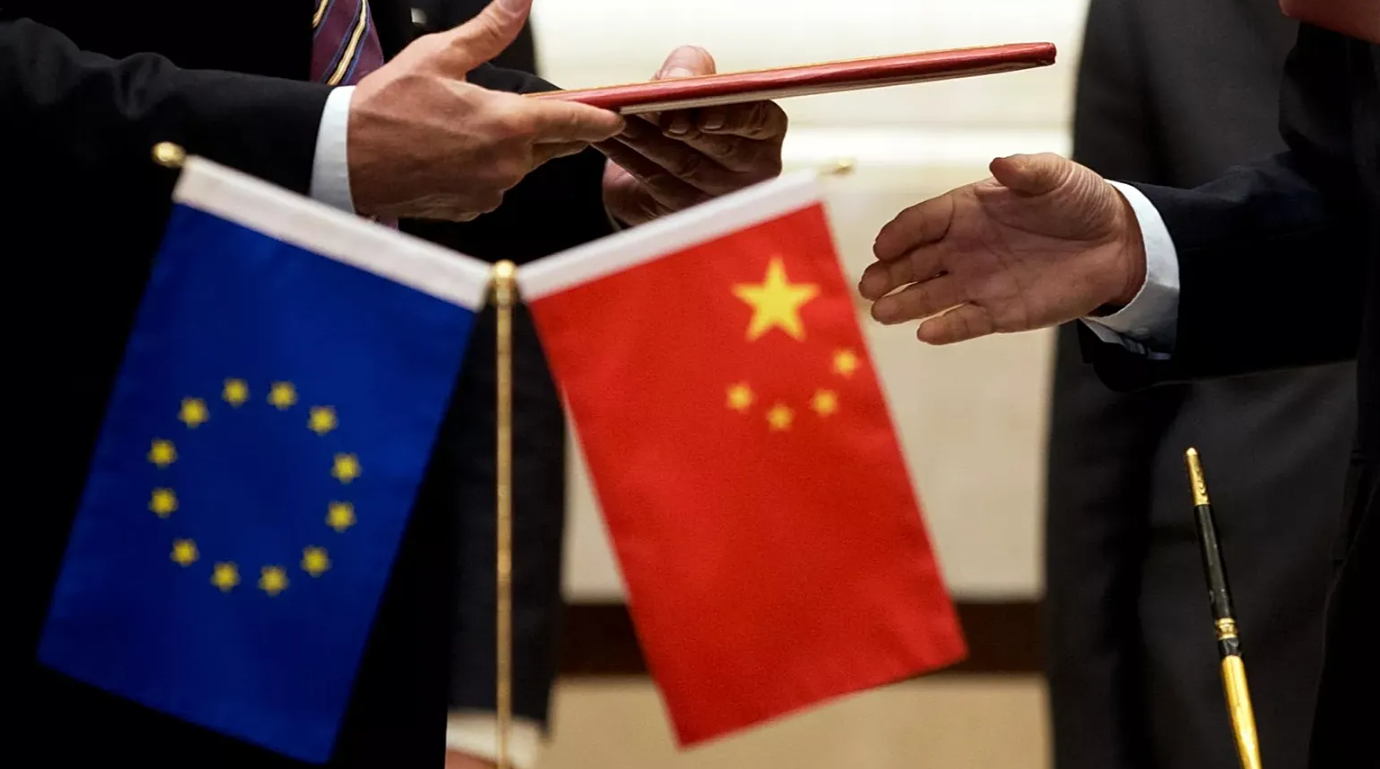
In early October, China and the European Union (EU) arrived at a landmark trade agreement, after rounds of protracted and at times heated negotiations. Beijing agreed to cap the country’s exports of electric vehicles to the EU at 350,000 cars per year, thereby reducing projected market share by 50% over a four-year period.
The undergirding complaint was by no means new: EU officials are convinced that the trade deficit between the bloc and China has been to the detriment of its manufacturers and wider national security interest – and had sought curbs from Beijing over its output of highly sought-after goods, such as electric vehicles.
If anything, the Chinese response was perhaps more surprising: after all, Chinese officials have long dismissed the narrative of “overcapacity” as a pretext for trade weaponisation and protectionism. Indeed, the Ministry of Commerce released a statement in July just this year, advocating a “comprehensive, objective, and fair view” on the “So-called Excess Capacity Issue” – discourse markers indicative of the state’s fundamental skepticism towards such charges.
One interpretation of the eleventh-hour agreement was that it reflected successful brinkmanship on the part of Brussels. After all, Beijing would prefer retaining at least some access to the European markets, as opposed to none. Whilst hardliners within the system had maintained that the Europeans were calling their bluff when it came to obstructing market access, more prudent and cautious voices eventually gave the greenlight for the compromise solution.
Persisting Underlying Issues
Yet the underlying issues remain. The EU’s production capacities in a range of advanced manufacturing goods – including electric vehicles, solar panels, and lithium batteries – range from near-non-existent to extant albeit heavily dependent upon imports. This is no small part due to significant overheads, such as bureaucratic hurdles, legal constraints, labour costs and compliance requirements. Yet many in Brussels would also point to the competitiveness of Chinese exports – whether they be the product of subsidies and proactive industrial policy is, in fact, fundamentally peripheral.
So long as this dynamic persists, downstream concerns pertaining to job losses, reliance upon foreign partners, and susceptibility to chokepoint weaponisation would thereby continually weigh down on the Sino-European relationship. Whilst some Chinese officials have sought to frame its widely available and affordable renewable exports as global public goods (there is indeed some merit to this view in abstract), this view has apparently not landed well with the European audience, especially senior bureaucrats and politicians in Brussels.
To see this, we need only to return to the roots of the recent debacle. By the end of this summer, long-standing rivals within the bloc, France and Germany, had arrived at an unusual level of alignment on trade policy concerning China. Spooked by the rise of the far-right exploiting the grievances of the unemployed and complaints from the industrialists in their respective countries, French President Emmanuel Macron and German Chancellor Friedrich Merz sent a joint letter to the European Union Commission President Ursula von der Leyen, advocating bloc-wide actions, such as the rapid retaliation and restriction of single-market access for “unnamed trade distorters”. Falling just short of naming any party, the letter was almost certainly referring to China – amongst other trade partners for the bloc.
That a deal had been arrived tentatively did not connote a fundamental resolution of the matters at hand. As of writing, EU leaders allegedly instructed Brussels to “urgently” devise measures aimed at containing the regional surge in imports from China across the board. Whether such rhetoric is a tactical play or a reflection of genuine sentiments is, of course, an independent and intriguing question. Whether such rhetoric will lead to Beijing making further concessions, too, remains to be seen.
Evaluating Beijing’s Assessment of European Grievances
Through conversations with my interlocutors in the mainland, I have come to hear two dominant interpretations of the European grievances.
The first posits that the mistrust between Beijing and Brussels is fundamentally geopolitical. Citing the tightening alignment between the EU and NATO in the aftermath of the Russian invasion of Ukraine, as well as broader overtures from Washington after the nadirs reached at the beginning of 2025, these voices hold that Brussels is likely playing hardball on trade not on economic or commercial grounds, but as a part of a broader “plot” to realign Europe with the U.S. geopolitically.
The second holds the opposite view, advocating a more pragmatic rethinking and moderation of China’s trade policy in exchange for continued market access to the EU. Champions of this view cite the necessity of the Chinese manufacturing base for many leading European firms, and flag that it would be in Beijing’s interest to accept a reduction in market share to keep at least some exports flowing. Given the sluggish domestic consumption levels and lacklustre property markets, keeping the doors open to the EU would be most conducive towards China’s meeting its growth target for the year.
In my view, there are issues with both assessments. The first view is correct in noting the deeper strategic mistrust undergirding existing trade disputes, though unduly deterministic in dismissing the prospects for a more conciliatory relationship between China and the EU. Beijing can and should do more to convince the European community that its support for Russia comes with reasonable caveats, and that it is willing and capable of playing a more constructive role for peace over Ukraine, provided the fulfillment of certain conditions. Critics may argue that the ship has long sailed, but as the war in Ukraine enters a potentially dangerous stalemate, the role of China as a possible mediator cannot be overlooked.
The second view is correct in pressing for a more pragmatic turn from China vis-à-vis its export economy. Yet it runs into the risk of ignoring the hardening public attitudes towards Beijing amongst European citizens, especially in Germany. Recent ECFR polling found that approximately 60% of Christian Democrat and Social Democrat supporters regard China as an adversary or rival. Whilst some may posit that support for such mainstream parties is increasingly flowing towards the far-right, which exhibits a more ambiguous – albeit potentially positive – stance on China, policymakers should be careful what they wish for. The rise of the far-right – and their entry into government – could well usher in an era of greater sociopolitical and economic instability in the EU, which in turn undermines the strategic cohesiveness and vitality of one of China’s most important markets.
Indeed, there is very little love lost between France’s Marine le Pen and China, as evidenced by her past statements.
There is hence a need for a more nuanced and carefully calibrated assessment of the bilateral relationship from China – one that takes seriously both the geopolitical and the economic, without overstating either’s importance.
Towards A More Constructive Modus Operandi?
There is no panacea for the fissures and tensions in the Sino-EU relationship.
Yet one thing can be known for sure – the existing pledges to reduce exports, whilst promising, are insufficient. Genuine value-sharing joint partnerships, between Chinese firms supplying technology and manpower, and European firms the local know-how, manufacturing capabilities, and rigour in application testing, are likely the only way out.
To the extent maintaining market access remains integral to Beijing’s export-driven political economy, its policymakers must learn that to “gain some” requires them to “give some”. Concurrently, European policymakers should try to frame their advocacy and proposals through language that is less explicitly hostile – thereby paving the way for more moderate actors within the Chinese system to respond constructively, as opposed to pushing them into a corner where they have no alternative than to toe the hard line.
The tango is by no means easy. Yet to avoid mutual losses, both sides must get used to the new groove – fast.
