
The future of global trade is unlikely to feature a reformed and revitalized WTO. Instead, we face a fragmented landscape defined by geopolitical blocs and competing regulatory spheres.
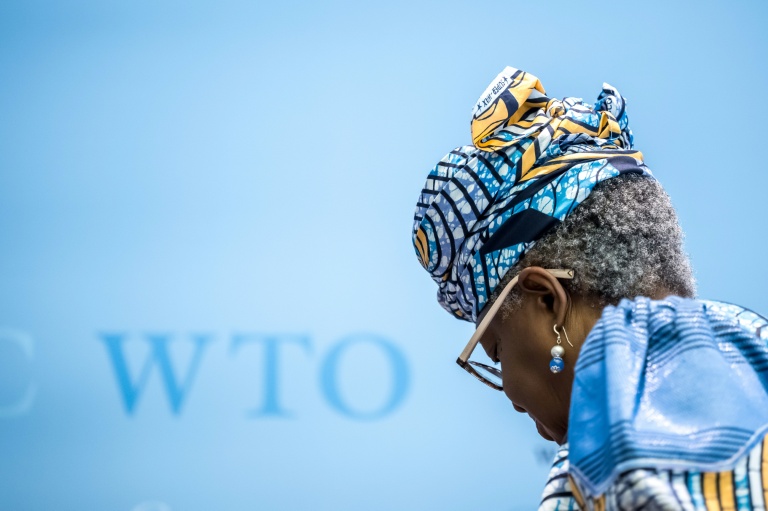
World Trade Organization (WTO) Director-General Ngozi Okonjo-Iweala has urged the ministerial conference to launch the next chapter of multilateral trading at a press conference on WTO's latest Global Trade Outlook and Statistics report at its headquarters in Geneva, Switzerland, March 19, 2026. (Photo: Xinhua)
The multilateral trading system centered on the World Trade Organization has passed its zenith. For the foreseeable future—a decade or more—the present era may well represent the height of its influence. The institution will not disappear, but neither will it regain the centrality it enjoyed between 1995 and 2015. What is emerging from today’s erosion is a more fragmented, geopolitically charged and less uniformly regulated global trade landscape. The architecture as we had known it has crumbled. What remains will still bear the WTO name, but it will be a fundamentally different entity.
The rules-based order that boosted decades of unprecedented global economic integration is now being dismantled by the very nations that designed it. The United States and the European Union, once regarded as the chief architects and guardians of the system, have become its most formidable challengers.
America’s assault
The most direct catalyst for the WTO’s decline is Washington’s embrace of aggressive unilateralism. In its pursuit of “reciprocal and balanced” trade, the United States has turned openly hostile toward the institution, viewing it as a constraint to be overcome. The multilateral rulebook has shifted from a framework for cooperation to a straitjacket limiting its power and the pursuit of “America first” objectives.
This philosophy has been translated into the weaponization of trade policy. Section 301 tariffs, imposing punitive duties on some 60 trading partners, exemplify Washington’s effort to construct a U.S.-led trade order that competes with—and undermines—multilateral rules. The move blatantly circumvents the WTO’s dispute settlement mechanism. Moreover, by replacing the world body’s foundational principle of most-favored-nation treatment with a self-defined concept of “fair” or “balanced” trade, the United States has struck at the core of the non-discriminatory system.
One of Washington’s most corrosive policies is its abuse of the national security exception. GATT Article XXI was conceived as a narrow safety valve for fissile materials, arms traffic and times of war or emergency—not for ordinary commercial competition. Yet Washington has transformed this exception into a universal tool of economic statecraft, applying national security logic to an ever-expanding list of imports: steel and aluminum, AI chips, semiconductor manufacturing equipment, grid transformers, inverters, energy storage systems and drones. The exception now swallows the rule, converting a rule-bound provision into a rule-making privilege. In short, the WTO has retreated from a code that binds great powers to a text that constrains only the small.
Crucially, the damage extends far beyond America’s share of world goods trade. Rules are upheld not solely by trade volumes but by the belief that powerful nations obey them. When the powerful flout the rules and invent a 25 percent chip tariff under the guise of security, the trade that remains operates on sufferance alone, not law. Credibility erodes steadily, then suddenly plunges to a drastic new low.
Europe’s softer dismantling
While the United States attacks the multilateral system head-on, the European Union engages in a subtler—but equally damaging—form of soft dismantling. Brussels constructs parallel standards that implicitly displace multilateral discipline even as it continues to praise the WTO in ministerial speeches. The Carbon Border Adjustment Mechanism—a unilateral climate charge imposed on foreign producers before any international agreement on carbon measurement was reached —epitomizes this approach. The anti-subsidy investigation into Chinese electric vehicles, culminating in countervailing duties imposed through Brussels’ own process rather than a WTO ruling, further illustrates the trend. The “de-risking” agenda, meanwhile, serves as a softer version of the national security argument, justifying import restrictions, investment screening and supply chain reordering in the name of economic security.
The deeper issue is that the EU is building a parallel system of trade governance outside the WTO discipline. The Foreign Subsidies Regulation empowers Brussels to investigate and block mergers and public procurement bids involving companies that have received foreign subsidies—even where those subsidies have never been challenged at the WTO. The Critical Raw Materials Act and Net-Zero Industry Act contain local content and procurement preferences that discriminate against foreign producers, justified not through WTO-compatible exceptions but through an open appeal to the EU’s “strategic autonomy.”
China’s restraint
China, as the world’s largest goods exporter, has compelling reasons to defend the multilateral system, but it operates from a structurally disadvantaged position. If Beijing grants Washington zero-tariff treatment in a bilateral deal, for instance, Article I of the GATT requires it to extend that concession to all 164 other members. The United States, acting outside the WTO, bears no such obligation.
Geopolitics also limits China’s ability to lead new multilateral rulemaking. Beijing is frequently the primary target of unilateral measures from both Washington and Brussels, leaving it in a constant defensive posture. Meanwhile, Chinese-led proposals, even economically sensible ones, are viewed in Western capitals through the lens of strategic competition: If Beijing supports a rule, their assumption follows that it benefits China and should therefore be resisted.
Paralysis within
The combined effect of this transatlantic shift has induced profound paralysis. The WTO now suffers from a dual failure of its core functions— judicial and legislative.
The dispute settlement system, once hailed as the crown jewel of multilateralism, provided a binding and impartial mechanism for resolving trade disputes. Today it is defunct. For years, the United States single-handedly blocked the appointment of new appellate judges, which has deprived the body of the ability to hear appeals since late 2019. Washington’s objective is not reform but the reclamation of sovereign power it believes was ceded to an unaccountable international tribunal.
The WTO’s negotiating function is in a similar state of atrophy. The Doha Round remains unfinished after nearly a quarter-century, and even the more modest negotiation on fisheries subsidies yielded only partial results after two decades. The March 2026 Ministerial Conference could not even agree on a ministerial declaration—a stark illustration of the institution’s comprehensive disarray.
Managed decay, not collapse
The multilateral trading system will not vanish altogether. Many smaller economies continue to rely on WTO tariff bindings, transparency rules and the Trade Policy Review Mechanism. Much of global trade still occurs under at least nominal WTO coverage. But as the United States and the European Union are observed going down the unilateral and protectionist path, the institution’s role is morphing into a platform for plurilateral deals and becoming a custodian of baseline commitments, rather than a forum for universal rulemaking and binding enforcement.
Critical new frontiers—digital trade, data governance, green industrial policy—are being carved up in competing regional blocs and unilateral regulations, further sidelining the WTO.
The future of global trade is therefore unlikely to feature a reformed and revitalized WTO. Instead, we face a fragmented landscape defined by geopolitical blocs and competing regulatory spheres. The era of hyper-globalization, driven by a singular focus on efficiency, is over. It is being replaced by a security-first logic in which resilience and political alignment are valued over cost.
This is not a prediction of total collapse but a description of managed decay. The familiar system is gone forever. What is emerging is a patchwork of competing rules, alliances and standards where market principles are consistently subordinated to the dictates of geopolitics. In this new reality, today’s weakened multilateralism may indeed be the best we will see for a long time to come.
