
Partisan polarization, electoral pressures and factional strife function together, driving Trump to take a tough stance abroad as his main tool in his political gamesmanship.
As Trump’s second term in office passes its first anniversary, he has been ordering tougher and more arrogant actions abroad. Diplomacy is a continuation of domestic politics and starts from within a country. Trump is no exception. His foreign actions are driven by numerous domestic factors. Mapping these drivers is relevant in analyzing the potential direction and impact of his policies.
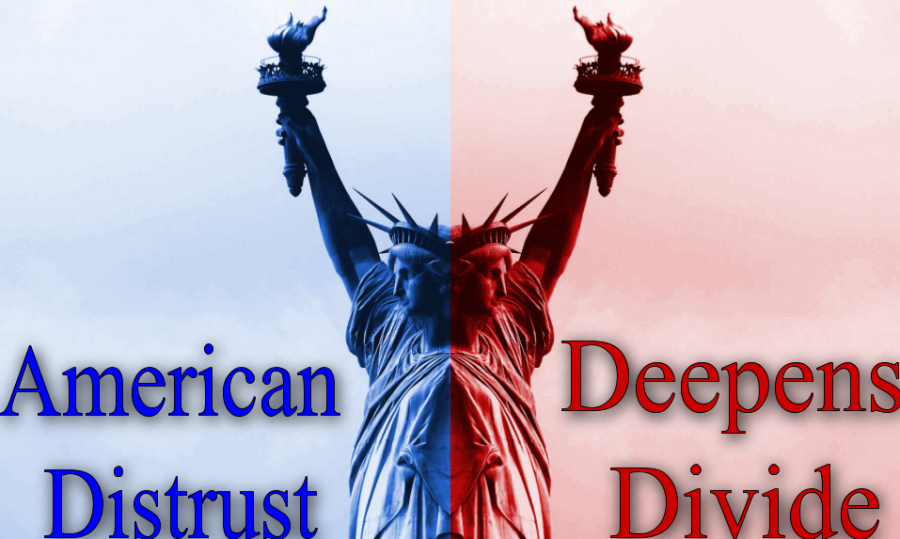
Partisan polarization, electoral pressures and factional strife function together, causing Trump to take a tough stance abroad as his main tool in political gaming. The 2026 midterm elections are on the horizon, which is the overarching political backdrop for Trump’s recent domestic and foreign policy actions. Despite appearing impulsive and unbridled, he has been hit with a string of setbacks, including the Jeffrey Epstein case, Republican losses in multiple local elections and a “betrayal” by once staunch allies. With declining domestic approval ratings and rumors of Trump’s poor health, Republican election prospects appear dim. Further, the party winning the presidential election typically does suffer in midterm elections.
If this pendulum effect manifests itself once again—and with the Democrats, driven by a desire for revenge, launching an all-out offensive—Trump’s second term will likely enter into garbage time earlier than expected. What worries Trump even more is that a major midterm defeat could lead to another impeachment and an ultimate trial. Adopting a hard-line foreign stance and even launching successive overseas military adventures helps shift the narratives in domestic political discourse and divert public attention from the president’s slumping popularity. It’s a political tactic used by many U.S. presidents in the past.
While Trump is known for his strong personality and instinctive decision-making, his foreign policy approach is still fundamentally driven by behind-the-scenes forces. American society is often the deep-seated source of government policy decisions. Trump’s Darwinist social worldview and his attempts to seek territorial annexation abroad are deeply influenced by the interest groups that have traditionally supported the Republican Party.
The fossil energy and military-industrial interest groups are prominent examples. During the 2024 presidential election, major fossil energy corporations provided huge financial support for the Trump campaign. Political donations from companies such as ExxonMobil and Chevron alone accounted for 12 percent of his total campaign war chest. In return, Trump overturned the previous administration’s clean energy policies, withdrew from the Paris agreement twice, banned new photovoltaic and wind power projects and revoked offshore drilling moratoriums to remove restrictions on the oil and gas industry. Since the U.S. became an energy exporter, energy groups have been increasingly involved in the country’s diplomatic strategy. Energy capitalists’ pursuit of profits around the world has directly driven Trump to play hardball to remove obstacles, targeting Venezuela and Iran first.
The influence of the military-industrial complex on Trump is even more enduring. During his first term, Trump made increasing military spending and strengthening America’s armed forces a key part of his security strategy. Since the start of his second term, he has not only loudly announced a 50 percent increase in military spending (to $1.5 trillion) but also frequently resorts to arms sales and military aid in multiple policy areas such as the Russia-Ukraine conflict, the Middle East and Taiwan to repay the military-industrial complex for its financial and political support.
Data from the Armed Conflict Location and Event Data Project (ACLED), which tracks global conflict activities, says Trump has ordered 573 air and drone attacks on the territory of other countries over the past year. Stephen Miller, Trump’s deputy chief of staff, has openly stated that the current administration’s decisions merely reflect a real world “that is governed by strength, that is governed by force, that is governed by power.”
Obviously, Trump’s hard-line foreign policies are aligned with the profit-seeking demands of the military-industrial complex, and this has been an essential tactic for the Republican Party to secure its traditional constituents and create a cycle of political and economic interest. Gunboat capitalism resounds again in the 21st-century United States.
The erosion of domestic political checks and balances in the U.S. has provided room for Trump’s unbridled foreign policy. On one hand, against the backdrop of an unprecedented partisan divide and deep social rifts, Trump’s disregard for rules and unrestrained pursuit of self-interest in foreign affairs have not hindered the support of his hardcore base and nearly half of the general public. Reactions to his actions against Venezuela are almost evenly split between support and opposition within the U.S., further emboldening Trump’s recklessness.
On the other hand, the checks and balances that influenced Trump’s governance during his first term have all but disappeared in his current term. Congressional oversight, intraparty checks and the voices of the establishment appear to have little impact on Trump’s foreign policy decisions. Both the Democratic camp and the diplomatic and security elite are mostly angry, and yet powerless in the face of Trump’s arbitrary actions. Trump is also adept at labeling the profiteering by specific capital groups as national interests, consolidating populist support with a strongman image and suppressing opposing forces with tools of state power at his disposal, thereby gradually hollowing out the existing political mechanisms of checks and balances.
Behind Trump’s neo-imperialist acts—constantly breaking rules and seeking to annex foreign territories—lies the inevitable result of deepening political polarization and worsening institutional decay in the United States.
In May 2023, Hillary Clinton expressed her anxiety about the prospect of Trump returning to the White House, arguing that the latter’s leadership style would pose a severe threat to American institutional stability. Just one year into his second term, Trump has greatly expanded executive power domestically and acted with growing recklessness abroad. He has significantly shaken the foundation of America’s existing institutions and its global dominance.
