
Over the past year, territorial expansion, military intervention, economic coercion, resource plundering and withdrawal from international agreements have become hallmarks of Donald Trump's imperialism. He is expected to continue to pursue more in the days to come.
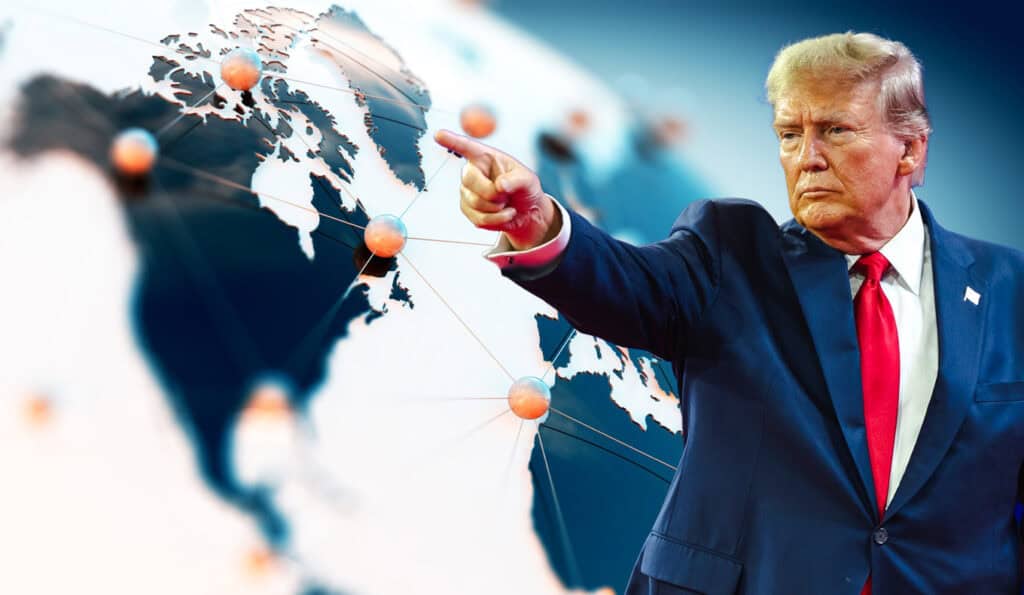
The attack on Venezuela by the United States and the arrest of President Nicolas Maduro and his wife have laid bare the aggressive and subversive nature of Donald Trump’s foreign policy. It reflects clear imperialist tendencies and signals that Trump will not stop there.
Over the past year, territorial expansion, military intervention, economic coercion, resource plundering and withdrawal from international agreements have emerged as the five pillars of Trump’s imperial ambitions. The world should expect him to continue this pattern in the days to come.
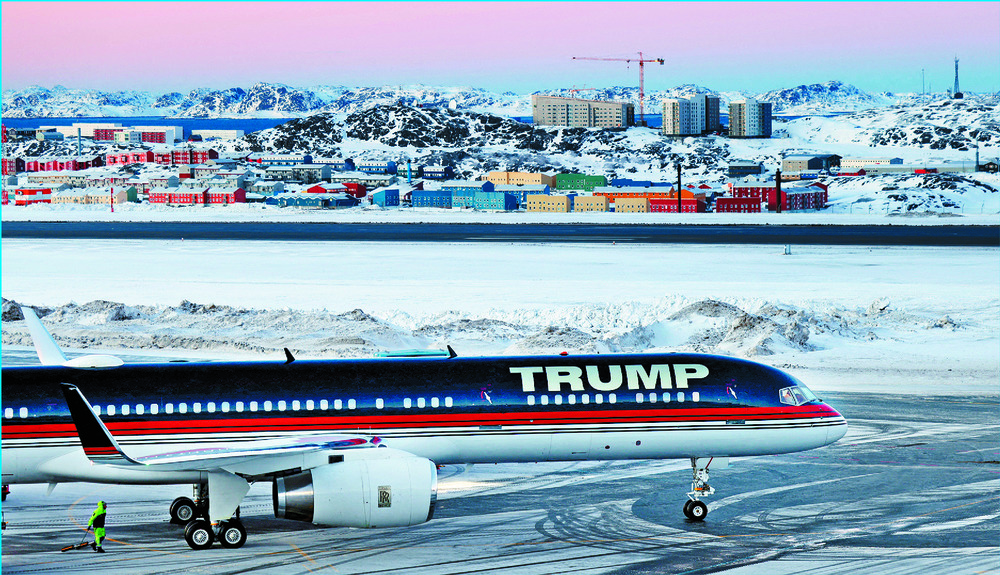
For example, Trump has repeatedly stated his desire to acquire Greenland and, until recently, suggested that he wouldn’t rule out military force to do it. Washington could theoretically pursue control of the island in three ways: financial inducements to the local population, direct purchase or military action.
Under the first scenario, an estimated $5.7 billion would be needed if each of the approximately 57,000 residents were offered $100,000. While this sum is not prohibitive for Washington, most of the island’s residents oppose joining the U.S. On Jan. 12, the local government issued a statement affirming that it would not accept a U.S. takeover of Greenland under any circumstances.
If Washington were to purchase the island, it would likely need to pay the Danish government between $700 billion and $1 trillion, or possibly even more. Denmark, however, has explicitly refused to sell Greenland, and within the United States, raising such amounts would face significant domestic opposition. Potential financing options might include issuing national debt, adjusting the fiscal structure or using expected revenue from the island as collateral. However, additional debt issuance would further inflate the U.S. federal deficit, while tax increases and spending cuts would encounter strong domestic resistance. Meanwhile, the anticipated returns from the purchase are highly uncertain.
More important, such a massive expenditure and related territorial changes would require the approval of a majority of Congress. But Congress is currently deeply divided on this issue, with disagreements even within the Republican Party.
Resorting to military force would entail even higher political and economic costs, potentially leading to the collapse of NATO. Such an outcome would deal a structural blow to Washington’s global alliance system and strategic posture while severely damaging its international standing. Further, Greenland suffers from severe infrastructure deficiencies and remains heavily dependent on external assistance. This means that even if the U.S. were to acquire the island, it would have to provide approximately $1 billion annually in subsidies and invest hundreds of billions of dollars in developing local transportation networks, healthcare facilities and communication infrastructure to enhance its strategic responsiveness.
Military intervention
According to data from U.S. institutions, within the first year of Trump’s return to the White House he launched nearly 600 unilateral military strikes on foreign soil. While the frequency of the administration’s foreign military interventions this year remains difficult to predict, several plans currently under consideration suggest that the intensity will certainly exceed that of 2025.
Iran appears to be the most likely target. On Jan. 14, Trump addressed Iranian anti-government protesters, declaring that “Help is coming.” Should the administration decide to launch a military strike against Iran, the scale and intensity of the operation would likely exceed last year’s strikes on Iranian nuclear facilities, and one cannot rule out the possibility that the operation would evolve into attempt at regime change.
Iran is a regional political and military power, and Supreme Leader Ali Khamenei commands a vast religious following. As a result, the outcome of a U.S. military intervention would be unpredictable. Any slight misstep could draw Washington into a deep and prolonged entanglement. This risk may help explain Trump’s recent hesitation.
Cuba is another potential Trump target. After the attack on Venezuela, the Caribbean Island has come under immense external pressure from the United States even as it grapples with internal hardships caused by shortages of money and oil. Trump recently issued several stern warnings to Havana, and some organizations estimate a 25 percent probability of a direct U.S. military strike against the country in 2026—the highest level in nearly a decade.
However, Cuba is no ordinary country. Its organizational capacity, military capabilities and will to resist are exceptionally strong, and ever since the failed Bay of Pigs invasion in 1961 Washington has refrained from undertaking large-scale military action there. Unlike Venezuela, Cuba cannot be expected to grant the U.S. easy access. Should Trump choose to strike, he must adopt a decisive, all-out military strategy, which would become a major historical event in the 21st century.
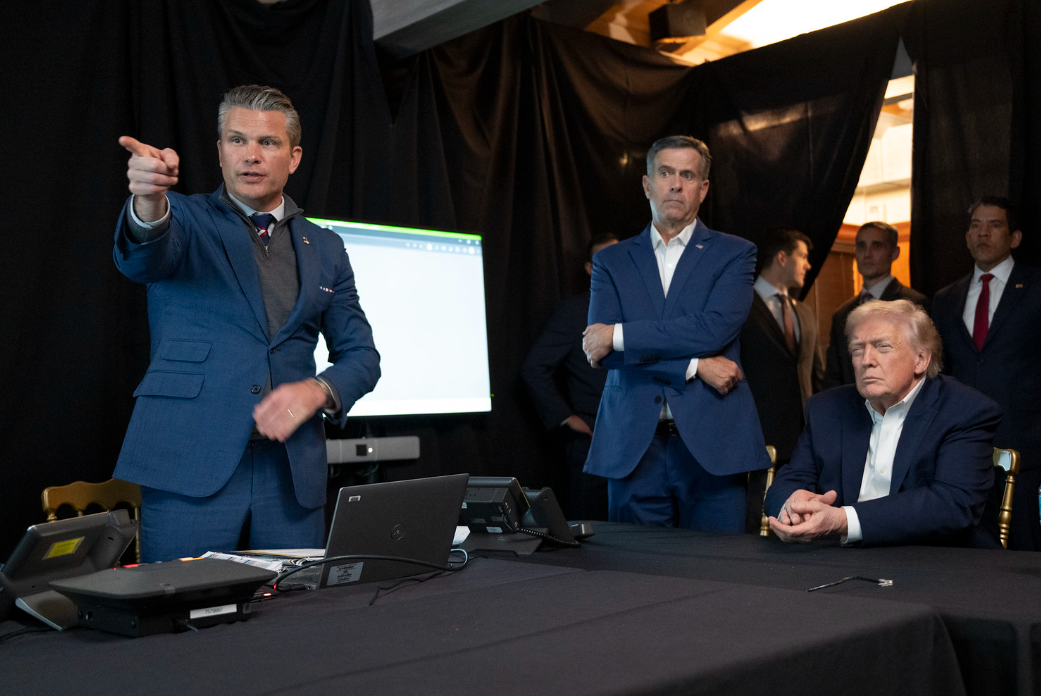
President Donald Trump monitors U.S. military operations in Venezuela, from Mar-a-Lago Club in Palm Beach, Florida, on Saturday, January 3, 2026. (Official White House Photo by Molly Riley).
Economic coercion (tariffs)
In April, the Trump administration announced plans to impose “reciprocal tariffs” at varying rates on all trading partners, allowing counterparties to secure tariff reductions by meeting U.S. demands. Since then, trade agreements have been negotiated and tariffs have become a central instrument of Trump’s foreign policy. Currently, public attention on tariffs has subsided somewhat because of geopolitical developments and Supreme Court rulings, but they remain a top priority for the administration.
This year, the primary constraint on Trump’s tariff agenda will be a pending Supreme Court ruling—an issue over which he has repeatedly expressed concern. The Supreme Court has yet to issue its ruling, but if the administration were to suffer a loss, it would likely resort to other laws to preserve its tariff regime.
The second focus will be trade negotiations with China. Given the administration’s current emphasis on stabilizing U.S.-China relations for broader strategic stability, it seems unlikely that Washington will take risks by escalating tariffs, although aggressive measures in other areas cannot be ruled out.
Its third priority is to push forward the implementation of trade agreements with the European Union, South Korea and Japan, update the USMCA and sign trade agreements with more countries. The U.S. and Europe are likely to engage in economic warfare in areas such as digital trade and the regulation of artificial intelligence. Finally, the administration is likely to expand targeted tariffs on specific industries and countries, such as semiconductors, robotics, polysilicon and pharmaceuticals.
It must be acknowledged that tariff negotiations have been complex and difficult, with their real-world impact falling short of expectations and generating greater backlash than anticipated. In particular, the lack of public support within the United States has dampened Trump’s enthusiasm for pursuing further tariff negotiations. The Supreme Court is unlikely to reject the administration’s policies entirely, but may mandate partial retention or withdrawal of certain tariffs. Coupled with factors such as economic expectations and the upcoming midterm elections, Trump may adjust some aspects of his tariff strategy, but he is unlikely to abandon it. Targeted tariffs on specific countries and industries may continue.
Resource plundering
Resource plundering is rooted in imperialism and colonialism. No old colonial power has ever refrained from it, leaving painful memories for developing countries. Since Trump’s return to the White House, he has plundered resources abroad with renewed vigor. In April, for example, Washington pressured Kyiv to sign a mineral resources agreement that provides U.S. companies with access to more than 55 minerals, including rare earth elements. This year, the administration is expected to push that agreement forward, regardless of developments in the Russia-Ukraine conflict.
With respect to Venezuela, Trump has explicitly tied U.S. involvement to oil, and said that America will manage Venezuela and its oil for years to come—primarily in four ways: controlling oil sales, taking over oil revenues, upgrading and expanding production infrastructure and implementing exclusive policies.
However, the effectiveness of this strategy remains to be seen. The current global oil market is generally oversupplied, Venezuela’s oil production facilities require large-scale upgrades, and U.S. oil companies lack sufficient incentive to invest in the country.
While aggressively pursuing resources globally, the Trump administration has secured access to critical minerals through agreements and alliances. In October, Washington reached framework agreements with Australia and Japan to secure the supply of critical minerals and rare earths, and memorandums of understanding were signed on critical mineral cooperation with Malaysia and Thailand.
In December, the administration launched the Pax Silica initiative, aiming to build a supply chain of critical minerals and energy, advanced manufacturing, semiconductors and artificial intelligence. Countries participating in the initiative include Japan, South Korea, Singapore, the Netherlands, the UK, Israel, the UAE and Australia. These agreements and initiatives are clearly exclusive in nature, with their primary purpose being the advancement of U.S. interests.
This year, while implementing these projects, the Trump administration is expected to plunder resources globally in a more aggressive manner. Reports indicate plans to invest in deep-sea mining, which clearly violates international law, including the United Nations Convention on the Law of the Sea, to which the U.S. is not a signatory.
Multiple withdrawals
Withdrawals were notable during Trump’s first term, but a significant shift occurred in his second. Previously, the U.S. would withdraw while other countries persisted; now, the U.S. withdraws but simultaneously seeks to reform global institutions until they align with its interests.
Overall, the strategy has become more aggressive and destructive. Trump claims to have mediated eight international conflicts and provocatively questioned the purpose of the United Nations. The new U.S. National Security Strategy explicitly rejects any erosion of U.S. sovereignty by transnational organizations, calling for reform to ensure that they support, rather than constrain, U.S. sovereignty and advance U.S. interests.
Following this line of thought, Trump earlier signed an order directing the United States to withdraw from 66 international organizations and institutions allegedly “working against U.S. interests.” These include 31 UN entities and 35 non-UN organizations. On Jan. 22, Washington’s withdrawal from the World Health Organization officially took effect, followed by America’s exit from the Paris Agreement on Jan. 27 last year. More fundamental bodies, including the United Nations Framework Convention on Climate Change (UNFCCC) and the Intergovernmental Panel on Climate Change (IPCC), are also among the 66 organizations targeted for withdrawal.
In addition to the 31 UN entities abandoned already, the administration may continue to review and withdraw from other UN agencies, weaken the World Trade Organization and demand reforms of the International Monetary Fund and the World Bank. Collectively, these moves will deal a heavy blow to global governance.
