
Two and a half years of war have depleted much of the moral capital Israel accumulated over the past half-century. Meanwhile, the lobbying machinery in America has a resilience that no fleeting surge of public emotion is likely to overturn.
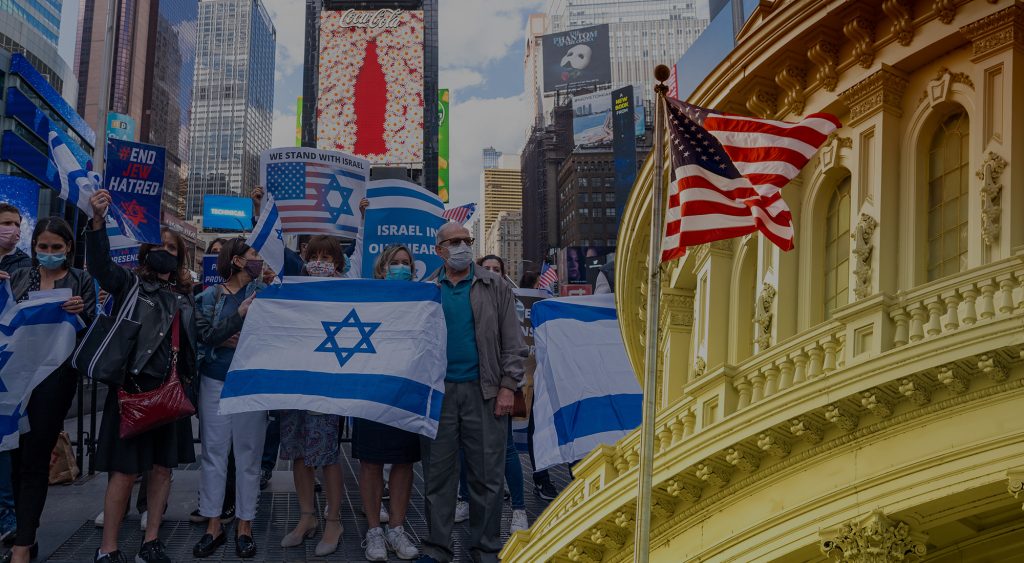
Since the outbreak of the Iran war, a particular assessment has gained traction among Chinese observers of international affairs: It holds that political support for Israel in the United States is eroding rapidly. In this view, donations made by the American Israel Public Affairs Committee has begun to shift from being an electoral asset to a political liability. An increasing number of American lawmakers are said to be distancing themselves from pro-Israel political networks, and U.S. policy toward Israel—once a matter of bipartisan consensus—is for the first time an issue that can be openly contested in electoral politics.
This argument is supported by a number of influential commentators, and with substantial evidence. The war, they contend, has dealt a severe blow to Israel’s moral standing, while rising inflation and surging energy prices have fueled public discontent among ordinary Americans. At the same time, the anti-interventionist wing of the MAGA right, together with progressive Democrats, have found themselves in a rare convergence of sentiment: opposition to the war.
The argument seems compelling on the surface, but the reality of American politics is rarely so straightforward. Does a reversal in public sentiment necessarily translate into a loss of institutional power for the pro-Israel lobby?
Public opinion shifts
To understand this issue, one must first acknowledge that a shift in public opinion has taken place, and it’s far from marginal. War has altered many dynamics, particularly among younger people. Algorithm-driven social media has given images of civilian casualties in Gaza unprecedented visibility for a rising generation, effectively breaking the long-standing dominance of traditional media narratives about the Middle East.
According to the Pew Research Center this year, 60 percent of Americans now hold a negative view of Israel, an increase of nearly 20 percentage points from two years ago. Notably, among Republican voters under the age of 50, a majority express an unfavorable view of Israel. This suggests that maintaining unconditional support for Israel as a public position now comes with higher reputational and political costs across the partisan spectrum.
The shift even extends into what has traditionally been considered Israel’s most stable base of support in the United States. Among younger American Jews, dissatisfaction with the military actions of the Benjamin Netanyahu administration has grown noticeably, and membership in organizations critical of Israel, such as Jewish Voice for Peace, has expanded. Pew data also show that favorable views of Israel among American Jews have declined from 73 percent two years ago to 64 percent now.
However, a decline in favorable sentiment is one thing; a fundamental reversal in policy position is quite another. Even after more than two years of war, 64 percent of American Jews and 65 percent of White evangelical Christians still hold positive views of Israel. Given the significantly larger size of the evangelical community, this remains the most structurally reliable pillar of pro-Israel sentiment within the Republican electorate. And yet, while pro-Israel public opinion is indeed shifting, it is far from collapsing.
Lobbying transformation
The claim that AIPAC has become toxic has gained some traction among Chinese analysts. This is often supported by examples such as the emergence of watchdog groups tracking AIPAC-related funding and lawmakers publicly returning donations.
The first step is to look at some numbers. During the 2023-24 election cycle, AIPAC’s political action committee, IPAC, and its affiliated Super PAC, known as the United Democracy Project, spent nearly $127 million, almost 10 times its spending in the 2022 cycle, making it one of the largest single external spenders in congressional elections that year. Around $20 million was directed into Democratic primaries, contributing to the defeat of members of the so-called progressive “Squad” who had been openly critical of Israel, including Representative Cori Bush of Missouri and Representative Jamaal Bowman of New York.
A political force in genuine decline would not, under conditions of adverse public sentiment, expand its electoral spending nearly tenfold. A more accurate characterization, therefore, is not that the lobbying system has weakened but that it has evolved. It was only in 2022 that AIPAC first directly entered the realm of campaign financing. For six decades before that, it had relied primarily on issue-based lobbying and behind-the-scenes influence. This shift itself suggests that the older model centered on private persuasion and interpersonal networks is feeling increasing strain.
At the same time, UDP’s advertising strategy has increasingly focused on constructing broadly negative portrayals of political opponents, rather than explicitly foregrounding Israel-related issues. The logic of funding has not changed, but its form has, and its traceability has been extended.
In the recent Democratic primary in Illinois, for instance, related funding was routed through at least three political action committees, with more than $5 million deployed in ways that exploited reporting lags in the U.S. campaign finance disclosure system, making it difficult for voters to fully identify the sources before casting their ballots. This does not indicate the disappearance of lobbying power, but rather its adaptation into more sophisticated forms of invisibility.
Meanwhile, many of the lawmakers who publicly announced they were returning AIPAC donations were subsequently still receiving pro-Israel funding through alternative channels, such as rebranded political committees or donors without explicit Israel-related labeling. So the money continues to flow. What many lawmakers are seeking to avoid is not the money itself but the reputational and political risks associated with being linked to it.
Cause of war
The post-resignation revelations made by Joe Kent, former director of the National Counterterrorism Center, created a stir within certain segments of the American right. Kent argued that Iran did not pose an imminent threat to America, and that Washington’s involvement in the conflict was primarily driven by pressure from Israel and its lobbying networks in the United States. However, his subsequent claims regarding Mossad’s alleged operational influence and surveillance of Donald Trump lack credible evidence and are better understood as speculative narratives that have circulated within anti-interventionist communities.
What is more analytically significant is the open fissure that has emerged within Donald Trump’s political coalition over the Iran war and his broader “America first” foreign policy. This reflects an internal struggle over strategic direction within the U.S. establishment, rather than a story of unilateral external manipulation.
Since the onset of the Iran war, some gas stations in the United States have seen bumper stickers blaming specific groups for rising fuel prices. While the emotional logic behind such narratives may appear straightforward—that higher oil prices arise from the American military involvement in Iran—the reality is far more complex.
U.S. involvement in Middle Eastern conflicts has historically been shaped by a combination of factors: the profit incentives of the military-industrial complex, long-standing neoconservative geopolitical doctrines, the inertia of military deployments in the Gulf and elite anxieties over being perceived as weak on national security. The pro-Israel lobby is an important component within this ecosystem, but reducing such multifaceted policy outcomes to a single factor is not empirically sound. It reflects a dangerous simplification that tends to emerge in populist discourse under economic pressure.
Reduced visibility
Current anti-establishment sentiment in both the Democratic and Republican parties appears, at first glance, to be converging in its criticism of pro-Israel political influence. In substance, however, it reflects distinct underlying political anxieties. Progressives are primarily concerned with the moral costs of Israeli military operations and the role of money in primary elections, while the MAGA anti-interventionist wing is focused on the broader issue of the United States being drawn into overseas conflicts. What is often described as a consensus between the two is better understood as a temporary overlap of different grievances directed at a common target, rather than the formation of a stable political alliance.
At a more fundamental level, there is a substantial institutional buffer separating shifts in public opinion from changes in policy outcomes. Campaign finance rules in the U.S. permit what is, effectively, unlimited spending by super PACs. Primary elections are highly sensitive to organized financial influence. Foreign aid decisions are embedded in stable legislative procedures. And the two-party establishment itself possesses strong systemic inertia.
Such institutional features make it difficult for any single wave of public sentiment to rapidly overturn established policy trajectories. This helps explain why, despite declining public favorability toward Israel, the congressional framework for military aid has remained largely unchanged.
A more accurate characterization than “the decline of pro-Israel lobbying power” is that the political cost of openly supporting Israel has indeed risen, while the channels and methods of influence have simultaneously evolved. Lobbying has shifted from the foreground to the background, from direct endorsement to indirect influence and from highly visible mobilization to more discreet forms of coordination. Together, these changes describe a transition from overt to more implicit modes of operation.
Mistaking an expansion of public discourse for a breakdown of the power structure is a particularly tempting analytical trap in studies of American politics. Israel has, over the course of more than two years of war, significantly eroded the moral capital it accumulated over previous decades, and substantial reputational repair efforts will likely be required. However, the lobbying architecture embedded in the U.S. electoral system, legislative process and political funding networks remains far more resilient than any single wave of public sentiment can easily dislodge.
With a clear understanding of this fact, there is no need to defend the system or hype its fragility. In fact, this is simply a prerequisite for a sober assessment of the future trajectory of U.S. policy toward Israel.
