
An era has reached its end. Washington now faces a stark choice: It must either pay the true diplomatic and political price of leadership or prepare to hand over the keys to a region it can neither afford nor effectively manage.
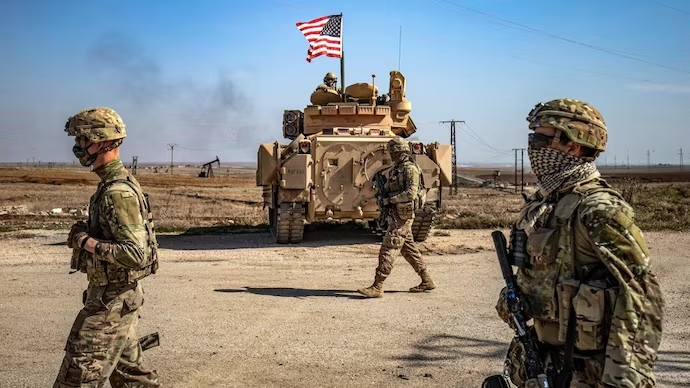
After the Iraq War, the prevailing analysis was that a declining America was retreating from the Middle East—a perception seemingly reinforced by Donald Trump’s vocal disdain for costly interventions and his proclaimed “obsession with peace.”
Yet Trump’s policies defied his own narrative. While refusing to provide traditional public goods (like troop deployments or nation-building), his administration relentlessly pursued hegemony’s dividends. Thus, a seductive but dangerous illusion has governed Washington’s approach to the Middle East—the belief that the United States can enjoy the dividends of hegemony there without shouldering much of its responsibility. This could be called hegemony on the cheap. But as the smoke clears over a widening, direct conflict against Iran that has already defied the quick victory predictions of the Pentagon, the limits of hegemony on the cheap have finally been demonstrated.
The strategy of delegating American dominance to regional proxies while posing as a detached peace-builder and rule-maker is failing. Hegemony on the cheap, the model that the U.S. is trying to impose, is facing severe challenges because of its miscalculations.
The post-Iraq era left the American public with profound intervention fatigue. Recognizing this, the architects of current U.S. policy in the Gulf sought a middle path. They did not want to fully withdraw because the Middle East remains vital for energy markets and global logistics. But they refused to commit to the massive “boots on the ground” model that is required for a serious U.S. role in the region.
The resulting strategy—hegemony on the cheap—rests on two pillars. The first was the Abraham Accords, an important geopolitical realignment. By shifting the regional focus away from the seemingly insoluble Palestinian question and toward the animosity of Gulf states toward Iran, Washington hoped to create a self-sustaining security bloc. The logic was elegantly cold: Foster a common enemy, and the region would police itself.
The second pillar was the outsourcing of security enforcement to Israel. In that framework, Israel ceased to be a mere democratically and became the regional sheriff. By empowering Israel to conduct a shadow war of assassinations and strikes against the so-called Axis of Resistance, the U.S. believed it could maintain the status quo from a distance. Washington would provide the weapons and the diplomatic cover at the UN, while Israel would provide the kinetic force.
In this transnational design of the current strategists in Washington, peace in the Middle East is not a moral objective or a humanitarian end; it is a strategic weapon. By brokering normalization between Israel and various Arab capitals, the U.S. sought to solidify its status as the offshore balancer, with the aim of controlling the animosity between its regional allies and Iran and fostering the reconciliation process between Israel and its regional allies.
The current administration created the slogan “Peace Through Strength,” but this is a misnomer. In reality, it has been “Control Through Chaos Management.” By allowing Israel a free hand to dismantle Iranian proxies in Gaza and Lebanon, Washington hoped to create a new Middle East in which Tehran was so weakened it would have no choice but to accept American terms.
For a moment, during the early stages of the Gaza conflict, the math seemed to work. The U.S. played a double game by supporting Israel’s most intense bombardment of the 21st century, while simultaneously posing as the only power capable of reining in its ally to prevent total regional conflagration. This created a paradoxical form of leverage. The U.S. gained authority not by preventing conflict, but by modulating the dial of its intensity.
In the war against Iran, however, it is increasingly obvious that the discount version of the United States as a superpower faced serious backlash. Now, as the conflict enters its third week of direct escalation, Trump’s blitz has stalled. Instead of the rapid collapse of Tehran’s will to resist, Washington finds itself caught in the very trap it sought to avoid, which is drainage of its resources into a black hole of regional conflict. The deployment of THAAD batteries in South Korea and the redirection of Marine units from the Pacific are the clearest indicators of this failure.
In truth, the primary reason for the failure of the “discount superpower” model is not surprising. It is just the hegemonic overstretch that the U.S. had hoped to avoid. Why has low-cost hegemony failed? The answer comes down to America’s unrealistically low estimates of what it would cost to trample its adversary’s bottom line and its overestimation of control over risky moves by its allies.
Washington has fundamentally underestimated Iran’s resilience in the face of an existential threat. The so-called decapitation strike by the U.S. and Israel against Iran’s supreme leader appears to rest on a cold, three-point calculus: first, that removing the central figurehead would trigger panic among the elite; second, that public dissatisfaction with Ali Khamenei would mobilize the opposition to take to the streets; and, third, that a display of overwhelming air superiority would serve as a “shock and awe” demonstration that would force Tehran to the negotiating table.
All three of these assumptions have backfired. While the supreme leader is the core of the state, Iran functions as an Islamic Republic rather than a traditional monarchy. Through the Islamic Revolutionary Guard Corps and other deep-seated institutions, the regime has cultivated a massive elite bloc whose survival is inextricably linked to the state. The demise of one individual does not change the collective incentive of this class to defend the system to safeguard their own interests.
Further, while Iranians are deeply dissatisfied with the economy, the country’s millennia-old civilization has fostered a potent sense of nationalism. The populace clearly distinguishes between their grievances with the regime and their love for the nation. Rather than fracturing the public, attacks on its leaders trigger a “rally around the flag” effect, binding a divided people to the state in the name of national survival.
Finally, as deterrence theory suggests, military pressure works against opportunistic goals, not core national interests. Limited, precise strikes might leave room for diplomacy, but the assassination of a head of state and the collateral damage of civilian targets (such as schools) pushes Iran to the edge of a cliff, killing any hope for a negotiated settlement.
Washington has fallen into a classic case of alliance entrapment. In the 1970s, Henry Kissinger masterfully balanced support for Israel with the leverage necessary to broker peace with Egypt. Today, however, by granting Israel carte blanche to act as its regional enforcer, the U.S. has effectively ceded the driver’s seat.
There was initial hope that Trump’s close ties with Israeli leadership would allow him to restrain Israel’s pursuit of “absolute security.” To an extent, he demonstrated this capacity by brokering cease-fires in Gaza and during last year’s Israel-Iran conflict. Yet, as former U.S. official Joe Kent noted upon his resignation, America has now been dragged into a broader war by its ally.
Washington appears to have overestimated its ability to control both its partner and the pace of escalation. Entering a conflict alongside an ally with more radical objectives—such as total regime change—makes coordinating an exit strategy nearly impossible. This risk is precisely why the U.S. excluded Israel from military coalitions during the 1991 Gulf War and the 2003 Iraq War. By allowing itself to be led (or misled) into this current confrontation, the Trump administration has entered the uncharted waters of uncontrolled escalation.
It is becoming increasingly evident that as the U.S. war against Iran drags on, the mounting costs will represent a watershed moment for American dominance in the Middle East. If the United States intends to lead, it must commit to the arduous and costly work of genuine diplomacy—a process that respects the core interests of all regional stakeholders and acknowledges that stability cannot be enforced through blatant military power alone.
The era of hegemony on the cheap has reached its end. Washington now faces a stark choice: either pay the true diplomatic and political price of leadership or prepare to hand over the keys to a region it can neither afford nor effectively manage.
