Whether it be the rise of right-wing populism, a sweeping expansion of presidential power, an assault on liberal pluralism or a transactional approach to alliances, it’s clear that Donald Trump and his supporters are attempting to change key underlying assumptions about what America is.
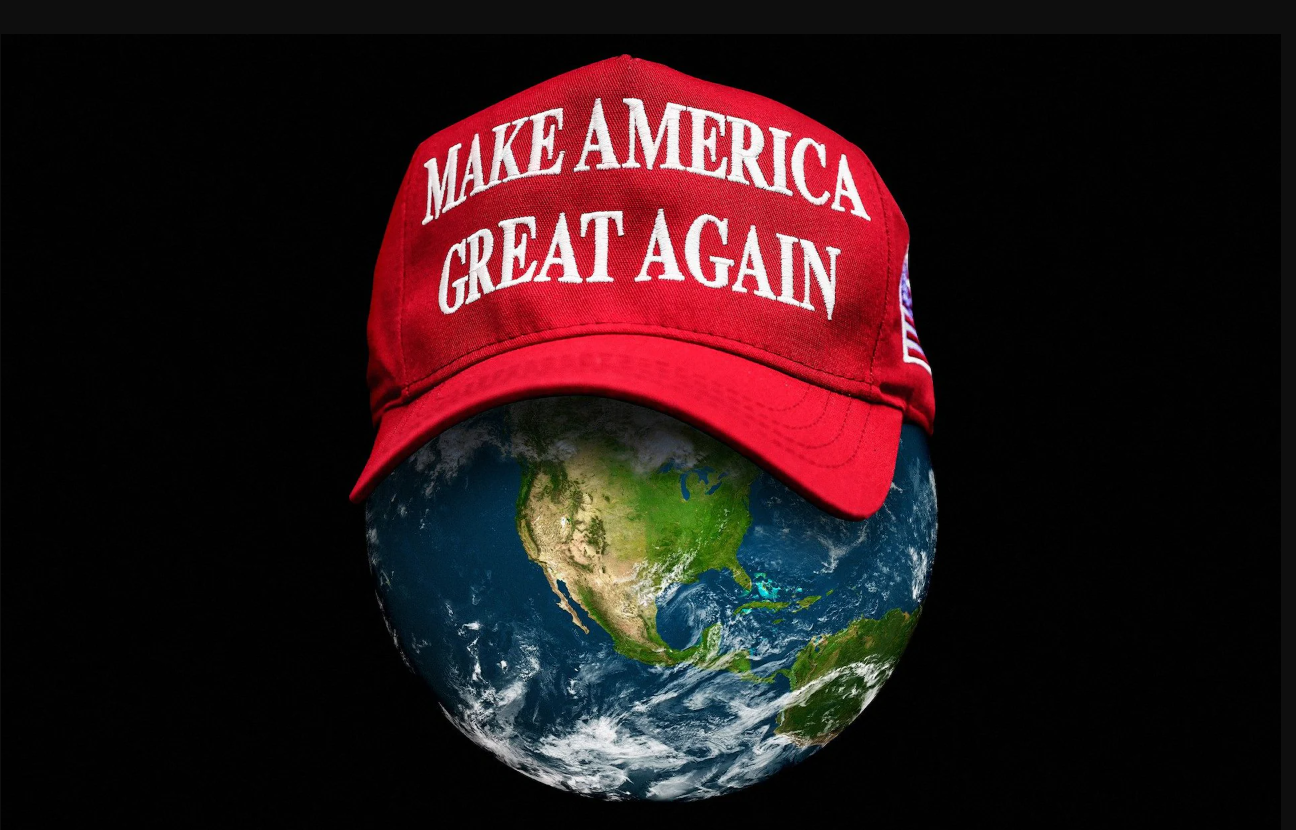
The United States has been undergoing massive change since the start of Donald Trump’s second term. Whether it’s been the rise of right-wing populism, a sweeping expansion of presidential power, the assault on liberal pluralism, the transactional approach to alliances, or the embrace of “withdrawal diplomacy,” everything points to Trump and his supporters’ attempt to reshape what it means to be American. For now and for the foreseeable future, the world will have to face a U.S. starkly different from the one it has ever known.
In a nutshell, the reshaping of “Americanness” can be understood in four dimensions:
First, it’s important to recognize the emergence of an “illiberal America” and the severe challenges the U.S. democratic system is facing. Equally important is paying close attention to the spillover effects of the country’s domestic political turmoil on its relations with China. For a long time, people had been accustomed to describing the U.S. with words such as “freedom and democracy.”
But since his return to the White House, Trump has launched a systematic pushback against the “diversity, equity and inclusion” (DEI) agenda championed by Democrats and liberals. The checks and balances exercised by the judicial and legislative branches over the executive power have been weakened. Trump and the political forces behind his “Make America Great Again” campaign are trying to redefine what freedom and democracy mean. What they want is not merely to win a cultural war but to institutionalize a range of right-wing populist ideas and embed them structurally in the American system.
There’s no denying that divisions in American politics have continued to widen over the past decade, along with an increase in violence related to politics. The latest rage of populism has contributed to the ascent of a strongman president. Both conservative elites and left-wing figures have become more jaded about violence and extremism to some extent. Polarization of the two major political parties has increasingly given way to fragmentation within the parties, while partisan polarization has broadened to permeate all of American society. Public trust in the U.S. political system has declined, and discussions about how the “deep state” and the “administrative state” pull the levers of power have intensified.
Trump and his supporters are seeking not simply to transform the U.S. ideological system but also to reconfigure the power structure of the federal government. This unconventional Republican president has pursued a sweeping expansion of executive power, including pushing beyond established legal boundaries with controversial policies such as a crackdown on immigrants. Trump’s forceful actions on tariffs and an unwillingness of Republicans in Congress to check the White House have led observers around the world to notice the American strongman, who has fueled debate over American-style authoritarianism.
Second, it’s necessary to note that this new nationalist America, with its increasing government interference in the economy, will have an enormous impact on China and the world at large. Both Republican and Democratic policymakers are looking to formulate and implement so-called modern industrial strategies to enhance U.S. competitiveness in the areas of semiconductors, communications electronics, energy and critical minerals through greater government investment and support, as well as to protect “made in USA” supply chains to reduce economic dependence on China and other competitors.
Broadly speaking, the United States is transitioning from financial capitalism to state power capitalism. Jake Sullivan, the national security adviser during the Biden era, and his peers advocated the “21st-century industrial policy” and the “New Washington Consensus,” which attach more importance to the role of government. In June, U.S. Treasury Secretary Scott Bessent, in a speech at the Economic Club of New York, underlined the idea that the Trump administration would adopt multiple policy tools to strengthen the country’s industrial capacity and the government’s control over the production of critical materials.
One can clearly see that interactions between the U.S. government and society, and between the state and the industrial system, are experiencing profound changes. The U.S. is securitizing industries such as semiconductors, critical minerals and pharmaceuticals, which will have a significant impact on China-U.S. competition in the long run.
Third, we need to understand what a “techno-nationalist” America will mean and examine the rise of the U.S. technology-military-industrial complex and its influence on the China-U.S. rivalry. Innovation remains the core of U.S. power. As technology becomes a focus in major-power competition, large economies are increasingly engaged in rivalries centered on control over tech-industry supply chains. To maintain its technological hegemony, Washington has been escalating its “tech cold war” with Beijing. To win this war is the central goal of its techno-nationalist agenda.
The Trump administration is seeking to reform America’s innovation ecosystem with strategic priorities and mission-oriented goals to reinforce the country’s tech leadership. It has identified artificial intelligence, quantum information and biomanufacturing as critical fields in which the U.S. must compete and ultimately prevail to maintain its position.
The rise of the technology-military-industrial complex constitutes an important factor influencing the future development of the United States. This complex is brimming with tech hawks who closely track China-U.S. tech competition and exaggerate the so-called China threat and the great-power confrontation narrative. In particular, the intelligent warfare the U.S. government has been pushing has crucial implications for China-U.S. security competition. High-tech companies, tech industry associations, experts and think tanks studying tech competition have become key partners of national security departments. Therefore, a closer examination of how the complex works is warranted. It can help provide a timely understanding of developments in the tech cold war with China from the perspective of multiple U.S. actors involved and their interactions. It can also help anticipate the risks and challenges that China faces.
Fourth, we must be ready to manage relations with an America shaped by transactionalism and consider the matter through the lens of global public goods. Global governance has become a focus in bilateral competition. How to deal with an America obsessed with transactionalism and “withdrawal diplomacy” is one of the most pressing challenges facing China.
Harvard professor Joseph Nye, who served as assistant secretary of defense during the 1990s, coined the phrase “The Kindleberger Trap”—a concept closely related to China-U.S. competition in global governance. It refers to a situation in which an emerging power fails to assume leadership responsibilities during a global power transition, resulting in a shortage of global public goods and subsequently economic turmoil and security disorder.
Once the main supplier of global public goods, the U.S. has played a dominant role in establishing major international economic governance organizations, including the International Monetary Fund and the World Bank. Such public goods helped promote the development of international trade and investment. However, since the 2008 financial crisis, both the willingness and capacity of the U.S. to support global governance have markedly declined. With the arrival of the Trump era, “America first” made its way across the country, accompanied by a more pronounced turn to unilateralism in the country’s foreign affairs. In the first year of Trump’s second term alone, the U.S. withdrew from 66 international organizations.
At the same time, Rush Doshi, a senior fellow of the Council on Foreign Relations and a former official of the White House National Security Council, as well as other strategists in Washington, claimed that China was trying to cripple U.S. dominance over the international order and that it should blunt the effort. Amid Trump’s withdrawal diplomacy, China’s major challenge is how to properly manage bilateral interactions in global governance, achieve international coordination and navigate competition for the Global South.
All in all, to handle strategic competition with the United States, China must break with many conventional assumptions as the U.S. increasingly becomes a restless hegemon. Only through a careful, in-depth examination of America’s new brand can China create a precise framework to assess the trajectory of U.S. strategies and formulate flexible, effective policies in response.
