
The summit illustrated that NATO is evolving from a traditional alliance founded on shared values and underwritten by American security guarantees into an alliance increasingly defined by capabilities, responsibilities and transactions.
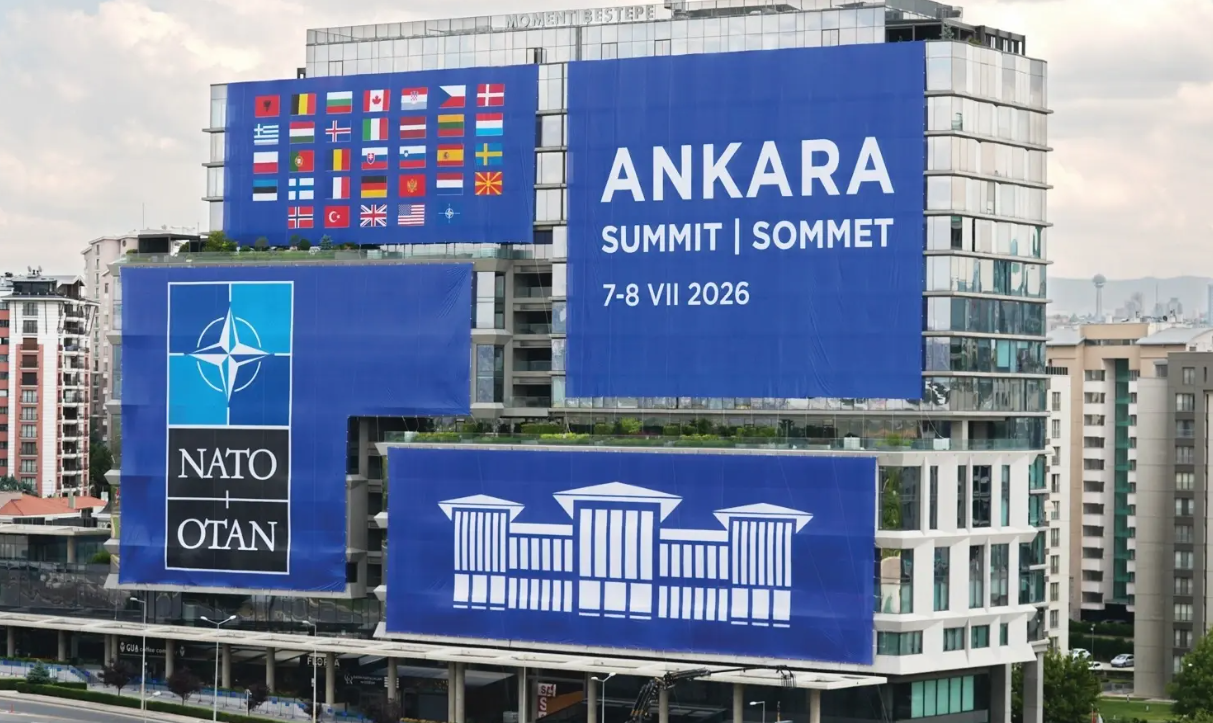
The Ankara Summit may not have been the most dramatic NATO summit in recent years, but it may well prove to be the one that most clearly illustrates how the alliance itself is changing. Previous summits were dominated by questions such as whether the Ukraine crisis would reinvigorate NATO, when Ukraine might join and whether Donald Trump would weaken America’s commitment to Europe.
This summit, by contrast, confronted a more practical question: how NATO should operate in an era when the United States is pressing Europe to shoulder greater responsibility even as the continent’s security environment continues to deteriorate. NATO Secretary-General Mark Rutte has described this transformation as “NATO 3.0,” with the core objective being a rebalancing of responsibilities within the alliance through increased investment, expanded industrial production for defense and greater commitments to defense by European allies and Canada.
If NATO 1.0 during the Cold War was primarily designed for collective defense against the Soviet Union, and NATO 2.0 after the Cold War expanded its role through enlargement, crisis management and out-of-area operations, then the defining feature of NATO 3.0 is its transition from an alliance centered on political commitments to one focused on capabilities.
Although the Ankara Summit Declaration is relatively concise, much of its content is devoted to defense investment and capacity, deep precision strikes, integrated air and missile defense, unmanned systems, intelligence capabilities and artificial intelligence. It notes that European allies and Canada invested more than $139 billion in core defense requirements last year, while the Ankara Summit announced more than $50 billion in new defense procurement and committed to expanding the alliance’s overall manufacturing capacity. It was also the first time that the concepts of an “interoperable transatlantic warfighting cloud” and “powerful AI models” have appeared in a NATO summit declaration, underscoring that digital warfare and artificial intelligence have become central components of the alliance’s capability agenda.
This shift means that the standard by which NATO evaluates member contributions will no longer be based primarily on whether allies support a particular political declaration but increasingly on whether they can provide financial resources, defense industrial capacity, military platforms and sustained operational capabilities. Whereas NATO discussions once focused largely on whether the alliance remained united, they are now increasingly concerned with whether it can deliver. Defense spending, ammunition stockpiles, strategic airlift, aerial refueling, long-range strike capabilities and supply chain resilience are becoming the new benchmarks for measuring an ally’s value.
Ukraine’s role within the alliance has also evolved. Rather than simply emphasizing NATO’s support for Ukraine, the Ankara Declaration explicitly states that Ukraine contributes to transatlantic security, while committing 70 billion euros in military equipment, assistance and training for 2026 and pledging to maintain at least the same level of support in 2027. Ukraine is therefore no longer merely a recipient of assistance; it has also become an important reference point for NATO’s understanding of future warfare and for advancing innovation in unmanned systems and defense industries.
The second defining characteristic of NATO 3.0 is that Europe is assuming greater responsibility without diminishing America’s leadership position. What U.S. President Donald Trump seeks to change is not NATO’s continued existence but rather the way the alliance has operated over the past several decades. He rejects the traditional arrangement in which the United States bears the primary security burden while Europe enjoys the security dividend. Instead, he wants Europe to evolve from a security consumer into a security provider, allowing Washington to redirect more strategic resources toward the Indo-Pacific, technological competition and other global priorities.
Accordingly, the United States has pressed Europe to increase defense spending, expand defense industrial production, provide greater support for Ukraine and address capability gaps in strategic transport, intelligence, surveillance, reconnaissance and integrated air and missile defense. At the same time, however, Washington intends to retain its advantages in nuclear deterrence, advanced military technologies, strategic command and agenda-setting within the Alliance. In other words, what the United States seeks is a transfer of responsibilities—not a transfer of leadership.
This adjustment has given rise to the first major fault line within NATO: The United States expects Europe to spend more and assume greater responsibility, while Europe worries that Washington intends to contribute less while continuing to dominate decision-making. Higher European defense spending does not necessarily mean that European governments are willing to devote all additional funding to purchasing American weapons. France and several other countries hope to use higher defense expenditures to strengthen Europe’s own defense industrial base and strategic autonomy, whereas the United States prefers Europe to remain deeply embedded within an American-led defense and technological ecosystem.
The defense procurement initiatives announced in Ankara demonstrate that Europe is indeed increasing its investment, but they also create competition over who wins contracts, controls technologies and sets industrial standards—an increasingly important issue across the Atlantic. Defense spending has therefore become not only a matter of security policy but also industrial policy, technology policy and market competition.
A second set of tensions exists within Europe itself. Poland, the Baltic states and the Nordic countries perceive a Russian threat most acutely. They place greater value on American security guarantees, and are more willing to increase defense spending rapidly. France continues to prioritize European strategic autonomy and indigenous defense industries. Germany must balance its security transformation with fiscal discipline and economic constraints. Southern European countries such as Spain and Italy face growing pressures from public debt, social welfare commitments and sluggish economic growth. Trump’s public criticism of Spain as a “terrible ally” during the summit—and his linkage of defense spending to trade measures—demonstrates that debates over burden-sharing within NATO have moved beyond technical discussions into overt political confrontation.
The third source of tension is the growing divergence over shared values themselves. NATO continues to define itself as an alliance of democratic nations, yet the Trump administration increasingly frames relations with allies in terms of fairness, costs, payments and returns. At the same time, American conservatives and Europe’s mainstream political establishment have become increasingly divided over issues such as immigration, freedom of expression, social governance and national sovereignty.
Consequently, today’s transatlantic debates are no longer confined to how defense burdens should be shared; they increasingly concern broader questions about the meaning of democracy, the identity of the West and the nature of alliance solidarity.
Looking ahead, NATO is unlikely either to collapse rapidly or return to its previous form. The Ukraine crisis has once again provided the alliance with a clear strategic mission. European defense spending and defense industrial capacity continue to grow, while the United States remains unwilling to forego the strategic benefits that NATO provides in shaping the European security order.
According to the Stockholm International Peace Research Institute, global military expenditures reached $2.89 trillion in 2025, with military spending in Europe increasing by 14 percent, highlighting that Europe’s remilitarization has become an unmistakable reality. Yet the stronger NATO becomes militarily, the more pronounced its internal disagreements over costs, industrial policy, burden-sharing and strategic autonomy are likely to become.
The alliance is therefore more likely to evolve into one that is stronger militarily but more complex politically. The institutional framework of collective defense will remain intact, but security commitments will become increasingly conditional. Member states will be expected to contribute continuously, while negotiations over rights, responsibilities and interests within the alliance become more frequent.
For China, the first implication is that it would be a mistake to assume that transatlantic disagreements will ultimately lead to NATO’s disintegration. Although the transatlantic relationship is undergoing a profound adjustment, the United States and Europe continue to need one another in the security domain, and NATO will remain the cornerstone of European security.
Second, China should pay close attention to the external implications of NATO 3.0. The alliance’s emphasis on expanding defense industrial capacity, military applications of artificial intelligence, supply chain security and economic security may further reinforce bloc politics while encouraging Europe to adopt a more security-oriented approach toward China in areas such as technology, investment and industrial policy. Although the Ankara Declaration does not explicitly mention China, NATO’s growing emphasis on emerging technologies, critical infrastructure, and strategic competition is unlikely to diminish.
Finally, China should avoid viewing China-Europe relations solely through the prism of transatlantic dynamics. Europe’s desire to strengthen its own capabilities and strategic resilience does not necessarily mean that it will align with the United States on every issue. China and Europe continue to share substantial opportunities for practical cooperation in trade, climate change, AI governance, Global South development and the reform of multilateral institutions.
The Ankara Summit demonstrates that NATO is evolving from a traditional alliance founded on shared values and underwritten by American security guarantees into NATO 3.0, an alliance increasingly defined by capabilities, responsibilities and transactions. This transformation may not make NATO more united, but it could make it more militarily effective. It is not likely to eliminate transatlantic differences; instead, it will reshape the way interdependence between the United States and Europe is managed.
The defining feature of future transatlantic relations will therefore not be the disintegration of the NATO alliance but rather increasingly frequent bargaining over interests, industrial policy and strategic autonomy within a framework of continued defense integration. The key challenge is not to predict when NATO might decline but to understand how its operating logic is changing and to prepare for a European security landscape that is becoming both more militarized and more internally differentiated.
