
Repeated U.S. military interventions and alignment with Israeli strategic priorities have eroded American credibility in the Middle East and weakened global confidence in U.S. leadership. The United States can restore its strategic influence only through diplomatic consistency, restraint, and a more independent regional policy.
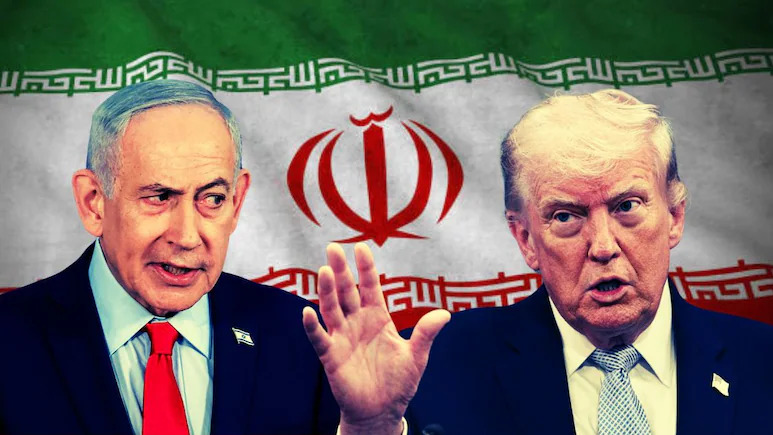
The war in the Persian Gulf that started on February 28th with the American and Israeli attacks over Iran is in a state of ‘open ended’ pause.
What was seemingly launched as a quick regime change action, through decapitation of Iranian leadership followed by domestic uprising has morphed into a war of attrition from which both sides will benefit to exit.
Unlike the past, NATO leadership has refused military involvement. ‘This is not our war,” said the German Defense Minister.
Former U.S. Secretary of State John Kerry’s recent remarks lend credence to the argument that Israeli preferences have sometimes strongly influenced U.S. decisions on Iran. Former Vice President Kamala Harris recently claimed that Trump was “pulled into it by [Israeli Prime Minister] Bibi Netanyahu.” Director of U.S. National Counter terrorism Center Joseph Kent, who resigned at the beginning of the war, claimed that Iran did not pose an imminent threat to the U.S. and the war was started due to pressure from the Israeli lobby.
This raises a larger strategic question: Is the United States attempting to shape the Middle East according to its long-term national interest, or reacting to a matrix of alliance pressures, domestic lobbying, and entrenched security paradigms?
The U.S.–Israel partnership is deep, institutionalized, and politically resilient. It rests on shared intelligence, defense coordination, and strong congressional backing reinforced by organizations such as the American Israel Public Affairs Committee. In parallel, the American defense establishment — anchored in the United States Department of Defense and supported by a vast military-industrial network — operates in an environment where persistent threat perception sustains budgets, deployments, and strategic posture.
None of this may necessarily constitute conspiracy. It reflects structural politics that shape outcomes. When alliance commitments, domestic political incentives, and defense-industrial interests converge, policy flexibility narrows. Strategic choices that might otherwise invite careful recalibration, instead default toward demonstration of resolve.
Here, the warnings of Hans J. Morgenthau resonate. He cautioned that a great power must never allow a weaker ally to define its strategic horizon, nor entrap itself in positions where retreat means humiliation and escalation entails grave risk. Realism is not cynicism; it is discipline. It demands hierarchy of interests and emotional detachment in the conduct of foreign policy.
Historically, Washington displayed that discipline, such as during the Suez Crisis in 1956, when President Dwight D. Eisenhower compelled Israel, Britain, and France to withdraw from Egypt despite intense allied pressure. He understood that American credibility in the post-colonial world required visible independence from European adventurism. That moment reinforced U.S. standing across the Arab world. Through various mechanizations that discipline has eroded over time.
Seventy years later, perceptions have reversed. The invasion of Iraq, intervention in Libya, prolonged conflict in Afghanistan and Syria, and withdrawal from the Joint Comprehensive Plan of Action under President Donald Trump collectively reshaped regional perceptions of American power. Each episode was framed in the language of stabilization, deterrence, or democratization. Each produced instability whose consequences persist.
For ordinary citizens across the Middle East, the lesson appears stark: external intervention promises reform; it often delivers fragmentation. Whether analytically precise or not, this perception shapes political psychology. When Washington speaks of freedom, many recall power vacuums. When it speaks of security, they recall warring militias.
Iran occupies a unique place in this narrative. It is not merely a government but a civilizational state with a deep historical memory of foreign interference. Iran remains deeply suspicious of Western powers since the democratically elected government of Prime Minister Mohammad Mosaddegh was overthrown and Raza Shah Pahlavi brought back in 1953. History is never absent from its diplomacy. It shapes how it interprets American actions and how it justifies its own.
External pressure tends to consolidate nationalism rather than fracture it. Even Iranians critical of their leadership frequently resist external coercion. Assassinations and airstrikes may degrade capabilities, but they also validate the regime’s argument that their sovereignty is under siege.
The erosion of American goodwill extends beyond the Middle East. Europe has effectively spurned Trump’s demand to provide naval support to keep the Straits of Hormuz open. In the Global South, American rhetoric about rules-based order competes with memories of selective application. In Asia, strategic partners observe Washington’s bandwidth consumed by recurring Middle Eastern crises while larger structural shifts unfold elsewhere.
Power is not only material. It is also reputational. It rests on predictability and credibility. When the United States withdraws from negotiated agreements such as the TPP or JCPOA, it weakens not merely a single accord but confidence in its diplomatic durability. Future negotiations become harder; adversaries hedge; allies doubt.
What, then, should America do to reassert both moral authority and strategic primacy?
First, restore diplomatic continuity. A serious recommitment to respect sovereign treaties would demonstrate that agreements survive electoral cycles.
Second, reestablish strategic autonomy within alliances. Support for Israel’s security need not require endorsement of every tactical escalation. Clear articulation of independent American red lines would signal maturity, not abandonment.
Third, place deterrence over preemption. Preventive strikes often create the very escalation they seek to avoid. A superpower must distinguish between capability management and regime destabilization.
Fourth, broaden regional engagement beyond military partnerships. Encouraging Gulf–Iran dialogue, and investing in economic integration would shift the regional narrative from coercion to stewardship.
Finally, align practice with principle. If sovereignty and stability are invoked as norms, they must apply universally. Consistency rebuilds trust; inconsistency accelerates decline.
The United States remains militarily unrivaled. But primacy in a multipolar era will depend less on force projection and more on strategic restraint. Morgenthau’s realism was grounded in prudence: national interest must outrank passion, pressure, and ideological impulse.
Great powers decline not only through defeat but through overextension and miscalculation. If Washington wishes to preserve its superpower status, it must recover the discipline that once allowed it to say no — even to friends — when long-term stability demanded it. Only then can it reclaim the goodwill that transforms power into leadership.
