
The old international order is being dismantled, even as a new one gradually comes into view. The interplay of major-powers, regional cooperation and global practices will continue to reshape that order as the parties attempt to stop the bleeding.
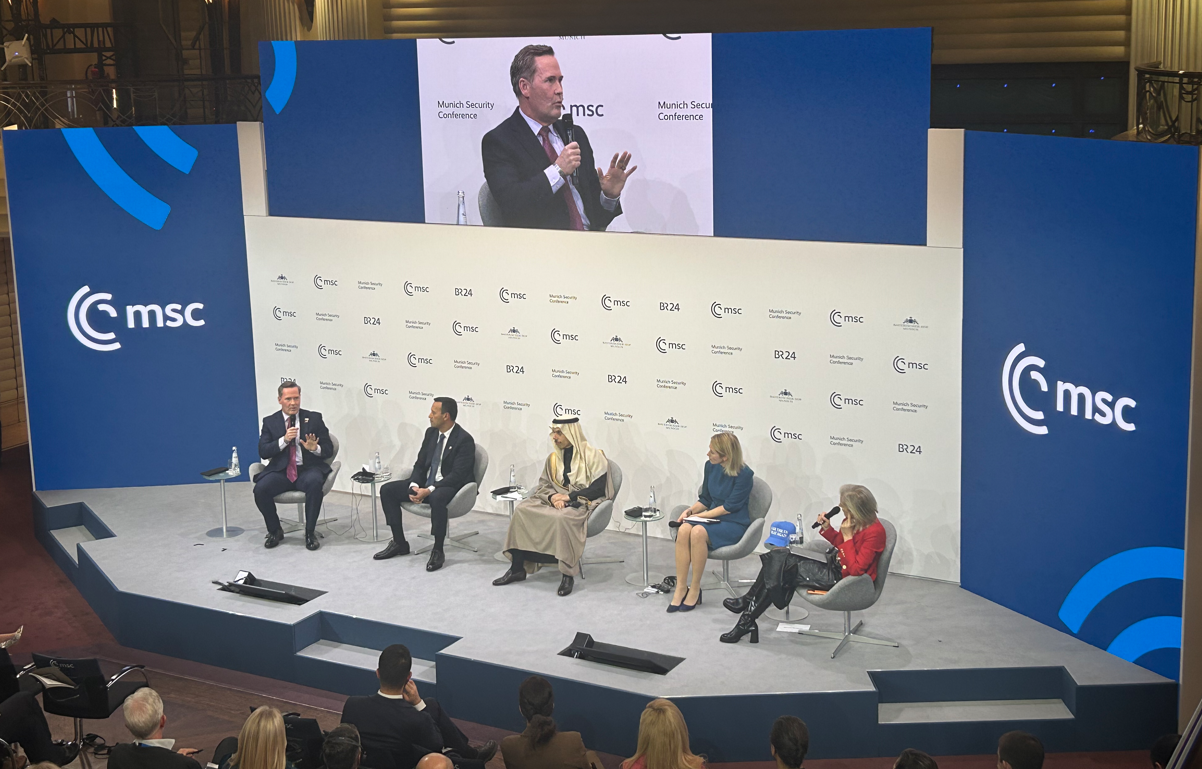
This year once again I was invited to attend the Munich Security Conference, where a palpable sense of anxiety about the international order permeated both the venue and the surrounding discussions. Unlike the transatlantic rift I sensed at last year’s conference, this Munich gathering felt more like a collective puzzlement over the future trajectory of the world: Can Europe and the U.S. still maintain consensus? Can they continue to shape the globe? What form will multipolarity ultimately take?
Looking back at the themes of the Munich Security Reports in recent years reveals a clear evolution in the mindset of Western strategic circles—from “Westlessness” in 2021, to “Turning the Tide” in 2022, “Re:vision” in 2023, “Lose-Lose?" in 2024, “Multipolarization” in 2025, and finally to this year’s blunt description of the international order as being “under destruction”.
The 2026 Munich Security Report states at the outset that the world has entered an era of “wrecking-ball politics.” In the eyes of Europe, this implies that the United States is now seen as dismantling rather than reforming the international order—an assessment that has become a defining trend of thinking in contemporary international politics. Such a judgment is rare in the history of the conference. It reflects not only the pessimism of European strategic communities about the future but also a deeper anxiety stemming from the loss of certainty about its direction. If Europe once believed that the liberal international order could be sustained through reform, the emerging consensus this year is closer to the view that the old order is ending while a new one has yet to take shape.
One of the most closely watched speeches at this year’s conference was delivered by U.S. Secretary of State Marco Rubio. Unlike the sharp criticism of Europe that was voiced last year by U.S. Vice President J.D. Vance, Rubio adopted a noticeably more conciliatory tone, emphasizing that the U.S. hopes to revitalize an old friendship and work with Europe to shape a new international order. Yet his core message was equally clear: In Washington’s view, the postwar order has failed and needs to be refashioned. He urged Europe to confront the failures of international institutions and the social pressures associated with free trade and migration, and he emphasized that the U.S. seeks to advance a new order, together with Europe, centered on national sovereignty, reindustrialization and military strength.
This framing triggered mixed reactions at the conference. European leaders welcomed the cooperative tone, but many European participants concluded that the American conception of order had fundamentally shifted. A particularly telling aspect of Rubio’s speech was that while he stressed the shared history, culture and civilizational ties between Europe and the United States, he clearly downplayed the notion of shared values—which is the traditional foundation of the transatlantic alliance. This nuance captures the core divergence in perceptions of order today.
From the perspective of the Trump administration, the international order should be grounded in national sovereignty, industrial strength and security competition. In mainstream European thinking, however, order should still be based on rules, multilateralism and a community of shared values. This year’s security report likewise argues that the U.S. is abandoning the three pillars of the postwar order—multilateral institutions, free trade and democratic alliances. Rubio’s speech effectively corroborates this assessment: Washington is not withdrawing from order but attempting to redefine its underlying logic.
Another striking feature of this year’s conference was the growing prominence of discussions about cooperation among middle powers. Although Canadian Prime Minister Mark Carney did not attend, his earlier call at the World Economic Forum for middle powers to band together to uphold order resonated strongly in Munich. Variants of this idea were ubiquitous— “Carneyism” seemed everywhere. Many European and Indo-Pacific participants voiced similar views, arguing that amid uncertainty about the U.S. role, middle-power cooperation needs to be strengthened.
Yet beneath this apparent consensus lay even greater uncertainty, with far more questions than answers. Who should lead? What mechanisms should such cooperation take? How should security and economic agendas be balanced? Within Europe, views diverged sharply: some emphasized strategic autonomy; some still hoped to persuade the United States to maintain its leadership of the order; others advocated expanding Europe’s cooperation with the Global South. This ambiguity of direction and pathway is itself a typical feature of an order in the process of rupture.
Another major change at this year’s conference was that transatlantic discussions became more candid—even sharp. The message Washington sought to convey was unmistakable: Europe needs to do more, not merely talk more. Rubio stressed that the U.S. wants a strong Europe that assumes greater responsibility, which many European participants interpreted as a “realist assessment” of Europe’s defense capabilities. At the same time, Europeans expressed their dissatisfaction and mistrust regarding U.S. policy more directly, with some even pressing American participants on whether the Trump administration still supports the existing international order. Such open mutual questioning between Europe and the U.S. became a defining feature of this year’s conference.
From the perspective of many Global South countries, however, transatlantic disputes are not alarming. Rather, they are seen as evidence that the West is stepping out of its comfort zone. One non-Western participant remarked during discussions that Europeans and Americans were welcome in the real world—“We have been living in it all along.” This perception gap reflects a broader shift in how order is viewed. What the West long regarded as universal rules never appeared truly universal to much of the non-Western world.
The conference serves as an important window into the evolution of the international order. A key trend emerging from this year’s meeting is that while the postwar liberal order has not suddenly collapsed, its structural loosening has become difficult to reverse and a new configuration of order is gradually taking shape. The Munich Security Report characterized this transformation as a process of dismantling order, and it outlined several possible future forms: a system shaped by spheres of influence, a transactional deal-based order or a non-institutional order structured by power networks. Although different in form, these trajectories point in a common direction: The logic of international relations is shifting from rules and institutions toward power, interests and capabilities.
This shift does not imply the disappearance of rules or multilateralism. The security report argues that in response to U.S. retrenchment from existing arrangements, many states and regions are actively strengthening cooperative mechanisms and rule-based frameworks—such as new trade agreements and regional partnerships—to preserve a degree of institutional stability. The emerging order is therefore likely to be layered and hybrid. In great-power relations, power politics and strategic competition will become more prominent; at the regional level, cooperative mechanisms and institutional arrangements may become more active; and at the global level, elements of rule-based governance will continue to function.
From this perspective, the international system has not entered a simple era of disorder but rather a phase of structural transition. In this transitional period, the norms and institutions of the old order continue to operate, albeit with declining authority, while the power configuration and operating principles of a new order remain unsettled. This condition—where the old has not fully receded and the new has not fully emerged—is a major source of contemporary uncertainty in international politics.
Seen from a broader vantage point, the dynamics observed in Munich extend well beyond Europe. The transatlantic relationship is renegotiating the distribution of power and responsibility; middle powers are exploring new modes of cooperation; and countries of the Global South are adapting to shifting power structures while seeking greater strategic space. Multiple actors in the international system are responding to the transformation in different ways, making the future international order more likely to assume a multicentered and multilayered character.
What this year’s Munich Security Conference reflects is not simply the decline of an existing order, but a signal that the international order is entering a new phase—one that will entail a recalibration of the relationship between rules and power and a realignment of ideals with geopolitical realities. As the security report suggests, we may indeed be living through an era in which the established international order is being dismantled, even as the contours of a new one gradually come into view. The interplay of major-power interactions, regional cooperation and global governance practices will continue to shape this order as the parties attempt to stanch the rupture.
