
Reaffirming legal limits is not an act of idealism. It is one of prudence. Strategic stability is not self-sustaining. It must be actively maintained. And in the nuclear age, maintenance begins not only with capability but with responsibility.
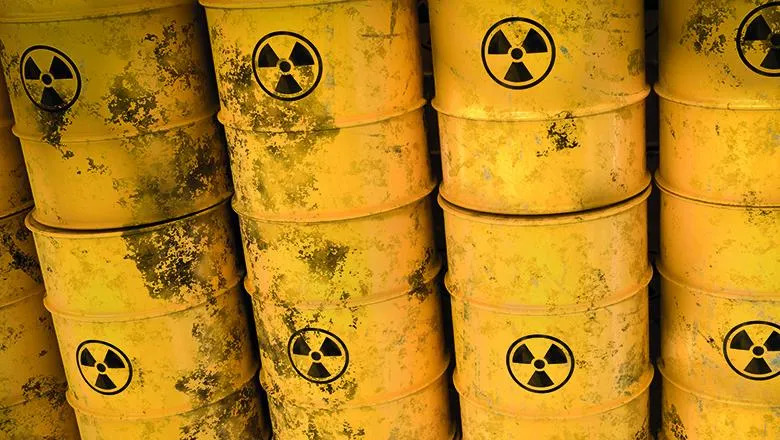
A recent report by the Russian Foreign Intelligence Service (SVR) alleges that Paris and London are working to provide Kyiv with a nuclear bomb.
Regardless of the report’s veracity, it serves as a jarring reminder of our current era, underscoring a fundamental truth that is often lost in technical debates: Nuclear deterrence is not merely a calculation of kilotons and retaliation. It is a normative question that goes to the heart of international law and whether it can still discipline power in an age of strategic rivalry.
This question has acquired renewed urgency. The expiration of key bilateral arms control arrangements between the United States and Russia has left the world’s two largest nuclear arsenals without binding quantitative constraints. At the same time, the language of nuclear threat has resurfaced in multiple geopolitical crises. In the Middle East, the United States has justified military action by invoking a perceived Iranian nuclear danger, despite having previously declared that Iran’s nuclear facilities had been effectively dismantled. In Europe, nuclear rhetoric has become increasingly normalized in view of the war in Ukraine.
Against this backdrop, the issue is no longer abstract. Does international law still meaningfully regulate nuclear threats, or are we drifting back toward an era in which strategic stability depends solely on political discretion?
Power and responsibility
In this volatile landscape, a broader principle must be emphasized: Major powers must play an exemplary and leading role in safeguarding global strategic stability. With greater capability comes greater responsibility. Those states that possess the largest nuclear arsenals and the most sophisticated doctrines shoulder correspondingly greater obligations—political, legal and moral.
In particular, the United States and Russia, the two states with the most extensive nuclear inventories, must assume primary and priority responsibilities in arms control and disarmament. Their conduct sets the tone for the entire non-proliferation regime. When they exercise restraint and pursue negotiated limitations, they strengthen global confidence. When they retreat from agreements or treat legal commitments as disposable, the ripple effects are global.
Strategic stability cannot be sustained if its principal custodians signal ambivalence toward the very norms designed to preserve it.
The political erosion of law
The primary threat to nuclear stability today is not technological; it is political. When leaders imply that “political will” or “moral compass” alone define the limits of state action, we witness a subtle but dangerous shift back toward raw power politics.
International law does not eliminate power. It disciplines it. If major powers begin to treat legal constraints as optional—as rhetorical tools rather than binding commitments—they erode the fragile guardrails that prevent nuclear brinkmanship from escalating into catastrophe.
The so-called “law of the jungle” offers no foundation for a stable nuclear order. Precisely because of their strategic weight, major powers have a heightened duty to demonstrate that law and power are not mutually exclusive. Indeed, in the nuclear domain, law is one of the few instruments capable of reducing miscalculation and misperception.
The cost of selective consistency
The credibility of the so-called “rules-based order” depends on consistency. Yet in recent years, there has been conspicuous tolerance—particularly by some European actors—for unilateral withdrawals from treaties and coercive practices even with traditional allies.
International law cannot function as an instrument of geopolitical convenience. If norms are invoked selectively, their authority gradually evaporates. The regulation of nuclear threats requires universality. Legal standards must apply irrespective of political alignment.
For the two largest nuclear powers, consistency is especially critical. Arms control cannot survive if it becomes hostage to shifting political calculations or domestic cycles. Leadership in this field requires strategic patience and the willingness to prioritize long-term stability over short-term advantage.
China’s normative contribution
In this evolving landscape, China is well positioned to contribute constructively to emerging legal discussions, particularly in areas such as negative security assurances and the clarification of unlawful nuclear rhetoric.
A central reference point is the principle of No First Use (NFU). Since its first nuclear test in 1964, China has consistently declared that it will not be the first to use nuclear weapons. Whether understood as a declaratory pledge or a binding doctrine, NFU functions as a normative restraint, narrowing the circumstances under which nuclear use can be contemplated.
If more nuclear-armed states—especially those with the largest arsenals—were to institutionalize similar commitments, global ambiguity could be reduced and predictability enhanced. Norm-building must be inclusive, but it cannot succeed without meaningful participation from the states that wield the greatest nuclear capabilities. Otherwise, progress risks becoming symbolic rather than structural.
Navigating the structural dilemma
Admittedly, there is an inherent tension at the heart of nuclear governance. Deterrence thrives on ambiguity; law demands clarity. Complete transparency may undermine deterrence credibility, while excessive ambiguity increases the risk of miscalculation.
The challenge, therefore, is not to abolish deterrence overnight, but to gradually shrink the legal gray zones that surround it. Through state practice, UN resolutions and multilateral dialogue, expectations can be shaped and conduct incrementally constrained.
Here again, the behavior of major powers is decisive. If they demonstrate that legal clarity and strategic stability are mutually reinforcing rather than contradictory, what appears today as a structural dilemma may become manageable over time.
Law remains indispensable
The ultimate question is whether law retains relevance in a domain defined by existential fear. The answer must be yes—not because law is a magical shield, but because without it nuclear politics would be governed solely by force and perception.
In an era of intensifying competition among major powers, reaffirming legal limits on nuclear threats is not an act of idealism. It is an act of prudence. Prudence begins with leadership—especially from those states whose arsenals and influence give them the greatest capacity to shape the nuclear order.
Strategic stability is not self-sustaining. It must be actively maintained. And in the nuclear age, maintenance begins not only with capability but with responsibility.
