
Dear Focus Reader,
Global leaders gathered this week at the World Economic Forum in Davos, where U.S. Treasury Secretary Scott Bessent said the U.S.–China relationship has reached a "very good equilibrium," with disagreements now less likely to escalate into full-scale economic conflict.
Bessent also mentioned that Presidents Trump and Xi could meet up to four times in 2026, including a planned Trump visit to Beijing in April, a potential Xi trip to Washington or Mar-a-Lago this summer, the G20 in Miami, and the APEC meeting in Shenzhen. His remarks and the prospect of multiple leader-level meetings seemingly indicate an effort by both sides to keep trade and strategic frictions from escalating, even as broader competition persists.
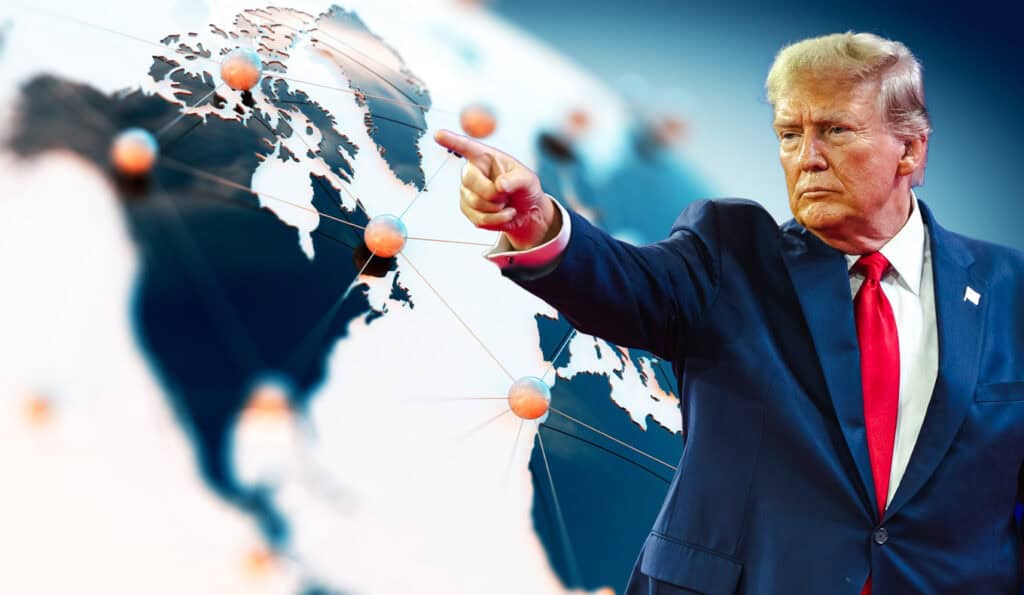
President Trump delivered a speech at Davos as well, discussing a preliminary framework for a Greenland deal — that continues to draw global criticism — aimed at expanding U.S. strategic influence in the Arctic, including access to rare-earth minerals crucial for defense and technology. While he said would not use force to acquire Greenland, he emphasized his ability to negotiate through tariff threats. Trump framed the move as countering Chinese and Russian ambitions, though analysts note that China's practical engagement in Greenland remains limited.
Meanwhile, following meetings with President Trump at the Forum, Ukrainian President Volodymyr Zelenskiy joined top U.S. and Russian officials today in Abu Dhabi for trilateral talks on Ukraine's territorial disputes in Donbas, nearly four years into the ongoing war in Ukraine. The negotiations come amid intensified Russian strikes on Ukraine's energy infrastructure. Zelenskiy emphasized that Russia must be ready to end the war and said a deal on U.S. security guarantees for Kyiv is ready, pending agreement on a date and location for signing. Kyiv continues to resist Russian demands to cede territory, while Moscow maintains that control of all of Donbas is a key condition. China has signaled support for the meeting, stating that dialogue and negotiation are the only viable ways out of the crisis.
Learn more on international relations by exploring our latest Focus content, including articles on trade, geopolitics, energy, and more.

"Even if our relationship is one defined by competition, the U.S. and China can benefit from talent and innovation exchange."
The total U.S. defense budget for 2026 under the NDAA.
Learn more in "Strategic Dissonance," by Eka Khorbaladze.
What is Reglobalization?
Watch VideoQuestion of the Week:
In our Focus Insights section, we featured an article by Brian Wong examining China's recent deal with the EU on electric vehicle tariffs and its broader outreach to U.S. partners, and how Beijing's efforts may be shaped by trade imbalances and geopolitical uncertainties.
We want to hear from you!
How can China navigate economic and diplomatic engagement with U.S. allies while addressing persistent trade and strategic challenges?
Submit your thoughts to USeditor@chinausfocus.com for a chance to be featured in next week's Focus This Week.
useditor@chinausfocus.com for more info.
Powered by
Prepared by China-US Focus editorial teams in Hong Kong and New York, this weekly newsletter offers you snap shots of latest trends and developments emerging from China and the U.S. every week. It is a community space to exchange thoughts and ideas about the China-U.S. relationship and beyond.
- 2026-01-16 Focus This Week: Trade Winds
- 2026-01-09 Focus This Week: Sovereignty at Stake
- 2025-12-19 Focus This Week: Between the Lines
- 2025-12-12 Focus This Week: Strategic Realignments
- 2025-12-05 Focus This Week: Cooperation on Track
- 2025-11-21 Focus This Week: Dialogue Forward
- 2025-11-15 Focus This Week: Seeking Peace
- 2025-11-07 Focus This Week: Beyond Busan
- 2025-10-31 Focus This Week: A "12 out of 10" Meeting
- 2025-10-24 Focus This Week: Staying "On Track"
- 2025-10-17 Focus This Week: Trade Strains, Policy Plans
- 2025-10-10 Focus This Week: Tariff Tensions, Rattled Markets
- 2025-10-03 Focus This Week: Shutdown Diplomacy
- 2025-09-26 Focus This Week: Turning Up the Heat
- 2025-09-19 Focus This Week: TikTok on the Table
- 2025-09-12 Focus This Week: A New Shift?
- 2025-09-05 Focus This Week: Parade of Power
- 2025-08-28 Focus This Week: Global Dialogue in Motion
