
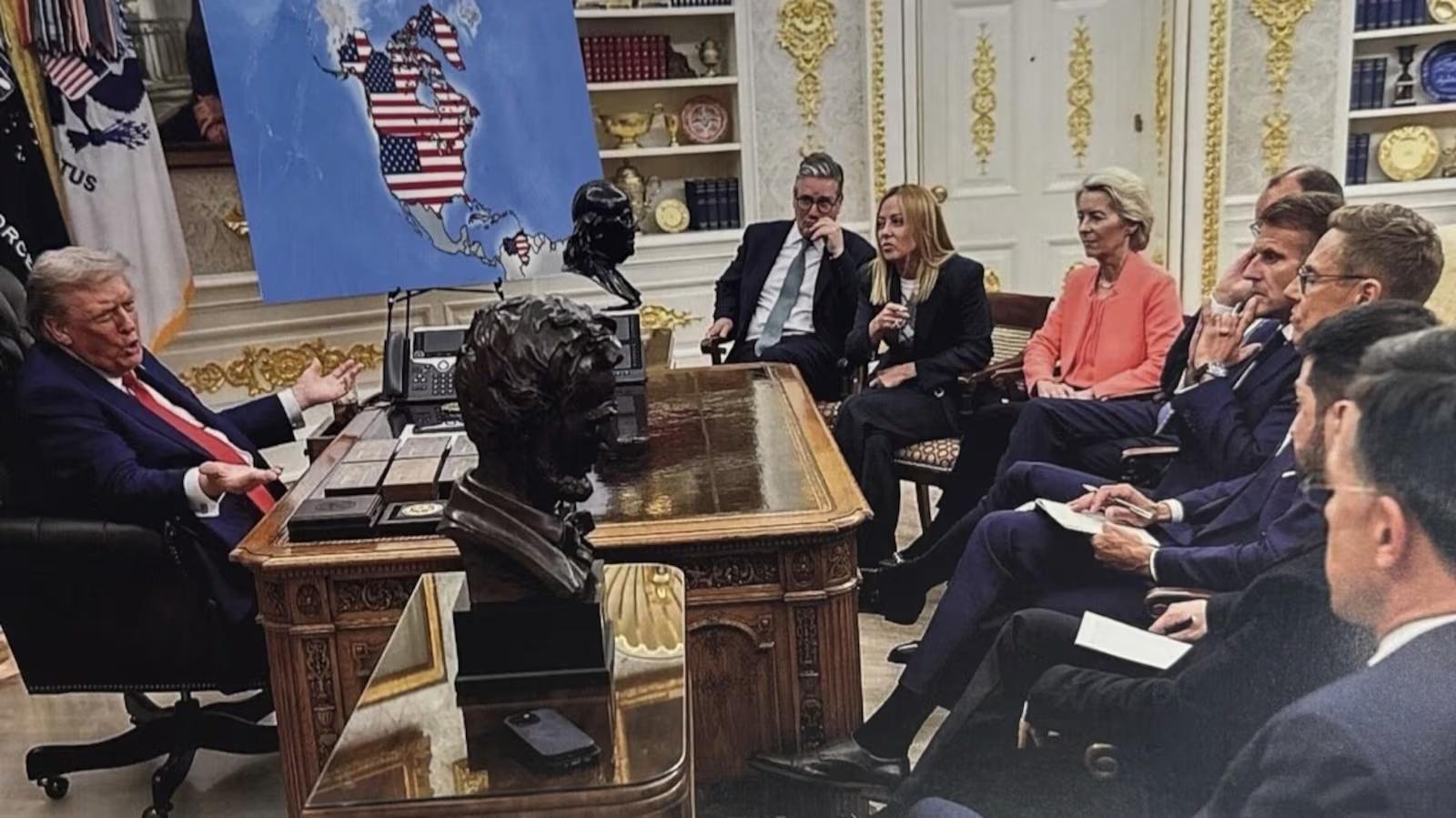
(Social media @realDonaldTrump)
In May 2024, I penned an article that framed Europe’s existential dilemma starkly: either fade into obscurity as the "continental tail-end” of a crumbling transatlantic empire, or forge a path as the western bulwark of an integrated Eurasian economic colossus.
Back then, the Ukraine conflict was raging, energy prices were skyrocketing, and Europe’s self-proclaimed role as the “garden of civilization” – a pedestal of moral superiority – was blinding it to pragmatic necessities. Fast forward to January 2026, and the landscape has shifted, yet the core challenge remains unresolved. The war in Ukraine grinds on, but with Russian advances near Kupyansk and Pokrovsk, and Ukrainian blackouts from targeted strikes on energy infrastructure, the writing is on the wall: the conflict is effectively lost for the West’s proxy ambitions. Popular sentiment echoes this – 72% of Ukrainians back peace plans with security guarantees, while 66% of Russians favour negotiations.
My earlier piece in effect urged Europe to shed its Russophobia and Sinophobia, embracing humility to navigate a multipolar world. Today, with US reliability in tatters under its “America First” pivot, and Europe’s energy vulnerabilities exposed anew, that proposition feels more urgent. The US’s 2025 National Security Strategy demands Europe shoulder NATO’s conventional defense by 2027, slashes intelligence sharing with Ukraine, and prioritizes Asia over the Atlantic. Meanwhile, Europe’s over-dependence on expensive US LNG – now over 55% of imports – drains billions, erodes industrial competitiveness, and locks the continent into a subservient role. If Brussels lacks the courage to act boldly, one wonders if and when the people of Western Europe will demand it. A Walter Benjamin-esque rupture – that messianic interruption in the continuum of history, shattering illusions and birthing new possibilities – is brewing. It’s not fully here yet, but the cracks are widening: from farmer protests to rising populism, the old order teeters.
This updated reflection explores clear pathways forward, weaving energy sovereignty with geopolitical realignment. In truth, if Europe seeks a future as something other than the tail-end of a transatlantic empire, it has no choice but to accelerate its escape from fossil gas dependency, partner pragmatically with China for clean tech, normalize relations with Russia and assert independence from US bullying. Food security via the freshly inked Mercosur deal bolsters this foundation. Europe’s survival presupposes a willingness and capacity for boldness
The Energy Trap: From Russian Gas to US LNG Shackles
Before February 2022, and Russia’s declaration of the Special Military Operation, cheap pipeline gas fueled heating and industry, underpinning prosperity. Then, the deliberate eschewal of Russian imports – with LNG banned by end-2026 and pipelines phased out by autumn 2027 – has shifted reliance to pricier US LNG. In 2025, US supplies hit 55-60% of Europe’s LNG imports, inflating costs 2-4 times higher than in the US or China. This has been devastating economically for European industry, but it has also delivered Washington geopolitical leverage. The US, under its current administration, views Europe less as an ally and more as a captive market for LNG exports and tech sales. Trade tensions, tariff threats, and the sidelining of transatlantic ties in the NSS confirm this: Washington bullies because it can.
Yet, gas demand remains stubbornly high in the short term – forecasts show modest stability or growth in 2025-2026, around 319-320 bcm EU-wide. Industrial electricity and gas prices linger at elevated levels, driving deindustrialization in sectors like chemicals and steel, and impairing the automotive sector. Permanent demand destruction is real, with relocation risks mounting. REPowerEU’s efficiency gains have cut demand 20% since 2021, exceeding voluntary 15% targets, but winters expose gaps – a cold snap could create a 46 bcm shortfall. Projections for 2030 are optimistic from a demand efficiency point of view: demand potentially halving to 190 bcm if aggressive measures displace 100-150 bcm with clean energy.
But to achieve this, Europe must prioritize sovereignty over short-term scruples.
LNG diversification offers breathing room – shifting to Qatar (with North Field expansions adding volumes from 2026), Algeria (10-15% share), Norway (stable pipelines at 30-50%), and others like Azerbaijan or Australia. Global LNG supply growth of 7-10% in 2026 could keep TTF prices bearish at $9-12/MMBtu, easing pricing pressure. This bridge buys time, but it’s no endgame. True sovereignty demands getting off gas altogether, or as much as possible, through rapid electrification and demand-side management (DSM). DSM – heat pumps, retrofits and industrial efficiencies – amplifies everything, saving tens of bcm annually without new dependencies.
Pathways to Energy Sovereignty: Pragmatic Partnerships with China
Europe doesn’t have the luxury of fretting over short-term dependence on Chinese manufacturing when energy vulnerability is the real Achilles’ heel. Once resolved, abundant low-cost clean energy will power domestic reindustrialization anyway. So, what are the features of the core strategy? Rapid ramp-up of electrification for transport (EVs) and industry (electric arc furnaces and heat pumps), slashing gas use by over 20% from 2021 levels and aligning with REPowerEU’s 45% renewables target by 2030 are central.
This necessitates massive renewable build-out, and China dominates, with over 80% of solar panels, key wind turbine shares and battery storage leadership. EU imports have surged, fueling record solar and wind additions. Tariffs on Chinese EVs and potential extensions to solar/batteries aim to protect local makers, but insisting on “made in Europe” for everything risks delays. The Green Deal Industrial Plan and Net-Zero Industry Act offer subsidies and procurement rules favoring EU assembly, but scale demands Chinese imports for speed and cost. Microgrids for industrial resilience integrate Chinese storage seamlessly.
China could push this even harder by offering substantial investments in European manufacturing – joint ventures, factories or technology transfers for solar, batteries, wind and storage – if Europe removes or eases tariffs on energy tech and infrastructure imports. This quid pro quo would circumvent trade frictions, create jobs and deepen ties, much like China’s outbound investments elsewhere. Deeper partnerships seal the deal: Collaborate on modular nuclear (China’s operational SMRs like HTR-PM), thorium reactors (TMSR program), fusion (ITER ties and domestic tokamaks), and green hydrogen (via renewables/nuclear electrolysis). EU-China climate dialogues – five since 2020 – provide a framework, blending China’s scale with Europe’s expertise. For hard-to-electrify sectors like steel and shipping, these technologies provide baseload and clean fuels, displacing gas further.
Canada’s recent shifts offer a precedent of political courage here. Under Prime Minister Mark Carney, Ottawa signed a wide-ranging trade deal with Beijing in mid-January 2026, slashing tariffs on Chinese EVs (from 100% to phased caps at 6.1%) in exchange for lower barriers on Canadian exports like canola (from 84% to 15%). This “strategic autonomy” pivot – breaking from US alignment amid Trump’s tariffs and threats – diversifies trade, reduces US dependence, and rebuilds ties despite past tensions. Mixed reactions aside (Conservatives decry it as risky), it’s hailed as a bold maneuver, with Carney framing it as essential for a “new world order.” Europe could emulate this by inviting Chinese investments tied to tariff relief, accelerating the transition without paranoia.
Critics decry “dependence,” but it’s misplaced Sinophobia. Supply chain risks (e.g., rare earths) are manageable via diversification and incentives for homegrown capacity. The payoff? Electricity prices are brought back under control through overbuild and storage, attracting industries back and funding EU manufacturing ramp-ups. By the early 2030s, this virtuous cycle reverses decline.
Geopolitical Realignment: Shedding Russophobia, Asserting Autonomy
Energy sovereignty unlocks bolder geopolitics. With reduced gas needs, Europe can engage Russia as a neighbour, not a bogeyman. My earlier call to overcome Russophobia is vindicated by leaders’ shifts: Germany’s Friedrich Merz labels Russia a “European country” and eyes rebalanced ties by 2027; France’s Emmanuel Macron pushes “fulsome dialogue” if US efforts falter; Italy’s Giorgia Meloni declares “the time has come for Europe to talk to Russia,” even proposing an EU envoy to Putin. The Kremlin welcomes this “positive move.”
The war’s endgame demands realism: blame the escalation on the US – NATO expansion crossed Russian red lines – and negotiate a direct peace settlement and engage seriously in a new pan-European security architecture. The longer the delay in doing so, the worse the terms are likely to get. Public support is there. Ongoing US-Ukraine talks (in Miami and possibly at Davos) are unlikely to make any meaningful headway, but Europe’s independent track could break the impasse.
A new security architecture implies the tearing up of NATO as we know it. US unreliability – troop drawdowns signaled with signals pointing to a desire for increased focus on Asia – makes the alliance obsolete. A bold Europe would tell Washington to remove its 100,000+ troops believing that it can handle conventional defence in the context of a new peace treaty. This would draw a line under American bullying. The US has no real stake in Europe’s future beyond compelling LNG and tech purchases.
This shift requires humility, which needs to extend to Sinophobia. A European future involves partnering with China without paranoia, anchoring Europe in Eurasian integration. Broader sovereignty follows – the EU-Mercosur deal, signed January 17, 2026, eliminates 90%+ tariffs, boosts exports by €50 billion annually, supports 600,000 jobs, and diversifies food/agri imports from Latin America. Quotas protect EU farmers, ensuring resilience without over-reliance.
The Benjamin Rupture: People’s Demand for Courage
Brussels must muster the courage, but if not, Western Europe’s people – from Paris streets to Berlin factories – need to demand it. The old illusions have been shattered. The “garden” narrative masks decline; transatlantic fealty brings servitude. A Benjamin rupture brews in protests against high energy costs, war fatigue and elite detachment. It’s not revolution yet, but the messianic spark – that dialectical leap interrupting history’s false progress – could ignite if leaders dither.
Europe’s pathway is clear: Accelerate electrification with Chinese tech and investments, diversify LNG as a bridge, engage Russia practically and with humility, jettison NATO in favour of a pan-European indivisible security architecture, and assert food/energy autonomy. Boldness, as Canada demonstrates, reclaims sovereignty and the prospects of prosperity; hesitation condemns to vassalage. The Eurasian colossus awaits; the question is, will Europe anchor it to the west, or fade?
