
Can extraordinary investment, market expectations, new leadership and financial commitments translate into sustainable returns for companies as technology and competitive conditions continue to evolve? Watch closely.
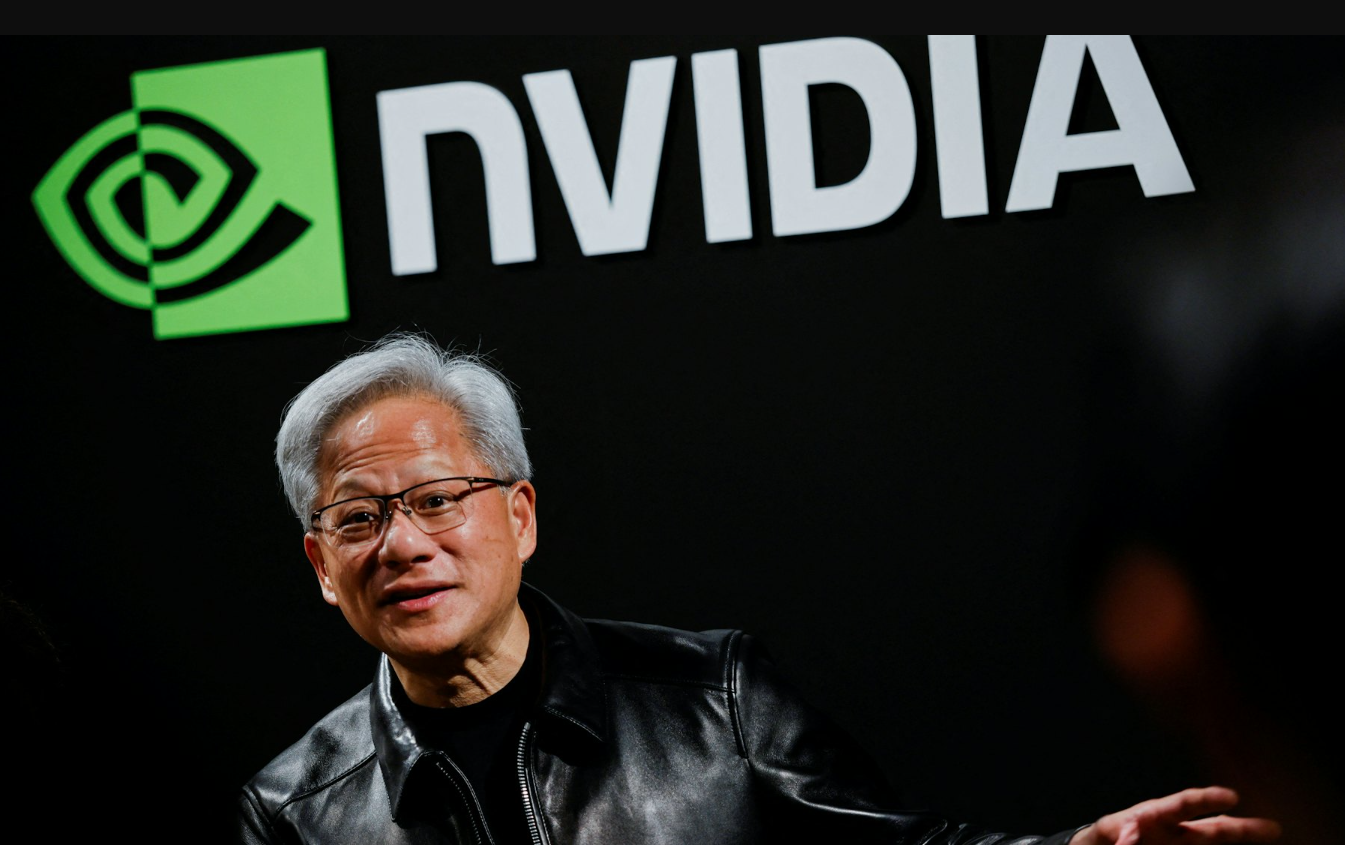
Nvidia’s sudden leadership upheaval cast an unexpected shadow over one of the most remarkable success stories of the AI boom.
In early November, Nvidia announced that Jensen Huang, who had led the company for 33 years, had resigned as president, CEO and board member. Chief Financial Officer Colette Kress became interim CEO, while longtime director Harvey C. Jones became the company’s first board chair. Huang’s departure followed a controversy that raised questions about corporate governance and national security.
Five days later, Nvidia reported record quarterly revenue of $115.8 billion, up 103 percent year-on-year. Data center revenue surged 110 percent to $107.6 billion, shipments of its next-generation Vera Rubin NVL72 computing platform began and the company projected revenues of approximately $130 billion for the next quarter. Yet the board indicated that it would not reinstate Huang, though it has since done so under pressure from U.S. President Donald Trump. The contrast between Nvidia’s extraordinary performance and its founder’s abrupt departure could hardly have been sharper.
The episode recalls Mark Hurd’s sudden resignation as Hewlett-Packard CEO in 2010 amid a corporate governance controversy. HP was performing well under Hurd and even raised its full-year outlook when announcing his departure. What followed was a period of management turmoil and strategic uncertainty, including the removal of his successor, Leo Apotheker, and a massive write-down related to the acquisition of Autonomy Corporation. HP’s experience helps explain why investors might worry about succession even after an exceptional quarter.
Intel’s history raises a different economic question: Can today’s technological leaders adapt as the commercial and competitive conditions underpinning their success begin to change?
Hidden risks of success
Intel’s leadership transition in 1998 offers another lesson. Andy Grove handed the CEO position to Craig Barrett while remaining chairman. It was an orderly succession, and Intel retained its industry leadership for years. Yet the company subsequently missed the shift toward mobile computing and struggled to keep pace in advanced semiconductor manufacturing. Intel’s difficulties cannot simply be traced to Grove’s departure. Its experience illustrates a fundamental challenge: Leadership in one technological era offers no guarantee of leadership in the next.
Nvidia faces a similar test today. Over the past decade, Huang transformed the company from a graphics processor supplier into the backbone of global AI computing infrastructure. Its CUDA ecosystem, GPU architecture, hardware/software integration and partnerships with cloud providers and AI developers have built formidable competitive advantages. Huang’s early commitment to CUDA exemplified his willingness to make bold, long-term technological bets and his determination to see them through.
Yet success can breed path dependence. When an established technological architecture and business model continue to generate extraordinary profits, research priorities, engineering talent and capital investment tend to gravitate toward reinforcing existing strengths. The very capabilities that made a company dominant can impede its ability to anticipate the next major technological shift.
Is another moment coming?
America’s A.I. leadership owes much to a global innovation ecosystem. The U.S. excels in chip design, foundational software and venture capital; Asia provides critical manufacturing, packaging and supply chain capabilities; and global markets generate demand for technological adoption and commercial expansion. Nvidia’s success embodies this international division of labor. But that environment is changing. Washington has tightened export controls on advanced chips, increasing compliance demands and reshaping the market environment for American technology companies and their global partners. Whereas Intel’s principal challenge was adapting to a generational shift in computing, America’s AI industry must contend with the growing influence of national security policy on technological choices, corporate decisions and access to global markets. If these trends continue, the industry could face another “Grove moment.”
Four developments deserve particular attention:
To begin with, the United States faces a dilemma between protecting its technological lead and preserving the openness that made that lead possible. Export controls may help slow competitors’ technological advances in the short run. But increasingly restrictive policies could shrink American companies’ overseas markets and limit opportunities for international research and commercial partnerships. Over time, measures intended to protect American competitiveness could end up undermining it.
Second, technology restrictions may accelerate the development of alternative AI technologies. The prevailing American approach relies heavily on advanced GPUs, massive computing clusters and ever-increasing capital investment. But scaling up computing power is not necessarily the only path to technological progress.
Companies with limited access to advanced chips have stronger incentives to invest in model compression, algorithmic optimization, inference efficiency and specialized chips. Prolonged restrictions could therefore accelerate the emergence of alternative technological ecosystems that compete in cost and energy efficiency. The long-term economic effects of these restrictions will also depend on how companies respond through technological innovation, efficiency gains and alternative computing architectures.
Third, technology companies may become more risk-averse. Nvidia’s establishment of a national security and export control oversight committee reflects the growing importance of managing policy risks. Its management may also place greater emphasis on financial discipline. The broader concern is that AI can transform the economy without every investment in it generating adequate returns.
A Nov. 19 report in The Wall Street Journal noted that Nvidia has participated in at least 293 investment and acquisition deals since 2023, building a portfolio worth more than $100 billion. A significant share has gone to companies that buy Nvidia’s chips, creating a circular financing model in which Nvidia helps finance demand for its own products.
This model helped nurture AI startups and ease early-stage funding pressures. As the industry matures and investors demand returns, however, circular financing arrangements unsupported by sustainable end-user demand become increasingly vulnerable. The direction Nvidia’s management chooses now could be more cautious.
Prudent risk management is essential. But if companies devote too many resources to compliance, risk containment and defending established markets, they may become less willing to invest in unproven technologies or pursue new overseas opportunities. Entrepreneurial risk-taking could increasingly give way to policy-driven caution. As investors place greater emphasis on financial discipline and sustainable returns, AI valuations may face further adjustment, particularly where expectations have outpaced underlying cash flows.
Fourth, the global AI ecosystem could become increasingly fragmented. AI innovation depends on the international circulation of talent, capital and knowledge. If access to advanced computing, critical software and technology partnerships becomes increasingly subject to geopolitical restrictions, countries may develop relatively independent technology ecosystems and supply chains. Some countries will continue to rely on American chips, software and cloud infrastructure, while others will build independent computing capabilities and seek alternative technology partners. Fragmentation would tend to increase duplicative investment and interoperability costs, but it could also create new markets and networks of innovation that challenge American companies’ established global advantages.
Rethinking U.S.-China boundaries
The United States and China have substantial differences in their technological ambitions and policy priorities. Nevertheless, both have an interest in preventing strategic competition from unnecessarily fragmenting the global A.I. industry. Building on existing commercial relationships, the two countries could and should establish more structured channels of communication between governments, industry leaders and technical experts.
Some groundwork has already been laid. In September, Washington and Beijing agreed to continue their AI dialogue and establish a communication channel for AI-related incidents. Their leaders again discussed AI during the November APEC summit in Shenzhen. The next step is to translate those understandings into practical arrangements in three areas:
First, institutionalize communication. Government agencies, companies, and research institutions could develop procedures for incident reporting, technical verification and emergency communication involving major AI safety incidents, unexpected model behavior and risks to critical infrastructure. Such arrangements would reduce the likelihood of miscalculation.
Second, cooperate on AI risk governance. A unified regulatory framework is unlikely, given differences in the two countries’ approaches to AI, but cooperation does not require regulatory convergence; both sides can exchange expertise on model safety assessments, reliability testing, risk disclosure and human oversight, beginning with specific risks that concern them both.
Third, promote global A.I. development and adoption. Through APEC, the G20 and the United Nations, the two countries could explore cooperation on secure and reliable AI infrastructure, open-source technologies, capacity building and industrial applications.
July’s APEC High-Level Forum on AI identified several of these priorities, providing a starting point for regional cooperation. Energy-efficient computing, smart manufacturing, agriculture and disaster early-warning systems offer additional opportunities to help more countries capture the economic benefits of AI.
The history of the U.S. technology industry offers valuable perspective on the challenges ahead. Mark Hurd’s departure did not immediately diminish HP’s financial performance, but it exposed the company’s dependence on management stability. Andy Grove’s departure did not precipitate Intel’s immediate decline, but the technological shifts that followed demonstrated how quickly established competitive advantages can lose their relevance. Jensen Huang’s status, likewise, will not determine Nvidia’s destiny. What makes the episode particularly significant is that the turmoil comes at a time when the conditions that have underpinned America’s leadership in AI are themselves changing.
AI’s Grove moment ultimately raises a broader economic question: Can extraordinary investment, market expectations, new leadership and financial commitments supporting today’s AI boom translate into sustainable returns as technology and competitive conditions continue to evolve?
It should be hoped that AI’s Grove moment does not mark the beginning of a more closed and divided technological relationship between the United States and China. Instead, it should serve as an occasion for both countries to reconsider where competition is necessary, where cooperation remains possible and how to preserve the openness essential to the continued progress of AI.
