
The relationship is likely to remain characterized by the dynamics of cooperation and competition—with friction and coordination coexisting for the foreseeable future. The primary role for heads of state will not be to produce dramatic breakthroughs but rather to build trust.
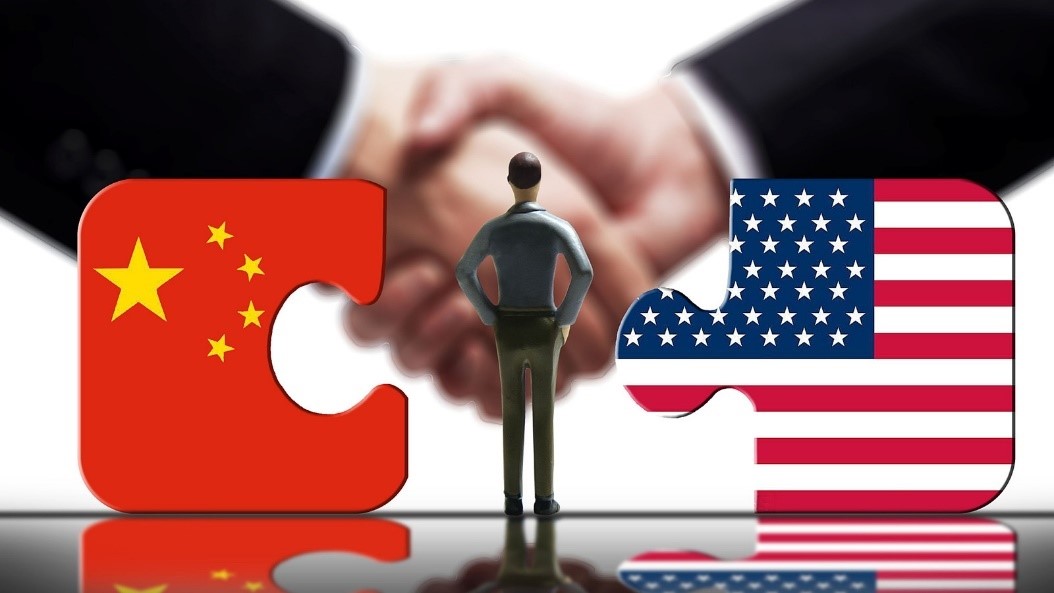
Nearly a decade has passed since the U.S. government formally adopted strategic competition with China as the defining framework for relations. Today, things have reached a point where a fundamental reassessment is needed. Over the past 10 years, successive U.S. administrations have sought to constrain China’s rise through a range of measures, including a trade war, the Indo-Pacific Strategy, the “small yard, high fence” approach, and successive rounds of tariff increases.
Yet China has not yielded to these pressures. Instead, it has become increasingly confident in pursuing its own development path. Against this backdrop, U.S. President Donald Trump now faces a strategic reality that cannot easily be ignored—the possibility that a new order in U.S.-China relations could emerge from years of sustained strategic competition.
The historic summit between the Chinese and U.S. presidents in May was widely regarded as a positive development, not so much because it resolved deep-seated differences between the two countries over trade, technology, Taiwan and other contentious issues, but because it reaffirmed the importance of maintaining high-level communication and managing strategic differences. More important, it marked an initial effort to establish a constructive framework for strategic stability
From China’s perspective, a sound relationship with the United States continues to serve important national interests. As its economy shifts toward high-quality development, China requires a relatively stable international environment and continued access to external markets. It also has a strong interest in maintaining ties with U.S. businesses, financial markets and research institutions. At the same time, China has little desire to become locked in ideological or military confrontation with the United States because that trajectory would not only raise the costs of its own development but also undermine global peace and prosperity. For this reason, Beijing has consistently stated that it seeks a relationship with Washington based on mutual respect, peaceful coexistence and win-win cooperation.
The United States is finding it increasingly difficult to sustain the ever-escalating strategic competition with China. Over the past several years, Washington has pursued a wide range of measures, including a trade war, expanded export controls, supply-chain restructuring and a strengthened military posture in the Indo-Pacific, all of which have produced some tangible results, but at considerable cost.
Many American companies remain deeply dependent on the Chinese market, while U.S. consumers continue to bear the higher costs associated with the trade war. Moreover, on a wide range of regional crises and global governance challenges, the United States cannot act effectively without China’s participation.
Although China hawks continue to believe that the United States can ultimately outcompete China, and they hope that Trump or a future administration will adopt an even tougher approach toward Beijing, they are unlikely to reverse what they see as the broader shift in the global balance of power. Nor are they likely to mobilize sufficient domestic support for a sustained strategy of confrontation.
To be sure, the United States and China face a number of deep-rooted structural differences, so strategic competition across multiple domains is likely to remain a defining feature of their relationship for years to come. The U.S. is unlikely to relinquish its global leadership position, just as China will not abandon its pursuit of modernization. Washington will continue to preserve its military and technological advantages, while Beijing will press ahead with industrial upgrading and greater technological self-reliance.
Competition, however, does not inevitably lead to the so-called Thucydides Trap. History suggests that although the rivalry between these great powers could result in war, it could also produce a relatively stable strategic equilibrium. The critical question is, therefore, not whether competition continues but whether the two sides can establish effective channels of communication and credible mechanisms for crisis management to prevent competition from escalating to confrontation.
Head-of-state diplomacy has long played an indispensable role in steering the overall direction of U.S.-China relations. Looking ahead to a possible new summit between the two presidents in September, cautious optimism is warranted. The key question is whether the two sides can sustain the renewed momentum for high-level engagement and continue exploring practical ways to build a constructive relationship of strategic stability.
The most realistic expectations lie in the economic and trade sphere. Over the past few months, U.S.-China economic relations have shown tentative signs of stabilization, yet the Trump administration has imposed a new round of tariffs on Chinese imports, highlighting allegations of “forced labor,” and is expected to launch further investigations into China’s presumed industrial overcapacity.
In addition, the one-year economic and technology “truce” reached by the two countries in November is approaching its expiration date. Although the Trump administration remains committed to maintaining high tariff barriers, it must also contend with the costs of losing access to the Chinese market, persistent domestic inflation and the prospect of strong Chinese countermeasures. If the two sides can negotiate a more stable and predictable tariff framework, both stand to benefit.
Another area where meaningful progress may be possible is the management of strategic competition in advanced technologies. Artificial intelligence, advanced semiconductors, quantum computing and biotechnology will remain central arenas of U.S.-China competition for the foreseeable future. This reality is unlikely to change simply because two leaders meet more frequently.
Competition, however, does not preclude the establishment of rules. The rapid development of artificial intelligence, in particular, has created an increasingly urgent need for cross-border regulatory cooperation. Just as the United States and the Soviet Union eventually established nuclear arms control mechanisms during the Cold War, Washington and Beijing today need institutionalized channels of communication. They urgently need risk-management mechanisms for artificial intelligence, cyberspace and digital governance.
A third area where progress is both possible and desirable is the practical restoration of crisis-management mechanisms. In recent years, tensions have repeatedly flared across the Taiwan Strait, the South China Sea and other regional hot spots, with continued U.S. arms sales to Taiwan being a particularly sensitive issue for Beijing. Insufficient communication increases the risk of miscalculation.
If the two sides can strengthen their security dialogue, institutionalize crisis-management channels and improve military-to-military communication, they will not only reduce the likelihood of unintended escalation but also take an important step toward building a constructive and strategically stable relationship.
The two countries also have considerable room for cooperation on global challenges. Whether in the Middle East, the Russia-Ukraine conflict, energy security, climate change or the governance of artificial intelligence, no country can address them alone. Although Washington and Beijing continue to differ on many questions, they share substantial common interests in preventing regional conflicts from escalating and in safeguarding the smooth functioning of international trade. Practical cooperation in these areas would generate benefits extending well beyond the bilateral relationship itself.
U.S.-China relations should be defined neither by moments of optimism nor by episodes of friction. Instead, they are likely to remain characterized by a complex interplay of cooperation and competition, with tensions and coordination coexisting for the foreseeable future. Against this backdrop, the purpose of head-of-state diplomacy is not to produce dramatic breakthroughs, but to steadily build mutual trust, manage differences and create conditions for the two major countries to eventually establish a stable strategic relationship.
