Even among America’s allies in the West there is a growing willingness to resist unrestrained U.S. unilateralism. The U.S. must establish a new equilibrium between its traditional isolationist orientation and its commitment to global engagement.
In July, the former prime minister of Singapore, Lee Hsien Loong, argued that global trade and economic relations had entered a new phase he characterized as “the world minus America.” In November, Canadian Prime Minister Mark Carney remarked at the G20 summit that the world can make progress on a range of issues without the United States.
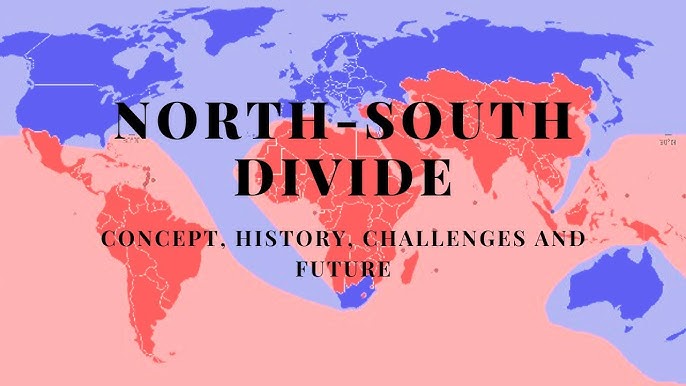
Thus, the discourse has shifted from the “de-Americanization” of global trade to a broader “removal of the United States” from global governance, suggesting that the international community is gradually internalizing U.S. retrenchment as a new normal. For China and other countries of the Global South, it is therefore all the more important to assess this emerging pattern in U.S.-world relations in a sober and accurate manner, to discern the trend toward a less American world, to promote renewed North-South dialogue, to forge a new North-South consensus and to contribute to making a more just and equitable international order.
In recent years, deepening domestic economic fragmentation and the rise of right-wing populism have transformed the United States from being a principal architect of the existing international order to its most significant disrupter. The “America first” diplomacy of President Donald Trump’s administration marked a fundamental departure from the post-Cold War U.S. strategic objective of leading the world and reflected the underlying reality that the “unipolar moment” had given way to a more genuinely multipolar configuration.
At the same time, economic globalization has driven the diffusion of economic and technological capabilities worldwide. After more than three decades of development and adjustment, a rebalancing of economic, technological and military power has taken place, and the broad-based rise of the Global South, with China as a prominent example, has signaled the return of multipolarity.
As U.S. Secretary of State Marco Rubio publicly stated earlier this year, “A unipolar world was an anomaly after the Cold War. We are now returning to a multipolar world.” The Munich Security Report 2025 likewise acknowledges that the world’s multipolarity is a fact.
One of the most salient changes in the contemporary international landscape is that the United States is reverting from being “the world’s sole superpower” to being “one major power among others.” Its aggregate capabilities may still exceed those of any single peer competitor, but its advantages are no longer sufficient to sustain a qualitatively distinct hierarchical status.
Emma Ashford, a senior fellow with the Stimson Center’s project—Reimagining U.S. Grand Strategy—captures this reassessment of America’s global position in her recent monograph “First Among Equals: U.S. Foreign Policy in a Multipolar World,” which indicates a broader shift within the American strategic studies community.
The erosion of the dominant position of the United States—and, more broadly, of the West—has in turn accelerated the incubation of a new order superimposed upon the emerging multipolar structure. The defining feature of this new order is likely to be pluralistic coexistence. Mutual constraints among established and rising major powers are becoming more balanced, and countries of the Global South now enjoy a historically unprecedented opportunity to shape and reform the international order on their own terms.
Put differently, institutional arrangements and sets of rules that were once defined almost exclusively according to U.S. or broader Western preferences are now subject to critical re-examination and substantive reform. This creates space for Global South countries to participate on equal footing in the development of a more inclusive and pluralistic set of norms and practices that better reflect diverse interests.
China and other Global South states have repeatedly emphasized that the emerging order is not about razing the old system but about inheriting, reforming and improving it. Groupings such as BRICS, the Shanghai Cooperation Organization, ASEAN and the African Union have become increasingly active in advancing diversification of monetary reserve systems and in promoting reform of the United Nations and the Security Council to expand the representation and voice of developing countries. They seek fundamental pathways through which to resolve the Russia-Ukraine conflict and propose fairer arrangements for burden-sharing in climate governance.
Likewise, in recent years China has successively put forward four major global initiatives, which provide public benefits that enhance peace and stability, security and development, as well as governance effectiveness. These initiatives help to address global governance deficits and facilitate a more balanced and orderly evolution of multipolarity.
A U.S. withdrawal from certain domains of international leadership does not necessarily mean disorder. Its consequences will depend on the interaction between forces that seek to maintain order and those that undermine it, and between strategic impulses toward stability and those that augur toward disruption.
A prominent strand of pessimism in Western scholarship contends that the hegemonic decline and strategic retrenchment of the United States will usher in an era of turbulence — or even a systemic crisis. This view sees the end of the long peace since World War II, the return of the rule of the jungle in international politics and the emergence of a vacuum in global governance.
Underlying these claims is a contemporary restatement of hegemonic stability theory. It is the notion that peace and stability under hegemony will necessarily give way to instability and conflict after hegemonic retrenchment. Yet the so-called Pax Americana, like the earlier Pax Britannica, is in large part a self-serving idealization rooted in Western-centric interests. From the perspective of the historical memory of China and other Global South countries, the 19th century “Pax Britannica” coincided with arduous struggles against colonial aggression, while the post-Cold War “Pax Americana” has been largely nominal. The U.S.-led wars in the former Yugoslavia, in Afghanistan and in Iraq remain vivid examples in living memory. What ought to have been mutual great-power restraint in the service of peace was frequently transformed into arbitrary hegemonic outcomes for the dominant power, met by reluctant compromise and forbearance from other major states.
Some Western strategic thinkers, motivated by a desire to preserve U.S. hegemony, have popularized narratives such as the Thucydides Trap and the trope that “rising challengers destabilize the international order.” In reality, however, much of the instability accompanying the current transition from the old order to a new one stems not from rising powers but from the disruptive behavior of a hegemon in decline.
The Trump administration engaged in coercive economic predation against other states, pursued a pattern of withdrawal and treaty breaking that undermined basic norms of international conduct and sought to profiteer from disorder and recast the rules amid chaos. By contrast, China and other emerging powers remain on an arduous climb that includes structural upgrading. They have a strong vested interest in a peaceful and stable external environment, as well as in the gradual, orderly reform of existing institutions. A series of major diplomatic statements and initiatives have thus shined a light China’s strategic resolve and policy preference to uphold, not overturn, the existing international order.
American society needs to recognize that the previous model of the United States as sole superpower and global policeman is not sustainable. Strategic overextension ultimately erodes national strength and cannot be perpetuated indefinitely. Nor is the current pattern of capricious withdrawals and treaty breaking a viable alternative. The United States must establish a new equilibrium between its traditional isolationist orientation and its commitment to global engagement.
Whatever form this new balance takes, it should rest on the premise that the United States participates in the international order as a normal major power and an equal member of the international community. This would be beneficial both for the U.S. itself and for the wider world. Until the United States makes the requisite intellectual and policy adjustments, the international community will need to cooperate consciously to contain and neutralize the contagious disruption that could arise from America’s decline.
Lee Hsien Loong’s argument for a “world minus America” in global trade and economic relations and Carney’s call for the “removal of the United States” from global governance are positive signs, suggesting that even within the West there is a growing willingness to resist unrestrained U.S. unilateralism.
Countries of the Global South and the Global North should therefore deepen dialogue and cooperation so that, even under conditions of U.S. withdrawal, they can jointly advance the sustainable development of global governance and the reform and improvement of the international order. The recent Sino-French Joint Statement on Strengthening Global Governance is a notable step in this direction and provides an instructive example for others.
