

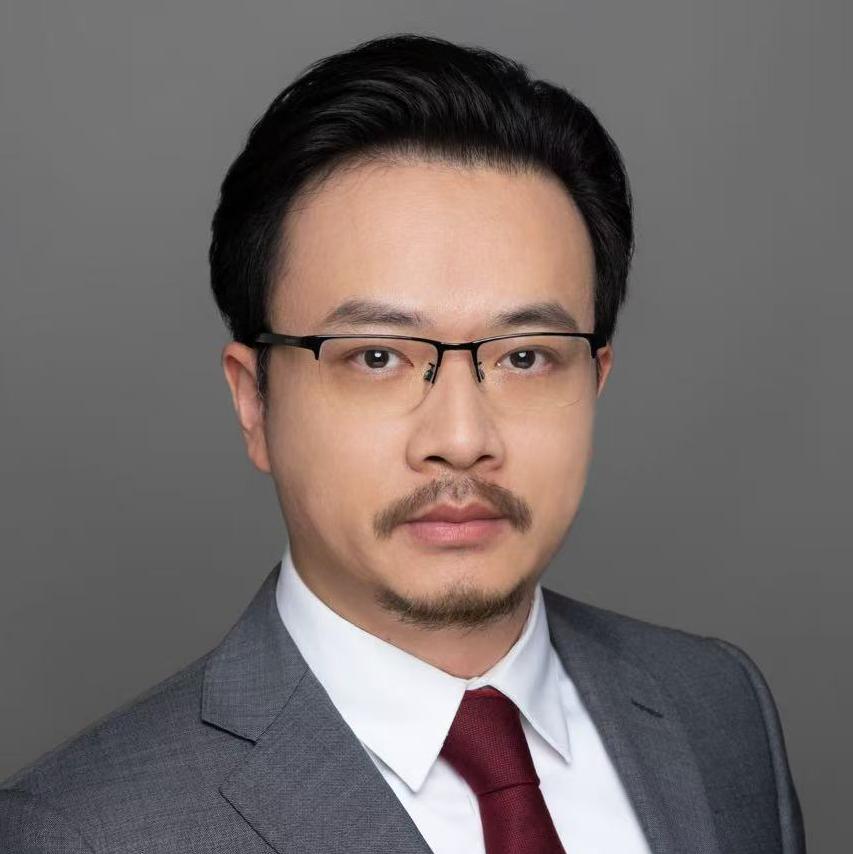
Editor’s note: Ahead of the APEC leaders’ summit in Shenzhen, scholars Da Wei, Shao Yuqun and Zhao Long discussed the changing dynamics of China–U.S.–Russia relations in a recent episode of Sinopinion, a podcast of Tsinghua University’s Center for International Security and Strategy. Their conversation explores the limits of Cold War analogies, prospects for strategic stability and the shared risks that could encourage cooperation. The following transcript has been lightly edited for clarity and readability.
Da Wei:
Welcome to Sinopinion, the podcast of the Center for International Security and Strategy, or CISS, at Tsinghua University. We provide Chinese perspectives with a global vision. I’m Da Wei, speaking from Beijing. Today, I’m joined by my co-host Shao Yuqun and Mr. Zhao Long, Yuqun’s colleague from SIIS, Shanghai Institutes for International Studies.
As the APEC summit in Shenzhen, China, approaches, there is growing international attention to whether the leaders of China, the U.S. and Russia will meet in Shenzhen. Of course, at this stage, we do not know whether such a meeting will actually take place. Nevertheless, we can discuss the relationship among these three major powers, which has drawn significant global interest, and what it means for the future of the international order.
The first question is: When people talk about China-U.S.-Russia relations, are they really discussing the trilateral relationship among the three countries—the so-called strategic triangle—or are they mainly referring to the three separate bilateral relationships: China-U.S., China-Russia and U.S.-Russia?
Yuqun and Zhao Long, do you think the strategic triangle remains a relevant analytical framework in the current geopolitical landscape? Or, put differently, what are the key differences between China-U.S.-Russia relations today and the strategic triangle of the 1970s?
Zhao Long:
Maybe I’ll start. I think the strategic triangle remains useful as an analytical framework, but it can be quite misleading if we treat it as a blueprint for today’s relations, because the whole logic behind it has fundamentally changed. In fact, I would prefer to talk about trilateral engagement rather than a triangle, for two reasons.
First, the international system itself has changed dramatically. During the Cold War, as we know, the world was largely divided into two competing blocs with separate political, military and economic systems. In that environment, this kind of triangular diplomacy made strategic sense. Washington could certainly strengthen its position against Moscow by moving closer to Beijing.
But today, I think we are no longer operating on this Cold War chessboard. The three powers are deeply connected through supply chains and other shared challenges. Of course, fragmentation is growing, particularly in the technological domain, but we are still far from having those separate systems.
The second reason is that the three countries now have quite different strategic priorities. Of course, deterrence remains important, but so do interdependence and the shared interest in avoiding direct confrontation. The three bilateral relationships have very different dynamics. You cannot simply rearrange the three sides of the triangle and expect the balance to shift as it did 50 years ago.
A final point is that there are other players. Europe and the countries of the Global South have their own interests and their own choices. Great-power relations can no longer be determined by the triangle itself; they are also shaped by broader international developments.
Coming back to a possible trilateral meeting among the three leaders, I think the discussion itself is revealing. It reflects a growing recognition that, in today’s world, serious challenges ranging from AI risks and regional conflicts to energy and supply chain disruptions cannot be effectively managed without communication among these three countries.
So, if we are talking about the possibility of a trilateral meeting, I would describe it more as functional trilateral engagement and less as using one relationship against another.
Da Wei
Yes, I agree with Zhao Long’s view. During the Cold War, in the 1970s, China, the U.S. and the Soviet Union were not interconnected as China, the U.S. and others are today. Today, we are coupled together, right? We are interconnected.
At that time, the three players were very independent of one another. One country could use a third party as leverage against another country. But I don’t think the situation is the same today. What’s your view, Yuqun?
Shao Yuqun
Compared with the 1970s, one thing is quite different: China’s overall strength. In the 1970s, China was much weaker than the Soviet Union and the United States in terms of comprehensive power. Currently, China is the world’s second-largest economy, and its overall strength and capabilities have risen to quite a high level.
I think this means we cannot look at relations among these three countries from an old perspective, or a Western perspective, because China’s history, culture and strategic thinking are very different from those of Western countries. As China becomes more powerful, I think the relationship among these three countries will be different. That is my first thought.
Second, I agree with both of you that, even though the United States pursues a strategy of strategic competition toward China, China still wants to maintain engagement with the United States, rather than see it as a security threat to China. The spirit of engagement is quite important in the current China-U.S. and China-Russia relationships, and also in U.S.-Russia relations to some extent. At least President Trump still wants to engage with Russia and the Russian president. These are some of the differences today.
I was also thinking about last year—I think it was the first half of 2025—when there was a debate about whether a “reverse Nixon” strategy might be possible. In what ways is the current discussion about China-U.S.-Russia relations different from those earlier debates? How has the focus of the conversation shifted? Zhao Long, what’s on your mind?
Zhao Long
Yes, indeed. I think the concept of a reverse Nixon strategy has not disappeared entirely since last year. The argument was quite straightforward: If China is America’s long-term adversary or strategic competitor, Washington should improve relations with Russia to reduce Russia’s dependence on Beijing. In other words, it should use Russia as a counterweight to China.
But I think people really underestimated the foundations of the China-Russia relationship. This relationship is not simply a so-called alignment against the U.S. It is rooted in economic complementarities and shared interests in regional and global affairs.
Although we are observing growing intentions in both Moscow and Washington to normalize their bilateral relationship, we should also recognize the limits of such a rapprochement. Even if Presidents Trump and Putin reach some form of accommodation, fundamental disagreements over European security and the broader international order will remain.
I would make an important distinction here between tactical accommodation and strategic alignment. Having said that, I think a reverse Nixon strategy would not be feasible in the near future, or perhaps even over the longer term, because the nature of this trilateral relationship, as we discussed earlier, has changed a lot.
Shao Yuqun
I would say people also underestimated the resilience of China-U.S. relations. It is quite interesting that China and the U.S. have reached a kind of consensus on building so-called constructive strategic stability. We have seen stability in China-U.S. relations before a comparable stability in U.S.-Russia relations. Why has this happened, Da Wei? What do you think?
Da Wei
First, I wouldn’t say U.S.-Russia relations have not improved. Of course, it is hard to say how much they have improved, but the two presidents met even before the Chinese and American leaders met. So I would say that, at least, the U.S.-Russia relationship has also stabilized.
Having said that, China-U.S. relations are very complex, as we all know. China and the U.S. need each other, and we cannot defeat each other. A confrontational relationship between China and the U.S. is too dangerous militarily and too expensive economically.
I would say both countries have realized that they cannot decouple from each other completely, and they cannot afford a military conflict. It would be a disaster for both countries and the whole world if we continued along the trajectory of deterioration.
I have always argued that structural forces are pushing China and the U.S. to stabilize the relationship. It is not just some random thinking on the part of the leaders. These are structural forces: We are two military powers with deterrent capabilities, and economically, there is what people call “mutually assured disruption” in supply chains, among other factors.
For all these reasons, we cannot afford to let bilateral relations deteriorate further. That is why China-U.S. relations have stabilized, as you said, or why the two countries have reached the framework concept of a “constructive relationship of strategic stability.”
Shao Yuqun
Great point. Discussions about great-power relations often lead us to broader questions about the transformation of the international order. Do you think the evolution of great-power relations can determine the direction in which the international order develops?
How do other countries, such as European countries and countries of the Global South, view the role of major powers in shaping or transforming that order? What is the relationship between great-power coordination and the multi-polarization of the world?
Are concerns about the emergence of a “new Yalta” or a great-power condominium grounded in reality? Are such concerns still relevant or necessary today? Sorry, that’s a lot of questions. Zhao Long, would you like to address some of them?
Zhao Long
Sure. First, there is no doubt that the international order is shaped not only by major powers. Regarding a multipolar world, I think it is also clear that multipolarity does not automatically produce a more stable world. It depends on what kind of multipolarity we are talking about.
I see different approaches to multipolarity. We have noticed that even senior U.S. officials recognize the trend toward multipolarity. But I think Americans still see it as competitive in nature: Major powers recognize one another’s capabilities but continue to intensify competition, with the ultimate goal of preserving U.S. supremacy.
There are other approaches—for example, coexistence, with considerable emphasis on restoring spheres of influence for different major powers. But China holds a totally different concept: an equal and orderly multipolar world. I think this is about complementarity. The idea is not simply to redistribute power among major countries. It is about producing more public goods without creating exclusive blocs.
Let me say something about a new Yalta. I wrote an article last year arguing that China has very little reason to welcome a new Yalta or a world carved up by great powers. China’s development has benefited enormously from globalization, connectivity and relationships across different countries and groupings. A return to spheres of influence would certainly undermine those conditions.
We also cannot forget history. Historically speaking, China was one of the major victims of the old pattern of the Yalta system. That is why I think China will continue to uphold the UN-centered international system and encourage different countries, including middle powers and countries of the Global South, to work together to reform the current global governance system, rather than create a new type of Yalta system.
Shao Yuqun
Yes, I agree. China’s political identity is still that of a developing country. As part of that group, China understands very well the concerns of developing countries. Their priorities are still economic and social development.
They have many concerns about major-power competition and the spheres of influence of a new Yalta system. They worry about several scenarios: military conflict between or among major powers; being forced to choose sides; and the unpredictability brought about by major-power competition.
They also worry that their interests and legitimate rights will be harmed by rules made only by big powers. And they worry that their interests and rights will be harmed by disorder in global governance caused by major-power competition.
I think China understands all those concerns very well. That is another reason China would not try to seek a new Yalta system.
Da Wei
Thank you, Yuqun, for elaborating on those concerns from other players. Based on that, I want to raise some questions. But first, I would like to add a few points to what you and Zhao Long have said.
I think we have to admit that major powers are the most significant shapers of the international order. China, the U.S. and Russia are important countries, but there are other players. In your earlier question, you mentioned European countries, the Global South and emerging markets. I think those countries are playing very important roles.
So I don’t think China, the U.S. and Russia are in a position to dominate the international order or carve out spheres of influence, even if they wanted to. For instance, after World War II, the U.S. alone accounted for roughly half of global GDP—basically 50 percent of the global economy. Today, I don’t think China, the U.S. and Russia together are in that position.
Zhao Long mentioned that China was actually a victim of the Yalta meeting in 1945. For listeners who may not be familiar with the history, China was a major participant in World War II and one of the countries that won the war, alongside the Soviet Union, Great Britain and the U.S.
The U.S., the Soviet Union and the U.K. decided to restore the Soviet Union’s preeminent rights in Manchuria, or Northeast China. I think the Yalta Agreement also guaranteed the status quo in Mongolia, which was de facto independent, although the Chinese government opposed that at the time.
China suffered from those actions by great powers carving out spheres of influence and undermining the interests of third parties. For that reason, I really think China has no appetite for this kind of new Yalta agreement.
But coming back to the concerns Yuqun mentioned, I think these are real concerns. Although we believe China, the U.S. and Russia will not have a new Yalta agreement or conference, how can these three major powers address those concerns? How can they contribute to conflict resolution without carving out spheres of influence or determining the fate of third countries? What should they do? Yuqun, perhaps you could start.
Shao Yuqun
I think there are several important principles for the foreign policies of major countries or major powers. First, when conflicts occur or disputes arise or persist between countries, major powers should insist on diplomacy first. Self-restraint is another principle.
Third, major countries need to strengthen dialogue with regional countries and stakeholders. They should have more dialogue and diplomatic consultation with regional players to deal with conflicts wherever they occur. I think these are responsibilities for major countries.
They should not look at the resolution of regional conflicts from a zero-sum perspective, thinking about who wins and who loses when a conflict ends, or thinking only about geostrategic interests after the resolution of a military conflict.
So, no zero-sum mindset, and no over-securitization of economic issues. From China’s experience, when we deal with disputes, military conflicts or security conflicts, we always think about the root causes. Some of those root causes are not military or security-related, but social and economic. China therefore takes a long-term view in dealing with military conflicts.
I know these conflicts are complicated and very difficult to resolve. But major countries need new thinking. We should not address these challenges only through the experience of the Cold War or earlier times.
Da Wei
Zhao Long, do you have anything to add?
Zhao Long
Yes, certainly. I totally agree with Yuqun’s points. I would emphasize that major powers should exercise more self-restraint and avoid a zero-sum mentality.
Beyond that, as a major country or a major power, you should behave like one and acknowledge that major powers have a common responsibility to maintain peace and stability.
I also agree that resolving regional conflicts is very complicated. Take the Ukraine crisis, for example. There are certainly very different positions in Washington, Moscow and Brussels. I don’t think a peace settlement can be achieved only through negotiations among major powers, or among the U.S., Russia and China.
But there is certainly a common responsibility to prevent escalation, keep diplomatic channels open and create conditions for political negotiations. In that respect, major powers could do more to facilitate a settlement rather than determine it.
That is why I think closer interaction and dialogue among major powers are important: to discuss regional conflicts, conflict resolution, crisis management and the prevention of escalation. But we should also be more realistic about the outcomes and what can actually be delivered. These efforts need the participation not only of major powers, but also of all the stakeholders involved in the regional conflicts and their root causes.
Shao Yuqun
Another question is whether stable relations among major powers necessarily lead to global stability. Is it possible that relations among major powers become relatively stable while regions such as Europe, the Middle East or the Asia-Pacific actually become more unstable?
Da Wei
I don’t think stable relations among the three countries will necessarily lead to global stability. But I also don’t think they will necessarily lead to instability in the international order or in regional orders. It really depends on how the three countries engage with one another, and how other players can join negotiations or continue discussions with the three countries.
Again, I understand there are concerns in many parts of the world. People worry that, if the three countries meet, they will decide or dictate the order on other issues. As we have discussed, I don’t think the three countries really want to, or can, reach a Yalta-style agreement. If they held a Yalta-like conference, that would probably lead to instability in other regions. But I don’t think that will happen.
I want to be very frank. Many of my colleagues in other countries have concerns about this potential meeting. Besides their concerns about Yalta, they point out that, among the three countries, Russia and the U.S. are at war: Russia is at war with Ukraine, and the U.S. is at war with Iran in the Middle East. So they ask: How can these three countries decide global issues?
I don’t share that view. If we are realistic, yes, the other two countries are involved in military conflicts. But I think it is still important to engage countries involved in conflicts. That is more helpful for peace and stability.
Let’s imagine that the three leaders are all gathered in Shenzhen but do not meet or talk to one another. I think that would be bad for international peace. It would be good for the three leaders, and other leaders as well, to talk to one another.
We can have bilateral meetings. We may have a trilateral meeting. APEC itself is a multilateral meeting. I think engagement is a key to peace and stability.
Shao Yuqun
Yes, I agree. The Chinese government has consistently emphasized that major powers bear special responsibilities for maintaining international peace and stability.
Given the current lack of mutual trust between China and the United States, and between the United States and Russia, is it still possible for these three major powers to coordinate and cooperate in areas such as AI, outer space, nuclear risk reduction, global energy stability and macroeconomic stability?
Can they still work together to prevent major risks from emerging? Or, when crises do occur, can they manage them effectively and prevent escalation? What do you think?
Zhao Long
I think they certainly can coordinate on these global challenges. But I would also be very cautious and call for lower expectations, because there are still fundamentally different views on certain areas and questions.
In general, despite the relatively low level of strategic trust among them, the three countries recognize that risks in certain areas should be managed because the consequences would be huge.
We can also learn from the past. Washington and Moscow had very different policies and strategies regarding their own military development. They could not agree on everything the other proposed. But they did reach a certain level of consensus because both recognized the catastrophic consequences of uncontrolled competition.
I would name a few areas where greater coordination among the three countries may be possible. The first, of course, is risk reduction, particularly on the nuclear issue. It would be unrealistic to expect China to participate in trilateral nuclear arms control negotiations with Washington and Moscow, because those two countries have much larger nuclear arsenals than China. They therefore have to bear primary responsibility.
But that does not mean China should remain outside discussions of strategic stability. There are certain areas where the three countries could coordinate, including reaffirming that a nuclear war cannot be won and must never be fought, and addressing risks related to the AI revolution and other emerging technologies.
The second area is AI. I think China and the U.S. have taken significant steps and agreed to launch talks on AI risks. This is a very positive signal. Perhaps, in the future, the three countries could also launch trilateral discussions on this.
Beyond that, energy security and supply chain resilience could also be on the agenda. China, the U.S. and Russia occupy different positions in the global energy system, but all three have an interest in avoiding disruptions. They could talk about maintaining the stability of shipping routes and energy infrastructure, and the broader consequences of regional conflicts.
In general, my preferred approach is more communication and fewer unrealistic commitments. These talks and coordination efforts should focus more on risk management and less on institution-building outcomes.
Da Wei
Zhao Long has given us a very good list of potential areas where the three countries might work together. I share his cautious view. I may be even more cautious than Zhao Long.
I don’t think they can reach many detailed agreements on any of the issues he mentioned, particularly during this APEC summit. It is less than a month away, and all these issues are extremely complicated and require a long period of preparation. I don’t think we have enough time.
Having said that, they can first reiterate some principles. Just reiterating them would be good. For example, Zhao Long mentioned that nuclear weapons should not be used, and that a nuclear war cannot be won and should not be fought.
I wonder whether we could also repeat that all three countries are committed to keeping international sea lanes and straits open. Or the three countries could say that they are all committed to the principle of nuclear non-proliferation.
We are going through a very chaotic period. If the leaders of the three countries could reiterate principles we have agreed on and been committed to for decades, I think that would be helpful in these chaotic times.
I also think a potential meeting could start a process on the issues Zhao Long mentioned. We certainly cannot reach agreement within a month. But perhaps after one, two or three years, we could achieve something.
The three governments could continue to talk. They could also encourage, for example, Track II or Track 1.5 communication. I think these would all be very helpful. There is something we can do afterward.
But I have a question for both of you. Looking at the new positioning of China-U.S. relations, which we call “constructive strategic stability,” some would argue—and I myself think this way—that it has been driven by mutual vulnerability between China and the U.S., rather than shared interests.
If that is the case, do China, the U.S. and Russia today share similar forms of mutual vulnerability? Could those vulnerabilities provide a foundation for a certain degree of strategic stability among the three countries, even while strategic competition continues? Is mutual vulnerability among all three, or between each pair, a good foundation?
Shao Yuqun
I agree with the view that common or shared interests have not brought stability to China-U.S. relations, but mutual vulnerabilities have successfully done so.
For the three major countries, I think AI safety risks represent a vulnerability and a possible worst-case scenario for all three. I haven’t followed AI development very closely, but through my conversations with scholars and experts in that area, I have come to worry about two things in particular. The first is the use of AI in the military domain, and the second is the use of AI in wet labs.
AI’s development is really beyond our expectations and imagination. I think the three countries share the same vulnerability, and they should work together on agreeing not to do certain things in military applications of AI, and not to do certain things in wet labs. Otherwise, we will face the extinction of human beings, which is the real nightmare for all of us. So I think the three countries can work on agreeing not to do certain things.
But to return to the previous question, take China and the U.S. as an example. These two countries now have channels or mechanisms for trade and economic dialogue. They will also start the first round of dialogue on AI [wording to confirm]. But on the security front, they don’t have the mechanisms.
If the three countries need to reach consensus, or start a process of discussing what not to do in certain sectors, they need mechanisms. I agree with Da Wei that we can do something through Track II or Track 1.5 exchanges. I think that is a starting point, but we should act as soon as possible. Otherwise, I don’t think the future will be very bright for any of the three major countries.
Zhao Long:
I think the concept of mutual vulnerability originally emerged in the context of nuclear deterrence. If we understand today’s strategic stability as a relationship in which competition can be managed and made more predictable, then potentially, yes, we could extend the same logic to the trilateral level.
But we have to acknowledge that today’s vulnerability is no longer only about nuclear weapons. It also involves AI, as Yuqun mentioned, cybersecurity, infrastructure and critical supply chains.
China, the U.S. and Russia all have considerable capacity to generate strategic pressure. But I think all three have less confidence in their ability to control the consequences. That is why this kind of mutual vulnerability really matters.
How can we extend strategic stability to the trilateral level? I would outline three possible types of strategic stability. First, stability based on deterrence, in which all three countries try to avoid confrontation because they understand the costs. The second type is related to risk management, where they could establish communication channels. The third is more about cooperation, involving broader common interests and institutionalized cooperation.
I don’t think China, the U.S. and Russia are ready for that kind of cooperative stability at the current stage. But moving from deterrence-based stability toward stability based more on risk management would already be very meaningful.
We could certainly facilitate dialogue on the issues Yuqun mentioned, and on areas where all three countries recognize that, if misperceptions are not well managed, the consequences would be huge for all of us. So I think we could certainly try to extend strategic stability to the trilateral level. But there is still a lot of work to do.
Da Wei:
Yes, vulnerability is a very critical concept right now for China and the U.S. Between the U.S. and Russia, mutual vulnerability in the nuclear area is also a key to the stability of that bilateral relationship.
What I want to add is that, yes, we have mutual vulnerabilities, but these vulnerabilities may change, militarily or economically, because of technology. AI could alter nuclear strategic stability. Our economic interdependence could also change in the future. For example, Americans want to develop their own rare earth technology, and China wants to produce its own semiconductors.
At the same time, besides mutual vulnerability, I think AI brings us common vulnerabilities. These common vulnerabilities are emerging very rapidly. This is not something a decade away. It is something that all three countries—or, I would say, all of humanity—may face within months, or perhaps a year or two.
Superintelligence or artificial intelligence could, of course, give us tremendous opportunities. At the same time, it could pose a fatal threat to all countries, particularly China and the U.S. as the two leading countries.
So this is not just a zero-sum game between China and the U.S. over the point of singularity, or who can reach AGI—artificial general intelligence. It could be an existential threat to all of us. That is a common vulnerability.
In facing these common vulnerabilities, we have to work together, hand in hand, to cope with them. It is good that we now have governmental dialogue, but I have to say it is moving too slowly, while technology is developing so fast. We need to think about the fact that, a year from now, we may be in a very different situation. I think we need to move faster to deal with this challenge in the future.
Shao Yuqun:
All right, that brings us to the end of our time. Thank you, Da Wei. Thank you, Zhao Long, for joining this conversation.
Today, we discussed relations among China, the U.S. and Russia, their implications for global stability and the transformation of the international order.
The most important thing is that major countries bear special responsibilities for the development of the global economy, society and security, and indeed for the future of humankind. They should act responsibly, fulfill their obligations and play a constructive role in addressing the common challenges facing the international community.
Da Wei:
Thank you. Thank you for listening to Sinopinion, Chinese Perspectives, Global Vision. For more insights from Chinese scholarship on international affairs, please follow or subscribe to our podcast. Until next time.
