
Global governance is increasingly constrained by three interconnected traps: a shrinking supply of international public goods as U.S. global leadership recedes, a growing crisis of public trust in governments and institutions, and the rising power of AI firms that outpaces effective regulation. Together, these trends weaken the ability of states and international institutions to address major transnational challenges, from security and public health to climate change and artificial intelligence.
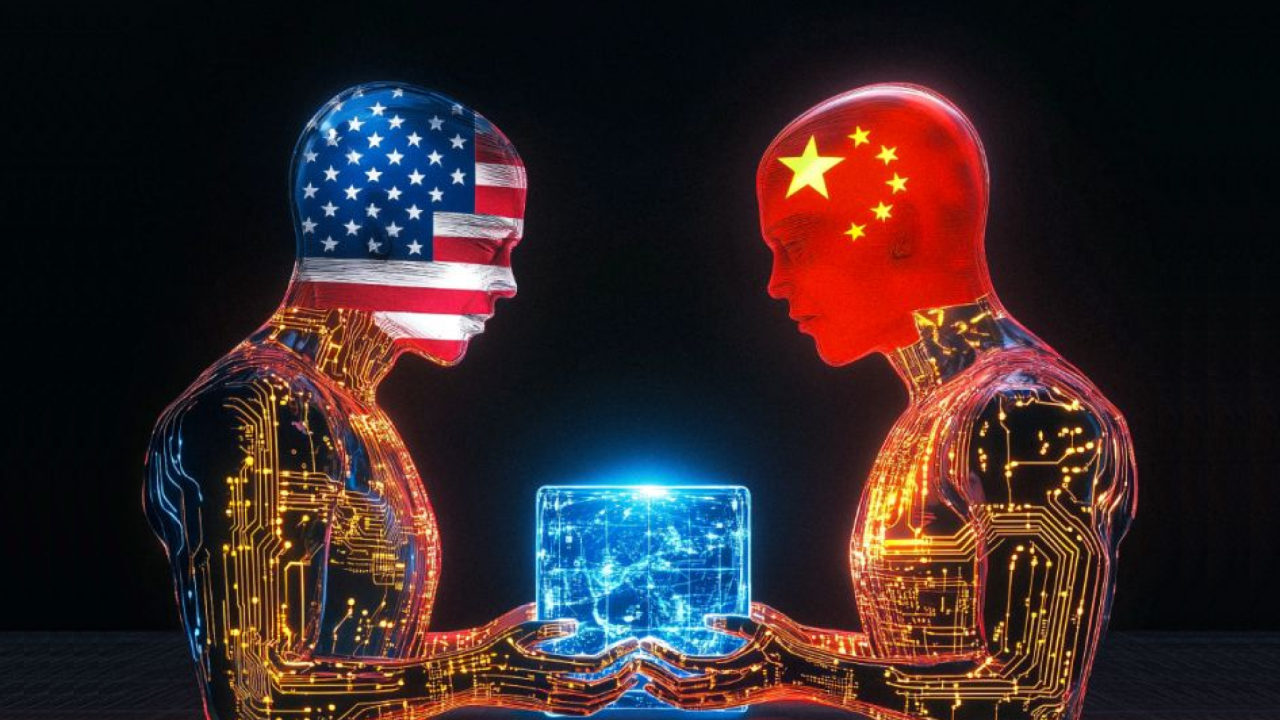
As I address my students from near and abroad on global geopolitics, I often get asked – what keeps me up at night?
This question is surprisingly difficult to answer, in light of the plethora of challenges confronting our world today: from anthropogenic climate change to public health crises, from the precipitous advent of artificial intelligence – especially in socially impactful domains and potentially detrimental ways – to the spillover effects of “great power” rivalry, there exist plenty of challenges demanding robust pragmatism and a healthy dosage of realism, from both state and non-state actors.
Inter-state engagement pertaining to issues of such magnitude and scale can also be construed as an emphatic representation of the term “global governance” – which could be loosely defined as the management of trans-national problems afflicting a significant proportion of the world’s population by states, non-state actors, and multilateral institutions. The emphasis is to be placed upon “governance”, as opposed to the binary of “competition” or “cooperation” – both of which would inevitably feature in the process.
In my view, as it stands, global governance is beset with three critical challenges: the “Kindleberger”, the “Tacitus”, and the “AI-Leviathan” Traps. Naming them is perhaps the first step to a genuine understanding of what to do next. Indeed, these issues matter not just in relation to China and the U.S., which comprise but 20% of the world’s population, but also the Global Majority beyond.
The Kindleberger Trap
In accounting for Donald Trump’s return to power, much emphasis has been placed upon the predominant roles played by disgruntlement towards his predecessor Joe Biden’s economic record (in ways that are reminiscent of Trump’s initial triumph against Hillary Clinton in 2016). Other accounts have pinned the blame on the Democratic ticket’s perceived liberal bent – positing that its social agenda was far too radical and alienating for the median voter.
Yet a perhaps overlooked part of the story was the increasingly prevalent belief, held by many in the Rust Belt and swing states, that the U.S. had been embroiled in far too many “foreign projects” of (purportedly) little to no immediate relevance to their own interests. That is, the U.S. is perceived as footing one too many bills for others – on wars, security and defense (vis-à-vis NATO and the Middle East), on trade (with the USD being arguably the country’s greatest export – a fact that had culminated in the Triffin Dilemma and exorbitant privileges of sustaining a net current account deficit), and on multilateral institutions (e.g. funding the WHO and international aid). The smorgasbord of grievances played right into the hands of – or, rather, was artfully exploited by – Trump and his allies, which paved the way for his return to the prized throne.
The ferocious drive with which Trump has systematically dismantled the U.S.’ “globally oriented institutions” – from USAID to its contributions towards the UN and WHO – has been in part tempered by the hitherto independent judiciary and, to a lesser extent, Congress. Nevertheless, the damage has already been done. A Lancet study posited that should current funding cuts from the U.S., UK, Germany, Canada, and other developed nations continue, we could well be seeing 9.4 million additional deaths by 2030. Around 2.5 million of these deaths would be among children under the age of five.
From ongoing regional security disruptions in Myanmar and the Democratic Republic of Congo to public health challenges such as the persisting Ebola pandemic (which is innately intertwined with the strife in Congo), from ubiquitous food shortages to the escalating shocks of climate change, the world is experiencing an acute deficiency in public goods provision.
Could China be the answer? The country has raised its funding share of the UN regular budget from 1% in 2000 to over 20% and is now the second-largest financial contributor to the UN peacekeeping operations. However, whilst Beijing exhibits strong interest in supporting the renewable transition, providing public health goods (e.g. vaccines and masks during COVID-19), and advancing norms in AI governance, it has little interest – perhaps with good reason – to serve as the world’s “policeman”. Indeed, by contrast, the U.S. has over 750 military bases in 80 countries, China only has one. As Trump’s U.S. withdraws its military presence unevenly and selectively, who will fill the vacuum – if anyone?
The Tacitus Trap
The Tacitus Trap refers to the phenomenon where the immense unpopularity of a government may cause it to enter into a self-reinforcing crisis of trust deficit and perceived illegitimacy, such that even if the administration ends up implementing sound policies, such policies are not trusted by the public.
The significant setback to the U.S.’ reputation in recent years has been conspicuous – with the Copenhagen Democracy Index observing that the net perception of the country has entered negative territory (-16%), placing it behind Russia (-11%) and China (7%). Across major NATO and European partners to the U.S., favourability has plunged as a result of the prevarications over and unilateral imposition of tariffs, Washington’s decision to wage war in Iran, and the threat to NATO sovereignty epitomised by Trump’s actions and rhetoric on Greenland and Ukraine.
On the other side of the Pacific, the bellicose and trenchant demeanour embraced a few years back by select Chinese diplomats had won the country relatively few supporters on the international stage – as I argued in a piece five years ago. Whilst the country’s soft power has considerably improved in recent years – for example, “Chinamaxxing” and the global awakening to its prowess in AI and other advanced technologies – Beijing still struggles to make inroads in the European Union, with over a third of the respondents in an ECFR survey in 2025 viewing the country as a “rival” and “adversary”, as well as amongst other G7 nations.
Yet the problem extends beyond these two powers. Across advanced liberal democracies in Europe and Northeast Asia, the past decade has seen a significant surge in anti-regime resentment and corresponding rise in anti-elite populism. From Nigel Farage in the UK to Marine le Pen in France, that these figures now pose viable threats to the powers that be indicates problems that are more fundamental than merely social media echo chambers or the advent of AI-enabled misinformation – the intractable polarisation speaks to the entrenched harms of socioeconomic inequalities, identity politics, and an ossified establishment ill-equipped to respond to incipient usurpers of power.
The AI Leviathan Trap
The third trap pertains to the proliferation of AI – and the complex politics underlying it.
USD 965 billion. USD 852 billion. These two figures comprise the latest valuations of Anthropic and OpenAI – two leading giants in the American AI space. To what extent are these numbers warranted? Should we see such numbers as reflective of some metaphysical facts about the quality and value of such companies? For whom is such value real?
The global AI landscape has long been portrayed to be a “race” between nation-states – China vs. the US, with the European Union occasionally included as an afterthought. Yet this framing is innately misleading: as evidenced by recent events, private corporations such as Anthropic and OpenAI are by no means mere extensions of the American state, despite their deep interlinkages. Even the more regulation-inclined Chinese and European bureaucracies have struggled to bring their respective tech giants under control – though in the eyes of some, Brussels has opted for regulatory predictability at the expense of unpredictable innovation.
Indeed, the greatest overlooked challenge to global governance does not come from any single sovereign nation-state – be it Russia, the U.S., Iran, Cuba, or North Korea. Instead, it comes from powerful tech oligarchs who derive impunity from the veneer of faux-intellectual brilliance and the aura of purportedly groundbreaking innovation. In the capitalist West (at least), AI has increasingly become an arena in which wealth is asymmetrically accrued to a few players – including founders, institutional investors, and a handful of senior executives at each of the firms. The only more perturbing fact about all of this, is the significant political power that has been concurrently amassed by the hands of these unelected individuals.
Is the (democratically elected) state thereby the answer? Judging from the half-hearted and tepid state of regulatory responses – such as the recently rolled-out restrictions targeting Anthropic’s Fable 5 and Mythos 5 – it is apparent that many governments across the world are ill-equipped on both fronts of knowledge and capacity to carry out effective policing. For all the talk of AI governance, there is a glaring dearth of attention paid to the kind and quality of general governance that is needed for an era of AI.
All these three issues are grave, persisting, and deeply worrying. This article offers no solution – though perhaps the recognition that there exists no sound solution, and that there will likely never be an easy panacea, is the first step to tackling these three traps.
