
The 2026 midterm elections in the United States are set for early November. The results will serve as a test of the Trump 2.0 administration and are also are likely to have a profound impact on the stability of China-U.S. relations.
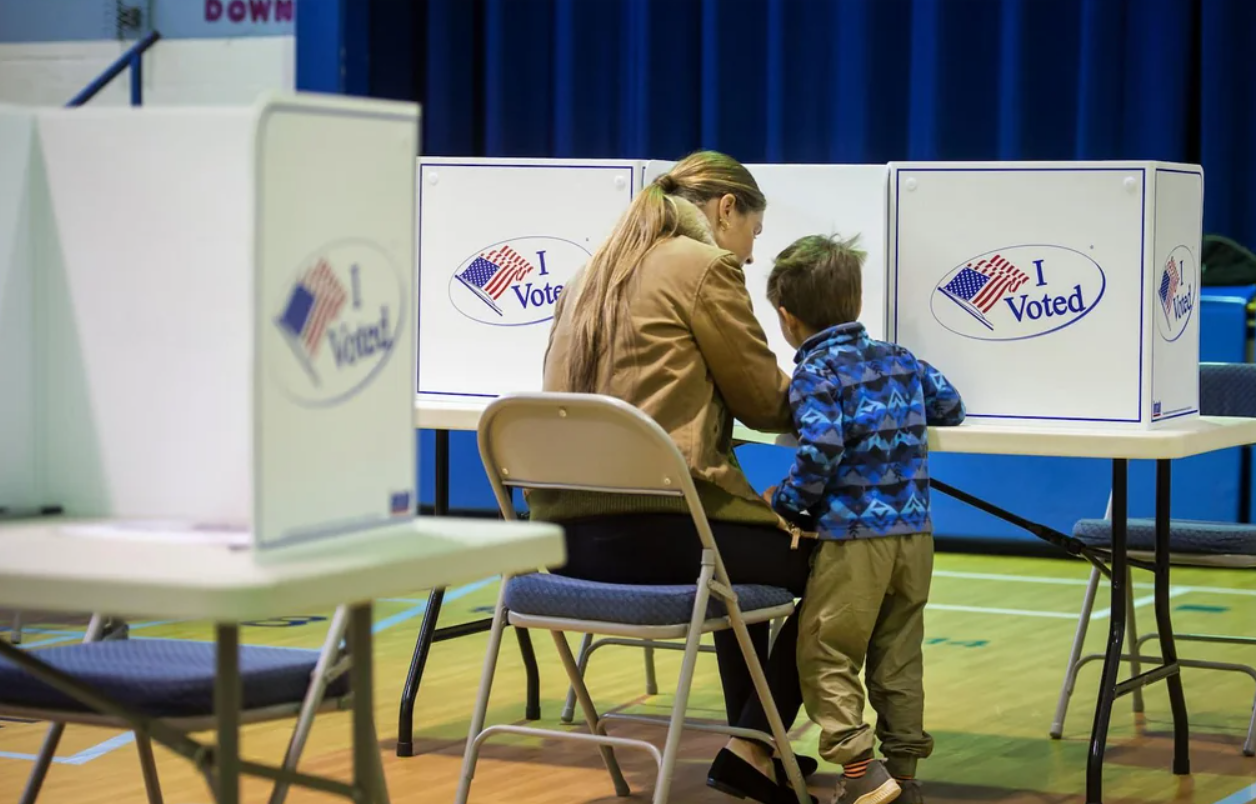
The midterm elections in the United States could directly influence and shape China-U.S. relations going forward. At present, Republicans hold only a narrow majority in the House of Representatives—217 to 214 seats. Historical data show that in the 20 midterm elections between 1946 and 2022, the party in power lost an average of 28 seats. With anti-Donald Trump sentiment among American voters continuing to expand, Democrats are optimistic about their prospects and are widely seen as having a strong chance of retaking control of the House at least, and possibly even the Senate.
In the Senate, Republicans hold a 53-47 advantage. The chamber is generally considered less vulnerable to reversal, and the electoral map appears relatively favorable to the GOP. However, Democrats see a narrow path to a potential reversal of control in that chamber of Congress.
The Trump factor is a double-edged sword in the midterms. While Trump himself remains a powerful vote-mobilizing force for the Republican Party, rising public dissatisfaction over the economy and immigration could become decisive variables in shaping the outcome. As of late May, Trump’s approval rating stood in the range of 36 to to 40 percent, significantly lower than the 48 percent recorded at the start of his current term.
In addition, the United States’ involvement in a war of Trump’s making with Iran is also likely to weigh on Republican electoral prospects. At present, the U.S. finds itself in the awkward position of being neither at war nor at peace— unable to achieve a decisive victory, unable to reach a negotiated settlement and unable to disengage. These dynamics introduce a set of highly unpredictable “black swan” factors into the midterm electoral landscape. This year’s elections could mark a turning point for the Trump administration.
If Republicans were to lose control of the House, Trump would face significantly stronger congressional checks and balances. He himself has acknowledged that the Republican Party must win the midterms, warning that otherwise he could face a third impeachment initiated by Democrats. Should Republicans lose both chambers of Congress, Trump would effectively become a lame duck in his final two years in office, with limited room to advance his domestic and foreign policy agenda.
With regard to U.S.-China relations, Congress has historically been a stronghold of China hawks. In April this year, both the House and Senate introduced some of the most stringent export control measures on semiconductors directed at China so far. After the midterms, a more assertive Congress is likely to launch additional investigations and push forward confrontational legislation. Democratic control of Congress could also put pressure on the White House to adopt a tougher stance on issues such as Taiwan and Xinjiang, potentially driving U.S.-China relations from a phase of seeking stability back into one of renewed volatility.
Stability serves all
Trump’s visit to China in May marked an important engagement following last year’s summit of the two heads of state. China’s President Xi Jinping is expected to visit the United States in September, with additional high-level meetings anticipated over the course of the year. Head-of-state diplomacy plays an irreplaceable strategic role in guiding bilateral relations, and reciprocal visits can help sustain the current momentum of stability.
According to American scholar David Shambaugh, maintaining stable China-U.S. relations is an objective of the Trump administration. Notably, in his first State of the Union address of his second term this year, Trump made no mention of China. It was the first time since 2005 that a U.S. president had omitted China from the key address. Similarly, strategic documents released by the administration, including the National Security Strategy and the National Defense Strategy, used relatively moderate language regarding China, downplaying the emphasis on strategic competition and bilateral tensions and placing greater weight on managing stability and maintaining economic and trade engagement.
After nine years of strategic competition since the first Trump presidency, Washington has increasingly recognized the rapid rise of China’s national strength and the profound changes in the balance of power. As a result, U.S. policy toward China has become more pragmatic and calibrated than before. Secretary of State Marco Rubio has on multiple occasions has spoken in a more conciliatory tones, describing the current state of bilateral relations as one of “strategic stability.”
However, this easing reflects a tactical adjustment grounded in political realities more than it does a fundamental shift in strategic perception. Facing mounting domestic pressures ahead of the midterms, the fallout from failed tariff policies and other major political challenges, including the Epstein case, the Trump administration has strong incentives to demonstrate diplomatic achievements and avoid economic turbulence that could further impact electoral prospects. Against this backdrop, Washington has taken a more cautious approach to its China policy, seeking to restrain the intensity of strategic competition and preserve a relatively stable phase of managed bilateral relations.
This year, China-U.S. relations are expected to remain broadly stable, with bilateral trade continuing under a de facto truce. Meetings between the two heads of state will help consolidate this trajectory. The two sides’ shared understanding of a “constructive relationship of strategic stability” as a framework for bilateral relations is also likely to provide strategic guidance for the next three years and potentially a longer horizon.
Structural uncertainties
Since Donald Trump returned to the White House, China-U.S. relations have continued to fluctuate between confrontation and limited easing. The United States still regards China as its primary strategic competitor, and containment and pressure remain the central thrust of its China policy.
This year, U.S. military and economic actions in Venezuela and Iran have carried a clear China-related strategic signal—an effort to isolate China and constrain its global influence. In the economic and trade sphere, Washington in February brought together 54 countries to form a critical minerals alliance, promoting the “de-Sinicization” of supply chains of rare earths and other critical minerals. In March, Washington announced the launch of Section 301 investigations targeting 16 countries including China, thereby undermining the stability of bilateral economic and trade cooperation. In April, the U.S. approved new national security restrictions that prohibit electronic devices from being tested or certified in countries that do not have mutual recognition agreements with the United States, further eroding China’s advantages in industrial and supply chains.
On the Taiwan question, the U.S, House of Representatives passed the Taiwan Protection Act in February, with the intent of excluding China from six major international financial institutions. During Trump’s first term, U.S. arms sales to Taiwan exceeded those of previous administrations; following the recent leaders’ meeting, Washington has even begun to treat arms sales to Taiwan as a bargaining chip in broader negotiations. Although the administration has temporarily suspended more than $10 billion in arms sales approved in December, it has nonetheless sent signals that such issues remain negotiable.
In addition, congressional instruments such as the National Defense Authorization Act and the annual China Military Power Report explicitly call China a strategic competitor and continue to amplify narratives of a China threat.
It must be emphasized that the structural contradictions between China and the United States run deep, making strategic competition difficult to avoid. Within the U.S. policymaking establishment, hard-line views on China remain dominant. Even if Trump seeks to stabilize bilateral relations, he remains constrained by domestic China hawks and partisan divisions. Driven by a desire to maximize his political advantage, pressure and containment policies toward China are unlikely to cease.
In short, China-U.S. relations this year are likely to remain in a fragile equilibrium of competition without breakdown, with uncertainty expected to increase in coming years. In the longer term, the two countries will engage in sustained strategic competition in an environment characterized by broadly comparable power and greater strategic autonomy.
