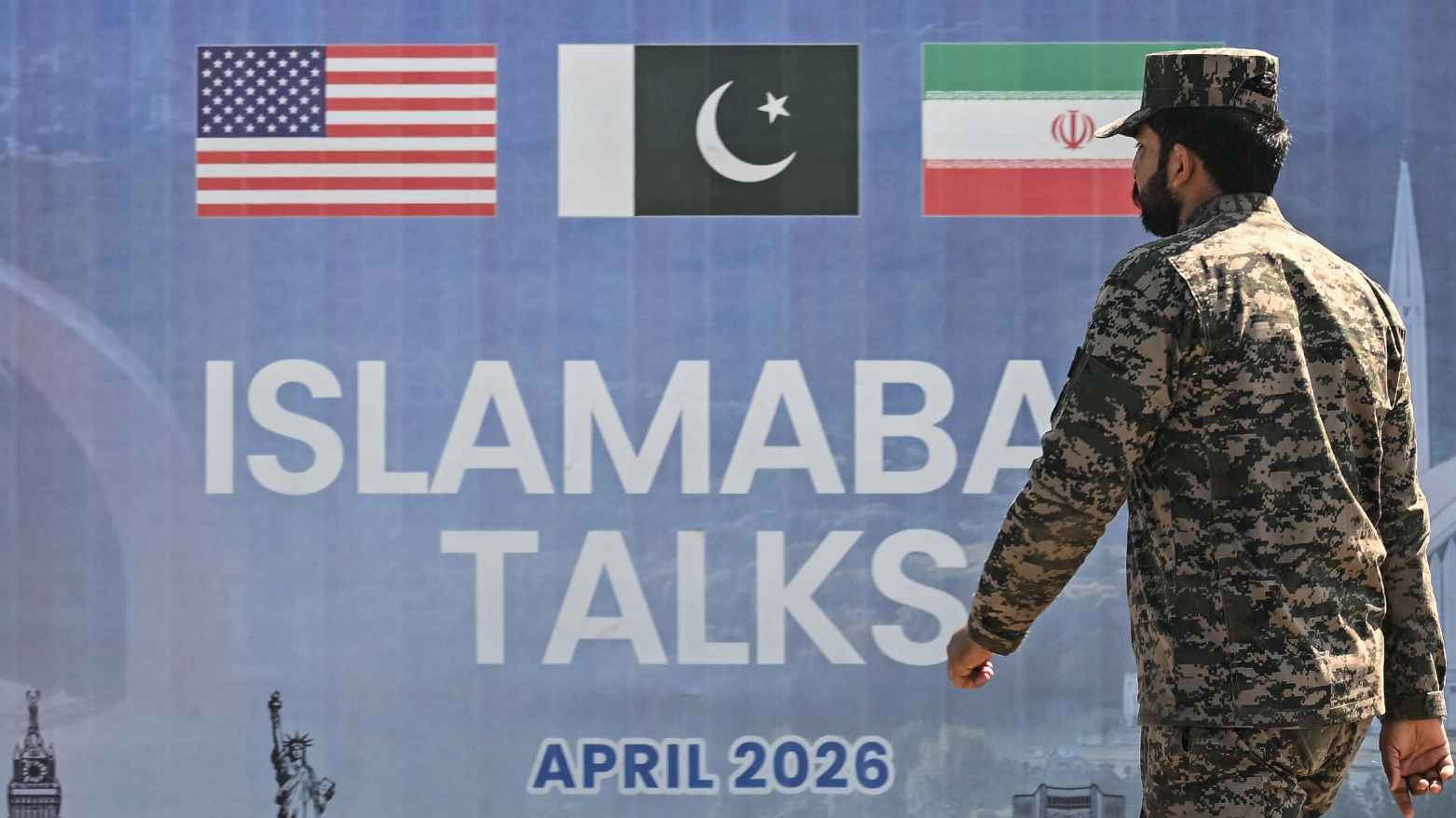
A Pakistani Ranger walks past a billboard for the U.S.-Iran peace talks in Islamabad on April 12, 2026.
The ongoing conflict involving the United States, Israel, and Iran represents one of the most significant geopolitical crises of 2026. It began in late February when U.S. and Israeli forces launched large-scale strikes on Iranian military and nuclear infrastructure, escalating long-standing tensions over Iran’s nuclear program and regional influence. Iran responded with missile and drone attacks across the Middle East, targeting U.S. bases and allied interests, turning the confrontation into a broader regional war. The conflict has disrupted global energy markets, intensified regional instability, and triggered fragile ceasefire efforts, highlighting the risk of prolonged confrontation and wider international consequences.
In an evolving multipolar world, Pakistan has projected itself as a responsible member of the community of nations, leveraging credibility, neutrality, and strategic wisdom to act as a peacemaker and facilitator. Pakistan’s advent as a mediator in the contemporary U.S.–Iran crisis can be understood through a convergence of geopolitical positioning, diplomatic credibility, and strategic necessity. First, Pakistan occupies a unique geostrategic location at the intersection of South Asia, the Middle East, and Central Asia, while sharing a direct border with Iran. This proximity, coupled with long-standing political and security linkages, provides Islamabad with both access and stakes in regional stability. Simultaneously, Pakistan maintains a historically complex but functional relationship with the United States, enabling it to act as a rare interlocutor acceptable to both adversaries.
Second, Pakistan’s diplomatic neutrality has enhanced its credibility as a mediator. Unlike many regional actors, Islamabad has avoided overt alignment in the conflict, opting instead for a balanced foreign policy that emphasizes de-escalation and dialogue. Pakistan has actively facilitated indirect communication channels and hosted negotiations in Islamabad, thereby institutionalizing dialogue even amid active hostilities.
Third, Pakistan’s mediation reflects its aspiration to reassert itself as a significant diplomatic actor in global politics. By engaging in high-stakes conflict resolution, Islamabad seeks to enhance its international standing and demonstrate its utility to major powers. This aligns with broader foreign policy objectives, including strengthening ties with Washington while maintaining cooperative relations with Tehran. Such dual engagement underscores Pakistan’s capacity to leverage its multi-vector diplomacy for conflict resolution.
Fourth, Pakistan’s role has been operationally significant in facilitating ceasefire arrangements and sustaining dialogue momentum. Its diplomatic efforts contributed to bringing both parties to the negotiating table and even helped broker a temporary ceasefire, despite the absence of a comprehensive settlement. This highlights Pakistan’s effectiveness not merely as a symbolic intermediary but as an active diplomatic broker capable of influencing outcomes.
Finally, the involvement of Pakistan is also driven by pragmatic security concerns. Escalation between the United States and Iran poses direct risks to Pakistan’s economic stability, energy security, and internal security environment. Consequently, mediation is not only an act of international responsibility but also a strategic imperative to prevent regional spillover effects.
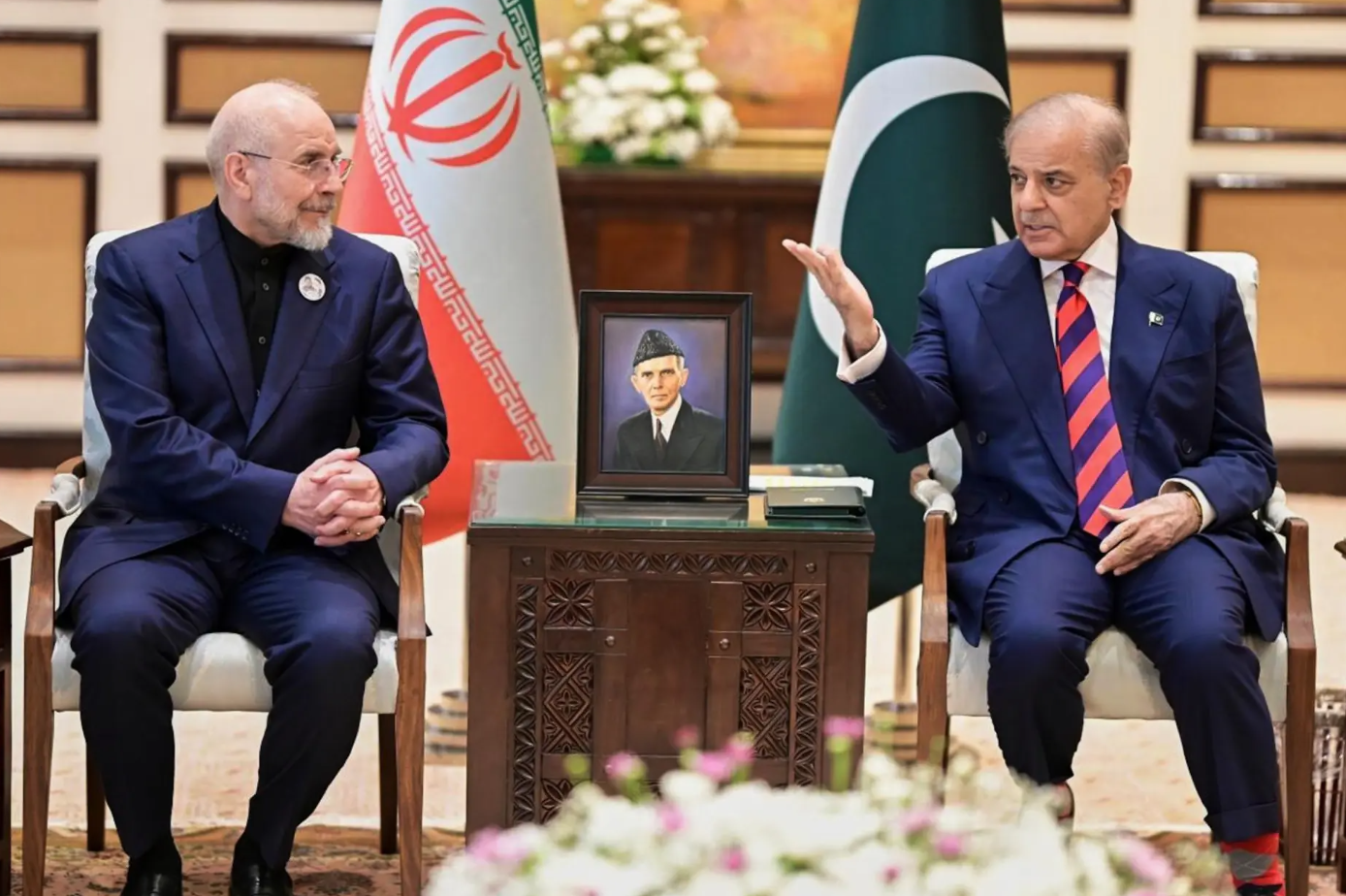
Iran’s Parliament Speaker Mohammad Bagher Ghalibaf, left, meets with hand with Pakistani Prime Minister Shehbaz Sharif, in Islamabad, Pakistan, Saturday, April 11, 2026. (Pakistan Prime Minister Office)
Pakistan’s crucial mediatory role derives from its unique geopolitical positioning, balanced diplomatic posture, strategic ambitions, and vested interest in regional stability, making it an indispensable actor in efforts to resolve the ongoing crisis.
Pakistan’s ability to gain the trust of the United States in the contemporary Iran crisis is not accidental; rather, it is the outcome of a calibrated convergence of strategic alignment, institutional engagement, and demonstrated diplomatic utility. From an academic perspective, this trust-building process can be analyzed through the lenses of realism, diplomatic signaling, and credibility theory.
First, Pakistan strengthened U.S. confidence through renewed high-level strategic engagement. After a period of relative diplomatic distance, Islamabad re-established direct communication channels with Washington, including leadership-level interactions and military-to-military contacts. Notably, Pakistan’s senior leadership, particularly its military establishment, engaged closely with U.S. counterparts, signaling policy coherence and reliability. Such engagement reduced informational asymmetries and reassured Washington of Pakistan’s capacity to act as a disciplined intermediary.
Second, Pakistan demonstrated functional utility by acting as an effective communication conduit. It facilitated the transmission of proposals and messages between Washington and Tehran, including reportedly conveying structured negotiation frameworks. In mediation theory, this “brokerage role” is central to trust formation: a mediator gains credibility not merely through neutrality, but through consistent delivery of verifiable diplomatic outcomes. By sustaining backchannel communications during active hostilities, Pakistan proved its operational relevance to U.S. strategic objectives.
Third, Pakistan adopted a policy of calibrated neutrality, which enhanced its acceptability in Washington. Unlike actors perceived as ideologically aligned with Iran, Pakistan avoided overtly partisan rhetoric and instead emphasized de-escalation, ceasefire, and regional stability. This positioning aligns with the concept of “credible neutrality,” wherein a mediator is trusted not because it lacks interests, but because it manages them transparently. Importantly, Pakistan’s refusal to escalate militarily against Iran reassured the United States that Islamabad’s role would remain diplomatic rather than interventionist.
Fourth, Pakistan leveraged its broader geopolitical networks to reinforce U.S. confidence. Its ties with Gulf states, China, and regional actors enabled it to function as part of a wider diplomatic architecture rather than an isolated intermediary. This multilateral embeddedness increased its value to Washington, which seeks coalition-based crisis management rather than unilateral engagement.
Fifth, institutional actors—particularly Pakistan’s military leadership—played a decisive role in cultivating U.S. trust. The involvement of senior figures in maintaining discreet communication channels and facilitating dialogue contributed to perceptions of continuity, discipline, and strategic seriousness. Pakistan’s military leadership played a significant role in sustaining covert diplomacy and enabling negotiations, which further consolidated U.S. confidence in Pakistan’s mediation capacity.
Finally, Pakistan’s own strategic incentives aligned with U.S. interests, reinforcing trust through shared objectives. Both states sought to prevent regional escalation, secure energy routes, and stabilize the broader Middle East. This convergence of interests reduced the risk of opportunistic behavior, thereby enhancing Pakistan’s credibility as a mediator.
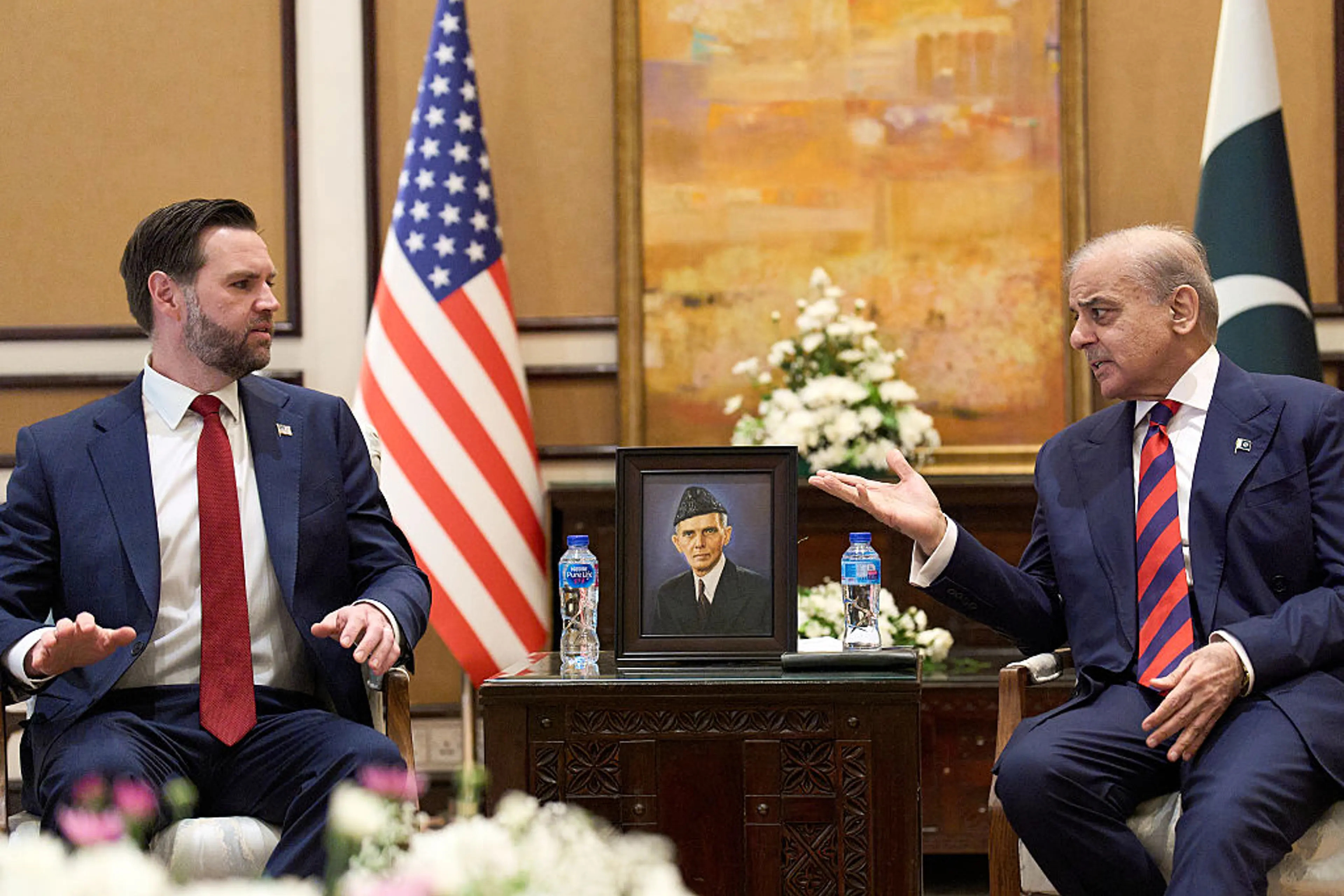
U.S. Vice President J.D. Vance meets with Pakistan's Prime Minister Shehbaz Sharif during their meeting at Islamabad, Pakistan on April 11, 2026.
Pakistan got U.S. trust through a combination of renewed strategic engagement, effective diplomatic brokerage, credible neutrality, multilateral connectivity, and alignment of core security interests—factors that collectively positioned it as a reliable intermediary in a highly volatile geopolitical environment.
Pakistan’s ability to obtain the trust of Iran in the ongoing U.S.–Iran conflict can be analytically explained through a combination of historical affinity, strategic restraint, diplomatic signaling, and functional mediation. From the perspective of international relations theory, this trust is rooted not merely in opportunistic alignment, but in long-term relational capital and credible policy behavior.
First, Pakistan benefits from deep-rooted historical and geopolitical ties with Iran, which form the structural foundation of trust. The two states share a long border, cultural linkages, and sustained diplomatic engagement since the mid-20th century. Such continuity has fostered what may be termed “strategic familiarity,” reducing uncertainty in bilateral interactions. Iranian officials have explicitly acknowledged Pakistan’s constructive role, reflecting a level of confidence derived from this historical relationship.
Second, Pakistan’s policy of non-hostility toward Iran during the crisis significantly enhanced its credibility. Unlike several regional actors, Islamabad refrained from participating in military actions or adopting aggressive rhetoric against Tehran. This restraint aligns with the concept of “negative assurance” in diplomacy—where a state gains trust by demonstrating what it will not do. For Iran, which remains highly sensitive to external intervention, Pakistan’s avoidance of alignment with U.S. or Israeli military strategies signaled reliability and reduced perceived threat.
Third, Pakistan engaged in sustained backchannel diplomacy, which is critical in high-conflict environments. Islamabad facilitated indirect exchanges, including transmitting proposals and maintaining communication lines between Tehran and Washington. Such roles are central to mediation theory: trust is built through consistent, discreet, and accurate transmission of information. Moreover, high-level engagements—including visits and communications involving Pakistan’s military and political leadership—reinforced Tehran’s perception of Pakistan as a serious and capable interlocutor.
Fourth, Pakistan’s willingness to host negotiations in Islamabad provided a neutral and controlled diplomatic space. The initiation of direct U.S.–Iran talks in Pakistan marked a significant confidence-building measure, as Iran would not participate in such high-level engagement without a baseline of trust in the host country’s intentions and security assurances. This hosting function elevated Pakistan from a symbolic intermediary to an operational mediator.
Fifth, Pakistan’s alignment with broader regional de-escalation efforts further strengthened Iranian trust. Its coordination with other actors, including Turkey, China, and Gulf states, embedded its mediation within a wider diplomatic framework, reducing suspicions of unilateral bias.
Finally, Pakistan’s mediation is underpinned by converging strategic interests with Iran, particularly the desire to avoid regional destabilization. Escalation poses direct risks to Pakistan’s border security, trade, and energy connectivity, creating a shared incentive structure that Iran recognizes as genuine rather than instrumental.
Pakistan secured Iran’s trust through historical ties, strategic restraint, credible backchannel diplomacy, provision of neutral negotiation space, and alignment of mutual security interests—collectively positioning it as a pragmatic and acceptable mediator in a highly volatile conflict.
Pakistan’s mediation in the ongoing U.S.–Iran crisis offers a rich set of policy-relevant lessons that can inform the future trajectory of its diplomatic practice. From an academic standpoint, these lessons can be situated within the frameworks of conflict resolution theory, middle-power diplomacy, and strategic statecraft.
First, a central lesson is the importance of maintaining credible neutrality while preserving strategic flexibility. Pakistan’s ability to engage both Washington and Tehran without overt alignment underscores the value of what scholars’ term “calibrated neutrality.” This approach allowed Islamabad to act as an acceptable intermediary while still safeguarding its own national interests. However, the fragility of the mediation process also illustrates that neutrality must be continuously reinforced through consistent signaling and restraint.
Second, the episode highlights the critical role of sustained communication channels, particularly backchannel diplomacy. Pakistan’s facilitation of indirect exchanges between the United States and Iran demonstrates that in high-intensity conflicts, formal diplomacy alone is insufficient. The maintenance of discreet, continuous communication helped prevent total diplomatic breakdown and enabled ceasefire discussions, even in the absence of a comprehensive agreement.
Third, Pakistan can draw lessons regarding the limits of mediation by middle powers. While Islamabad successfully brought the parties to the negotiating table and contributed to a temporary ceasefire, it had limited capacity to shape final outcomes, which remained largely dependent on the strategic calculations of the principal actors. This underscores a key insight from mediation theory: influence is constrained when the mediator lacks coercive leverage or economic incentives.
Fourth, the mediation process demonstrates the importance of institutional coherence in foreign policy execution. Pakistan’s coordinated engagement—encompassing political leadership, diplomatic institutions, and military channels—enhanced its credibility and operational effectiveness. Both civilian and military leadership played complementary roles in sustaining dialogue and facilitating negotiations, reflecting a whole-of-state approach.
Fifth, Pakistan recognizes the value of multilateral embedding in mediation efforts. The involvement of other regional actors, including Turkey and Gulf states, suggests that contemporary conflict resolution is increasingly networked rather than bilateral. By situating itself within a broader diplomatic coalition, Pakistan can amplify its influence and reduce the risks associated with unilateral mediation.
Sixth, the experience underscores the necessity of aligning mediation with national interest imperatives. Pakistan’s engagement was driven not only by diplomatic ambition but also by concerns over regional instability, energy security, and economic disruption. This alignment enhanced the credibility of its efforts, as both parties recognized that Pakistan had a genuine stake in de-escalation.
Finally, a crucial lesson is the importance of managing expectations and narrative framing. While Pakistan received international recognition for its role, the absence of a definitive settlement reveals the dangers of overstating diplomatic success. Effective mediation requires not only facilitating dialogue but also carefully calibrating public narratives to reflect incremental progress.
Pakistan’s mediation diplomacy offers key lessons in neutrality, communication, structural limitations, institutional coordination, multilateral engagement, and strategic realism—insights that can significantly refine its future role as a regional and global diplomatic actor.
In conclusion, Pakistan’s mediation in the U.S.–Iran crisis underscores the strategic value of calibrated neutrality, sustained backchannel diplomacy, and institutional coherence in contemporary conflict resolution. Its experience reveals both the opportunities and structural limitations faced by middle powers operating in high-stakes geopolitical environments. By leveraging historical relationships, aligning mediation with national interests, and embedding its efforts within broader multilateral frameworks, Pakistan demonstrated pragmatic diplomatic agency. However, the episode also highlights the necessity of managing expectations and recognizing constraints on outcome-shaping capacity. Collectively, these lessons provide a robust foundation for refining Pakistan’s future role as an effective and credible mediator in international diplomacy.
