
The success of the Manhattan Project was the result of specific historical conditions. Its model of concentrating resources to achieve a single technological breakthrough doesn’t fit the characteristics and competitive landscape of the AI era.
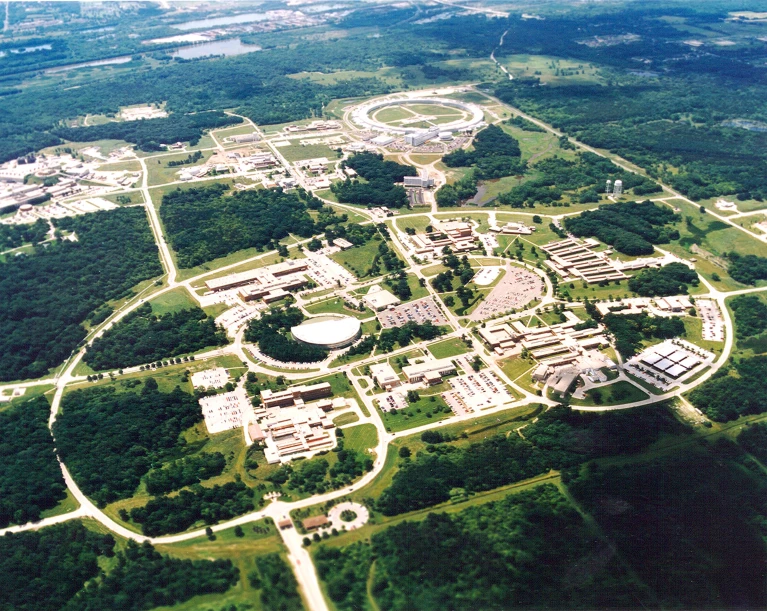
Supercomputers at national laboratories, including the Argonne National Laboratory in Illinois, will probably be used as part of the Genesis Mission. (Credit: Argonne National Laboratory)
On Nov. 24, U.S. President Donald Trump signed an executive order titled “Launching the Genesis Mission.” The initiative seeks to integrate decades of accumulated scientific data, top-tier computing power from national labs and automated experimental facilities into a cohesive American science and security platform. By collaborating with tech giants, it aims to create a closed loop of “AI + science” research, looking for breakthroughs in nuclear fusion, biotechnology, critical materials, and semiconductors—some of the most challenging issues of this century. The U.S. government describes this as the largest consolidation of federal scientific resources since the Apollo program and even draws parallels to the Manhattan Project, underscoring its strategic aspiration to lead the next technological revolution.
Since the end of World War II, the United States has been the world’s leading technological powerhouse, acutely aware that technological superiority is crucial for national strength and global influence. However, it now faces unprecedented pressure in the current AI competition. Although Trump’s executive order doesn’t name any specific country, its urgency and focus on out-competing others are clearly aimed at challenges from China.
Over the past few years, despite its restricted access to advanced chips, China has made significant strides in the global AI race. Innovations in algorithms and application ecosystems of open-source models like DeepSeek and Qwen have positioned China at the forefront. The U.S. now realizes that defensive tactics such as “chip embargoes,” tech decoupling and AI growth driven by the Mega 7 tech companies are not enough. The missing piece is “AI for science.”
As acknowledged in Trump’s order, U.S. scientific progress continues to lag behind China despite increases in private R&D funding. The government must step in to fill gaps in long-term, less cost-effective basic research that the private sector avoids. This will help it secure a dominant position in future tech competition and build a technological guardrail.
The Genesis Mission is a major U.S. effort to solidify its dominance in AI. It makes sense to integrate resources and push forward with “AI + science.” However, comparing it with the Manhattan Project just doesn’t fit. That comparison skips over how different today’s world is from the WWII era. We’re in a globalized, multipolar, open-source, interconnected age. Success from a unique time in history cannot simply be copied; that would be like trying to grow a Southern fruit in the North—a Chinese proverb that cautions against replicating experiences in a categorically different circumstance.
The Manhattan Project was a wartime, top-secret project orchestrated by the U.S. and its allies to beat Nazi Germany and develop weapons of mass destruction. The goal was clear: change the course of the war. The Genesis Mission, by contrast, will take place in a world where technology, talent and capital move freely. No country can monopolize technology anymore. As for America’s perceived competitor, China has a strong industrial base, solid R&D and a huge market. Today’s AI competition covers the whole tech stack, from research to industry, hardware to software. It’s not a sprint, but more of a long-term, future-focused, protracted war.
Moreover, artificial intelligence—an unprecedented technological force in human history—is fundamentally different from the atomic bomb. The Manhattan Project succeeded by focusing resources on solving specific physical and engineering challenges to achieve a single-point breakthrough. In contrast, AI—especially AI for science, which lies at the core of the Genesis Mission—relies on a highly complex and evolving technological framework. Its progress hinges on the continuous iteration of data, algorithms and computing power. Its value lies in empowering diverse societal sectors.
Crucially, AI is still in its infancy, marked by high openness and unpredictability in its developmental paths. China’s algorithmic breakthroughs came despite chip restrictions, showing that technological progress is not solely about stacking computing power. Attempting to control the entire trajectory of AI discovery through a national centralized platform likely underestimates the inherently decentralized and disseminating nature of innovation.
Of course, even setting aside the issues mentioned above, the policy experiments and practical progress in the AI field in America over the past two years have already exposed real and pressing constraints:
First is the issue of policy continuity. Although the U.S. has placed big bets on AI, the Trump administration has significantly cut federal research funding. This contradiction, combined with Trump’s limited time in office, poses huge policy uncertainties for a long-term project that requires sustained, stable and substantial investment.
Second is the energy-guzzling nature of computer power. The plan aims to use AI to solve energy problems, but the massive AI training and automated experiments it runs are energy-intensive. Against the backdrop of an aging U.S. power grid and power shortages in some regions, this will present a paradox in the short term.
Third is the difficulty of coordinating interests. The plan calls for integrating resources across government departments and institutions, and even incorporating the private-sector. Rallying government agencies, national labs, private universities and tech giants to collaborate seamlessly on this platform and share core data and intellectual property is, understandably, a daunting task.
Given these factors, the success of the Manhattan Project was the result of specific historical conditions. Its model of concentrating resources to achieve a technological breakthrough doesn’t fit the technological characteristics and competitive landscape of the AI era. Therefore, labeling the Genesis Mission as the AI version of the Manhattan Project seems little more than a political rallying point, which may actually obscure the real challenges.
The future of the Genesis Mission depends not only on U.S. resource investment but also on its ability to break free from historical narratives, grasp the technological logic of AI and establish a global posture adapted to the times. This is perhaps the true test.
