
China and the U.S. must avoid both the Thucydides trap and the Cold War trap. This is not only in their strategic interest but also that of other countries in the region and around the world. Both sides must make major efforts jointly and in a sustained manner.
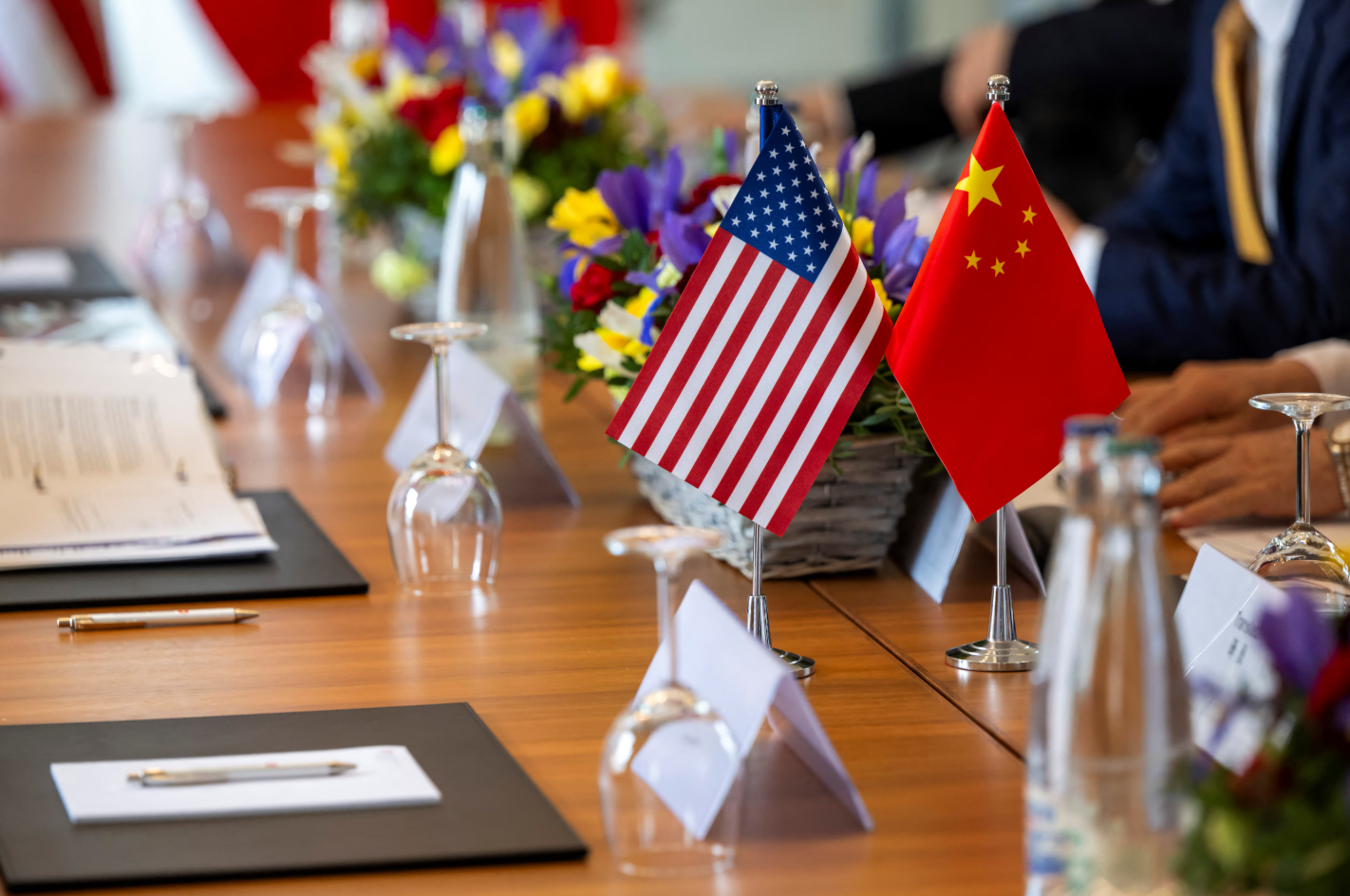
Over the past decade, China-U.S. relations have deteriorated significantly. The United States increasingly sees China as a major strategic competitor and has stepped up containment measures and pressure. The likelihood of a crisis or conflict between the two has risen markedly.
While air and maritime incidents have led to political and military crises between the two countries in the past, nowadays they may well trigger a direct military conflict. In such a grave situation, Chinese and American leaders have stated many times that the two countries should coexist peacefully and do their utmost to avoid a conflict or confrontation.
Since taking office earlier this year, U.S. President Donald Trump has been escalating trade and tariff wars around the globe while posing as a peacemaker. His key supporters, people in the MAGA movement, have strongly demanded that the U.S. stay away from any long-term war overseas, such as the one in Afghanistan or Iraq.
Chinese President Xi Jinping and his counterpart, Trump, have spoken in three phone calls so far, and they met recently in South Korea. After that meeting, Trump proposed a visit to China in April next year and expressed hope that Xi would visit America after that. Their defense and foreign ministers also spoke with each other. One can see signs of stability and improvement in bilateral relations.
Against this backdrop, while the window of opportunity remains open, China and the U.S. must strengthen crisis management and, on this basis, strive to steer bilateral relations toward a better horizon. To do this, the two sides need to enhance their awareness and settle on a mutual belief that dispute resolution can be achieved without using force. It can improve internal crisis coordination, decision-making and crisis capacity (including capabilities in deterrence, intelligence, negotiation and public communications) and develop effective bilateral mechanisms.
This article focuses on how crisis management mechanisms may be restored and rebuilt. Three approaches were adopted after the end of the Cold War:
• Strategic communication mechanisms, including hotlines and direct telephone links between the heads of state, defense departments and foreign services; exchanges of visits and meetings at these levels and between the director of China’s office of the Central Foreign Affairs Commission and the U.S. national security adviser.
• Diplomatic and security dialogues and consultations, including defense consultations; military maritime consultative agreement meetings (MMCA); consultations on strategic security, multilateral arms control and non-proliferation; defense policy coordination talks (DPCT); Strategic Security Dialogue; consultations on Asia-Pacific affairs; the Asia-Pacific security dialogue between defense departments; the high-level joint dialogue on cybercrime and related issues; the Diplomatic and Security Dialogue (D&SD); and the joint staff dialogue. Although most of these do not focus on crisis management, they all can play a positive role.
• Military confidence-building measures (CBMs), including declarations by the heads of state to refrain from aiming strategic nuclear weapons at each other. There should also be memorandums of understanding between defense departments on notification of major military activities and rules of behavior for the safety of air and maritime encounters.
Unfortunately, in recent years, strategic communication between the two sides has been severely weakened. High-level visits and meetings have either been absent or have encountered major difficulties.
Apparently, high-level hotlines have not been an effective tool in crisis management. In fact, many established security dialogue and consultation mechanisms have been stagnant for a long time or no longer exist. Only a few operate intermittently. Military CBMs are still important preventive tools; however, without progress in recent years they are no longer responsive. Dangerous naval and air encounters are on the rise.
In response to the situation described above, I have the following advice for restoring and strengthening China-U.S. crisis management mechanisms:
First, the two sides should restore strategic communications as soon as possible. The most important is to jointly create conditions for an exchange of visits by heads of state in 2026. A gradual resumption of visits and regular communications between the foreign ministers (or related officials) and the defense ministers. It is also essential to strengthen the crisis management function of the hotlines for heads of state, defense departments and foreign services, with increased frequency and shortened lead time to allow quick exchanges of information, clarification of intentions and clear signaling. It is particularly important to use these hot-lines for communication before and during a crisis.
The most important topics in China-U.S. strategic communications are upholding the principles and spirit of the three China-U.S. joint communiques, opposing Taiwan independence and safeguarding peace and stability regarding the island. In addition, safeguarding peace and stability in the South China Sea and on the Korean Peninsula should be included in the agenda.
Second, the two sides should restart their diplomatic and security dialogues and consultation mechanisms as soon as possible. The effectiveness of these mechanisms lies not in their quantity but in their sustainability and practical results. While maintaining the MMCA and DPCT, the two sides can focus their attention on restoring and establishing the following four dialogues:
• the joint staff dialogue, which can significantly raise the level of mil-to-mil talks;
• the 2+2 (diplomatic and defense) consultation on Asia-Pacific security affairs, as the region has the highest risk of crisis for China and the United States, as well as their militaries;
• the 2+2 consultation on arms control and non-proliferation, a field with both serious differences and major common interests; and
• the 2+2 strategic stability dialogue, to elevate diplomatic and security consultations to a new level.
Unlike the U.S.-Soviet/Russia style of strategic stability, which was based on mutually assured destruction, China-U.S. strategic stability must be based on mutually assured vulnerability. Nuclear arms control (rather than nuclear disarmament), crisis stability and related topics such as cybersecurity, space security and nuclear failsafe should all be part of this dialogue.
During dialogues and consultations, both sides should reconcile their serious differences in perception—and this as soon as possible—and agree on a definition of crisis management. This includes both crisis prevention and escalation control, with neither being omitted and the former assuming a more important position.
China cannot accept the U.S. approach of first creating a crisis or risk and then demanding crisis management. The visit to Taiwan by House Speaker Nancy Pelosi in 2022 was a vivid example of that dangerous approach.
Third, the two sides should further develop mutual CBMs. As the situation evolves, it will be necessary to further substantiate and improve the rules of behavior for the safety of air and maritime encounters and the notification mechanism for major military activities. These should be jointly formulated. The two countries should also make significant efforts to prevent accidental launches of missiles or nuclear weapons and put a mutual notification mechanism for ballistic missile launches and a joint nuclear failsafe statement on their agenda at an early date. They should further agree on no-first use of nuclear weapons.
Additionally, they may wish to have CBMs to avoid being drawn into a crisis or conflict due to third-party factors. For example, China could reaffirm that it will never use force to resolve disputes with its neighbors, while the U.S. could state that its bilateral alliances will only be defensive in nature.
In conclusion, strengthening crisis management is essential for China and the U.S. to avoid the both the Thucydides trap and the Cold War trap. It is not only in their own strategic interests but also conducive to the strategic interests of other countries in the region and around the world. Both sides must make major efforts jointly and in a sustained manner.
