
Canada and the five Nordic countries have vowed to seek closer “middle power” cooperation, a strategic effort to preserve national sovereignty. The move exposes a rift in the U.S.-led alliance system, which faces multiple uncertainties, including internal coordination challenges and U.S. pressure.
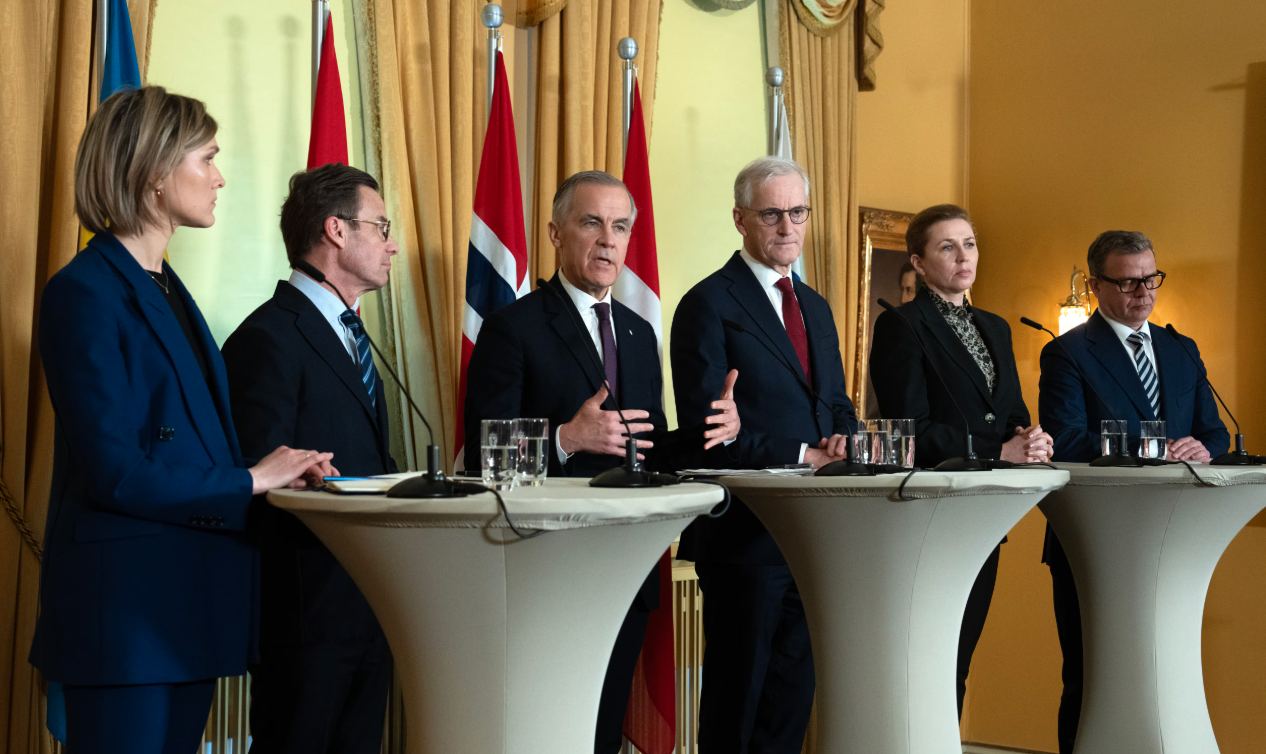
The Nordic-Canada Summit was held on March 15, 2026.
Following Canadian Prime Minister Mark Carney's high-profile proposal to build a “new alliance of middle powers,” the leaders of Canada and five Nordic countries gathered at a summit in Oslo, Norway, with the aim of strengthening cooperation and reducing reliance on the United States. The move is expected to contribute to fragmentation within the Western bloc, accelerate the transformation of the international order and become a new variable in the multi-polarization process.
The alliance represents an attempt by certain Western countries to protect themselves while breaking free from a U.S.-dominated world order. Far from being a traditional confrontational bloc, it is better understood as a product of strategic self-preservation shaped by U.S. unilateralism. Donald Trump’s “America first” policies have unsettled U.S. allies. His tariff bullying, disregard for national sovereignty and demands for increased defense spending have made the six countries acutely aware that dependence entails risk. As Carney put it, “If we’re not at the table, we’re on the menu,” a remark that lays bare the existential anxiety and strategic recalibration of middle powers in the face of “America first.”
The new alliance is focused on key areas, including the defense industry, critical resources, Arctic security and emerging technologies, each touching on a cornerstone of U.S. global hegemony. Though it cannot be defined as an explicitly anti-U.S. bloc for the time being, it is nonetheless characterized by a clear trend toward de-Americanization: It excludes U.S. participation and resists adherence to U.S.-crafted rules, yet retains underlying Western values as it seeks to carve out a third path amid major power rivalry. Danish Prime Minister Mette Frederiksen’s blunt statement that “The old world order is gone” amounts, in essence, to a repudiation of the U.S.-led international order and its unilateralism.
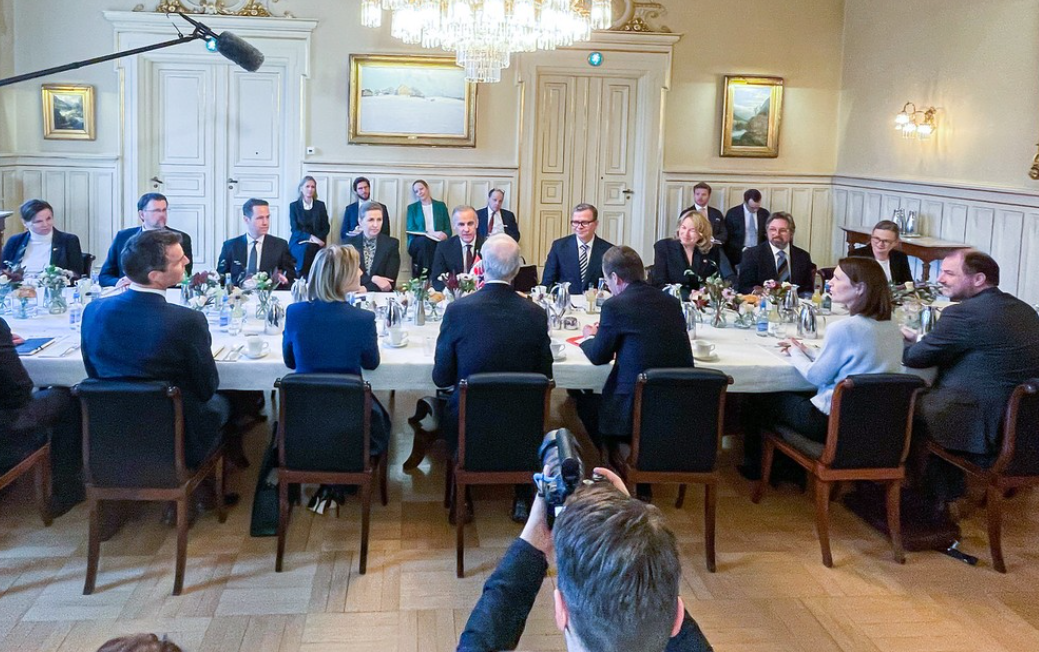
The Nordic-Canada Summit was held on March 15, 2026.
The emergence of the alliance marks the first time since World War II that the United States has been excluded from participation within the U.S.-led alliance system, and it is likely to accelerate the fragmentation of the Western bloc. The six countries’ push for industrial autonomy for defense and coordinated arms procurement will weaken the chains through which Washington controls its allies via the arms trade. Coupled with accelerated efforts for strategic autonomy by major Western powers such as France and Germany, the cohesion of the NATO system will be substantially eroded.
De-Americanization efforts in critical mineral and technology supply chains are set to undermine Washington’s practice of weaponizing supply chains as instruments of sanctions, thereby providing a U.S.-free model of cooperation for globalization. The Oslo Summit placed particular emphasis on the Arctic, a new geopolitical flashpoint, and incorporated Arctic security and resource management into its coordination agenda.
This could reshape the rigid confrontational logic of “West vs. Russia” that appeared in the wake of the Russia-Ukraine war, foster new mechanisms for multilateral consultation on Arctic governance and implicitly frustrate Washington’s strategic ambition to seize control of the region. In this sense, the geopolitical impact of the alliance extends well beyond the six member states themselves and may become the first substantive institutional shift signaling the fragmentation of the Western bloc.
Moreover, the alliance is likely to advance the multi-polarization of the international order. As the first transatlantic U.S.-free alignment of middle powers, its emergence may trigger a domino effect within the West and the international community at large, significantly boosting awareness of strategic autonomy among middle powers. Countries in Europe, Latin America and Asia may follow suit by forming regional cooperation networks, thereby challenging the traditional order in which major powers have the final say.
Meanwhile, the alliance provides a new operational paradigm for multilateralism which is currently in decline, as it claims to be based on international law and common interests, in contrast with the U.S. approach of power politics and bloc confrontation. In terms of international relations, these potential impacts may compel major powers to adjust their strategies. If the U.S. remains wedded to unilateralism, more allies may begin to drift away; countries that advocate multilateralism, on the other hand, could gain strategic opportunities for mutually beneficial cooperation with this new alliance. Realignments in international relations may follow across major issues shaping the international landscape, such as tensions in the Middle East and the Russia-Ukraine war.
As an emerging force, whether the New Alliance of Middle Powers can truly become a meaningful factor shaping the international order remains subject to multiple uncertainties.
First is the sustainability of internal coordination. The six countries exhibit varying levels of economic dependence on the U.S. and divergent strategic priorities, with the Nordic countries prioritizing Arctic security and Canada focusing more on economic autonomy. Moreover, the reconstruction of the defense industrial ecosystem and the integration of supply chains cannot be achieved overnight, casting doubt on the long-term sustainability of their coordination.
Second is potential U.S. backlash and pressure. Washington is unlikely to sit idly by as its allies drift away. It may resort to both inducements and disruptive measures such as tariff retaliation, technological blockades and political pressure to disrupt the alliance’s cooperation. Such measures will be particularly targeted at countries that are highly reliant on Washington, such as Canada, thereby exacerbating internal frictions within the alliance.
Third is recognition by the Global South. The alliance’s emphasis on shared values exposes its lingering West-centric orientation. If it fails to move beyond values-based politics and establish equal partnerships with Global South countries, the alliance risks becoming yet another exclusive clique, unable to gain broad international support and ultimately seeing its influence diminish.
