
Great powers can explore paths toward peaceful coexistence. The most important lesson of the Reykjavik Summit in 1986 was not that competition can be eliminated but that it requires clear boundaries. The real challenge is not the removal of differences but preventing their escalation into conflict.
(Image credit: The Brink of War)
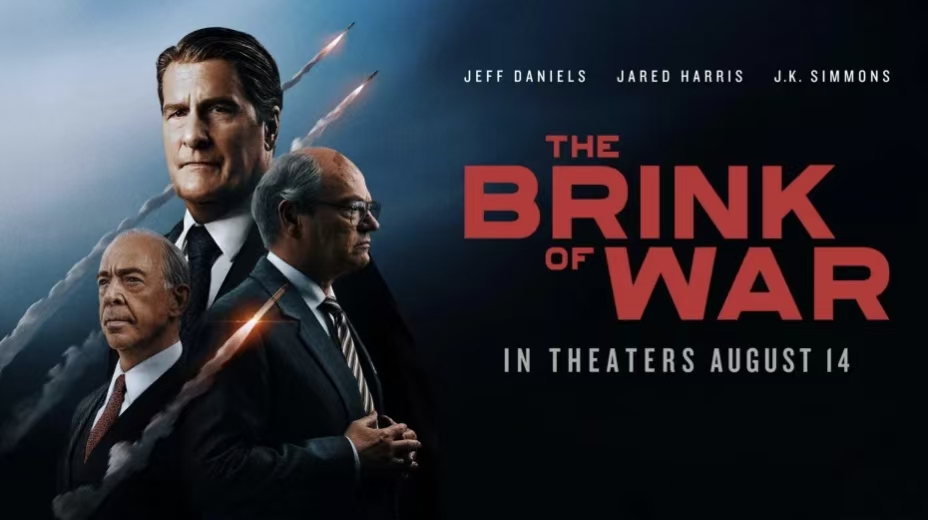
The upcoming historical political film “The Brink of War” turns its lens to the 1986 Reykjavik Summit of the United States and the Soviet Union. The film depicts U.S. President Ronald Reagan and Soviet President Mikhail Gorbachev attempting to forge an agreement that could fundamentally alter the course of the nuclear age, one aimed at dramatically reducing, or even eliminating, nuclear weapons. Although the summit ultimately failed to produce a formal agreement, history has shown that it was far from a failed meeting. On the contrary, it has left behind a political legacy that transcends any specific accord: Even amid the most intense rivalry between great powers, strategic dialogue can still serve as a vital mechanism for preventing catastrophic conflict.
Four decades later, the international system once again stands at a critical crossroads. The war in Ukraine shows little sign of resolution, the Middle East remains mired in instability, and the strategic rivalry of major powers continues to deepen. Many observers worry that the world is entering a new age of geopolitical confrontation. More consequential than the existence of competition, however, is whether the major powers retain the ability to manage competition and prevent it from spiraling into dangerous escalation.
From Cold War to new order
The Reykjavik Summit took place at the peak of the Cold War. By 1986, the world’s nuclear stockpile had surpassed 65,000 warheads, and humanity lived under the shadow of mutually assured destruction. Yet beneath the surface of the intense U.S.-Soviet confrontation, strategic debates persisted within Washington. Hardliners, such as Defense Secretary Caspar Weinberger, favored sustaining pressure through the Strategic Defense Initiative, while pragmatists led by Secretary of State George Shultz argued for reducing the risk of conflict through dialogue and arms-control arrangements. Ultimately, the Cold War was brought to an end not solely by shifts in the balance of power but also by a growing awareness in both capitals that the costs of confrontation had become unsustainable.
Although the Reykjavik Summit did not succeed in its immediate objective of eliminating nuclear weapons, it helped pave the way for the subsequent Intermediate-Range Nuclear Forces (INF) Treaty and the Strategic Arms Reduction Treaty (START I), both of which played a critical role in significantly reducing global nuclear stockpiles. This episode underscores the broader historical lesson that even under conditions of systemic confrontation, institutionalized dialogue and strategic restraint can still generate meaningful space for peace and stability.
Following the end of the Cold War, it was widely assumed that great-power competition would recede from the international stage. From the Gulf War to the early waves of globalization, the international community briefly embraced the optimistic notion of a “peace dividend.” Yet subsequent developments, from the Iraq War to the Ukraine crisis and recurring flare-ups in the Middle East, have challenged this expectation. Rather than disappearing, great-power competition has re-emerged in new forms, reshaping global politics through the complex interplay between globalization and geopolitics.
What the world sees
If great-power competition during the Cold War was primarily defined by military balance and ideological confrontation, today’s competition is increasingly characterized by multilayered and cross-domain rivalry.
At the global level, the distribution of power within multilateral institutions has become a new contest arena. The unusually intense competition in recent elections for the presidency of the United Nations General Assembly and non-permanent seats in the UN Security Council reflect growing divergences within the international community over the future direction of the global order. Unlike the Cold War-era focus on military equilibrium, the current strategic rivalry has expanded into competition over rule-making, agenda-setting and institutional influence.
At the regional level, the war in Ukraine and the situation in the Middle East share a pattern: War retains its ability to destroy, but it is increasingly unable to produce order. The protracted Russia-Ukraine conflict has not only dealt a severe blow to regional economies and energy systems but has also profoundly reshaped global food and energy markets. Meanwhile, the ongoing turmoil in the Middle East has introduced new uncertainties to strategic chokepoints such as the Strait of Hormuz. An increasing number of developments suggest that while initiating war may be relatively easy, bringing it to an end is far more difficult.
At the national level, the focal point of U.S. strategic thinking on China is also undergoing a notable shift. In the past, America’s attention was primarily centered on indicators such as GDP, military capability and national strength. Increasingly, however, debate has turned toward other questions: What kind of international order does China seek to advance? What forms of global public goods is it is willing to provide? And how will its concepts be translated into concrete policies? What the international community is scrutinizing is no longer simply how much power a country possesses, but how that power is exercised.
The real test
Looking back at the Reykjavik Summit, what is most often remembered is the set of agreements that were never reached. Yet its more profound impact lay elsewhere: It changed the way great powers manage their differences. It demonstrated that even at the height of intense rivalry, dialogue can still prevent miscalculation, communication can still reduce risk and restraint can still preserve the possibility of peace.
Although today’s world differs significantly from the one in 1986, the underlying logic of history has not changed fundamentally. During the Cold War, humanity’s greatest fear was nuclear war. Now, the risks are more diffuse, arising from deficits in global security governance, fragmentation of international rules and the erosion of strategic trust. Dangers may no longer take the form of mushroom clouds, but they can accumulate just as dangerously through misperceptions, loss of control and escalating confrontation. Thus, against the backdrop of a widening global security governance deficit, an increasing number of countries are beginning to explore new security concepts and cooperation pathways.
As an important contributor to a stable global order, China has been working through multidimensional diplomacy to alleviate the global security deficit. From promoting political settlements on the Korean Peninsula to the Ukraine crisis and conflicts in the Middle East—and then from its participation in global governance in emerging fields such as artificial intelligence and supporting the overall stability of its relations with the United States—China has been progressively translating its vision of common, comprehensive, cooperative and sustainable security” and the principle of “indivisible security” into public goods for the broader world and a cross-sectoral and cross-regional global governance architecture.
History repeatedly shows that great-power competition is a constant feature of international politics, while strategic stability remains a fundamental pillar of the international order. The most important lesson of the Reykjavik Summit is not that competition can be eliminated but that competition requires clear boundaries. For an international system undergoing both power transitions and order reconfiguration, the real challenge is not how to eliminate differences but how to prevent them from escalating into conflict. The greatness of a state may be reflected in its ability to win competition, but the greatness of an era is ultimately measured by its capacity to avoid war.
