
Dear Focus reader,
This week, Presidents Xi Jinping and Donald Trump held a closely watched phone call aimed at easing tensions between the world's two largest economies. Trump quickly cast the exchange as a sign of renewed momentum, calling the conversation "excellent," noting that Beijing was considering a significant increase in purchases of U.S. soybeans— highlighting potential trade gains and bolstering expectations for the upcoming summit in Beijing, slated for April. He also said the call covered broader trade issues, Russia's war in Ukraine, and developments in Iran.
Beijing's response was more measured. Chinese state media emphasized Taiwan as the central issue discussed, with Xi urging the U.S. to handle arms sales to the island with "prudence" and reaffirming China's sovereignty claims. While both leaders expressed a desire to maintain stable ties, the differing readouts underscored each side's priorities: Washington focused on trade and economic engagement, while Beijing highlighted security concerns, even as channels of dialogue remain open. On the same day, Xi also spoke with Russian President Vladimir Putin, underscoring Beijing's efforts to balance ties with both nuclear powers amid mounting global uncertainties.
Following the call, despite efforts to maintain stable ties, the U.S. accused China of conducting a secret nuclear test in 2020 and called for a broader nuclear weapons agreement that would include both China and Russia. The allegation came a day after the last remaining arms control treaty between Washington and Moscow expired, leaving the world's largest nuclear powers without formal limits on their arsenals for the first time in decades.
Beijing dismissed the U.S. allegations, reaffirming its "no first use" nuclear policy and asserting that it had always acted responsibly on nuclear matters. Chinese officials described the claims as exaggerated and cautioned against what they called "Cold War thinking." Learn more on international relations by exploring our latest Focus content, including articles on Chinese-UK diplomacy, Washington's foreign policy, and more.
"Territorial integrity and national sovereignty are clearly non-negotiable baselines for both countries, but the salience of and the rhetoric employed in these debates can be adjusted."
The U.S. national debt, now larger than the country's GDP
Learn more in "Is the American Empire Following a Historic Life Cycle?" by Sajjad Ashraf.
Perceptions of China are changing | The Fung Bros
Watch VideoFrom culture to tech, American perceptions of China are evolving. In this episode of China Current, Andrew Fung of the Fung Bros breaks down what's changing — and why.
Question of the Week:
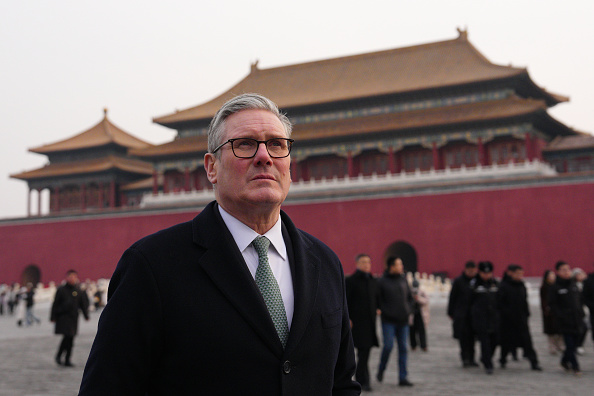
In our Focus Insights section, we featured an article by Tian Shichen on Prime Minister Keir Starmer's visit to China, highlighting how the trip raises questions about whether the engagement signals a long-term policy recalibration or a one-off diplomatic gesture.
We want to hear from you!
How should middle powers navigate relations with China amid shifting global alliances and intensifying great-power competition?
Submit your thoughts to USeditor@chinausfocus.com for a chance to be featured in next week's Focus This Week.
useditor@chinausfocus.com for more info.
Powered by
Prepared by China-US Focus editorial teams in Hong Kong and New York, this weekly newsletter offers you snap shots of latest trends and developments emerging from China and the U.S. every week. It is a community space to exchange thoughts and ideas about the China-U.S. relationship and beyond.
- 2026-01-30 Focus This Week: Balancing Acts
- 2026-01-23 Focus This Week: Delicate Equilibrium
- 2026-01-16 Focus This Week: Trade Winds
- 2026-01-09 Focus This Week: Sovereignty at Stake
- 2025-12-19 Focus This Week: Between the Lines
- 2025-12-12 Focus This Week: Strategic Realignments
- 2025-12-05 Focus This Week: Cooperation on Track
- 2025-11-21 Focus This Week: Dialogue Forward
- 2025-11-15 Focus This Week: Seeking Peace
- 2025-11-07 Focus This Week: Beyond Busan
- 2025-10-31 Focus This Week: A "12 out of 10" Meeting
- 2025-10-24 Focus This Week: Staying "On Track"
- 2025-10-17 Focus This Week: Trade Strains, Policy Plans
- 2025-10-10 Focus This Week: Tariff Tensions, Rattled Markets
- 2025-10-03 Focus This Week: Shutdown Diplomacy
- 2025-09-26 Focus This Week: Turning Up the Heat
- 2025-09-19 Focus This Week: TikTok on the Table
- 2025-09-12 Focus This Week: A New Shift?
