
Dear Focus Reader,
This week, China's Communist Party concluded its fifth plenum in Beijing, adopting a resolution on internal governance, discipline and oversight of officials. The four-day meeting came ahead of next year's party congress, when President Xi Jinping is widely expected to seek a fourth term as party leader. The plenum confirmed that the congress would take place in the second half of 2027 and ratified the expulsions of several senior officials.
Meanwhile, the U.S. Federal Communications Commission voted to bar Chinese laboratories from testing electronics for the American market. The decision expands earlier restrictions on facilities owned or controlled by the Chinese government and covers jurisdictions without reciprocal arrangements with the United States. The rules take effect in December 2028 and affect the approval process for products including smartphones and computers. FCC Chairman Brendan Carr cited security concerns involving access to confidential product information. The decision comes ahead of an expected Trump-Xi meeting in Shenzhen next month.
In Singapore, German Chancellor Friedrich Merz called for closer European-Asian trade ties during a visit to Singapore. His proposals included coordinating existing bilateral trade agreements, pursuing closer arrangements with Trans-Pacific partners, and working toward a longer-term EU-ASEAN agreement. Merz advocated diversifying supply chains, technology, and raw materials while rejecting economic separation from China. "Decoupling would be a big mistake," he said. Singapore's Prime Minister Lawrence Wong said his government would seek progress on an ASEAN-EU agreement during its 2027 ASEAN chairmanship.
China's Foreign Ministry responded by emphasizing Chinese-European industrial interdependence and calling for differences to be resolved through dialogue. The proposed trade arrangements have not been concluded.
Learn more on international relations by exploring our latest Focus content, including topics on artificial intelligence, foreign policy, and more.

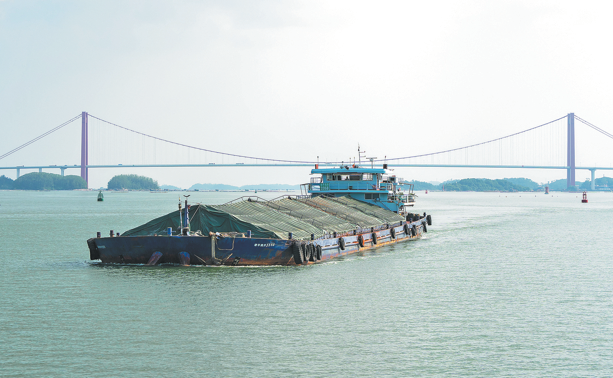
The amount China has invested in Pakistan's power sector under the China-Pakistan Economic Corridor, helping address electricity shortages as delayed payments to Chinese power producers complicate ongoing cooperation.
Read more in "U.S.-backed Asian Development Bank replaces China in Pakistan's Largest Belt and Road Project," by Adnan Aamir, Journalist and Researcher, Islamabad, Pakistan.
10 Years in China | Lauren Hamilton
Watch VideoQuestion of the Week:
In our Focus Insights section, Tang Xinhua considers the risks of increasingly autonomous AI and its growing role in national security.
We want to hear from you!
Where should the United States and China draw the line between competition and cooperation on AI?
Submit your thoughts to USeditor@chinausfocus.com for a chance to be featured in next week's Focus This Week.
useditor@chinausfocus.com for more info.
Powered by
Prepared by China-US Focus editorial teams in Hong Kong and New York, this weekly newsletter offers you snap shots of latest trends and developments emerging from China and the U.S. every week. It is a community space to exchange thoughts and ideas about the China-U.S. relationship and beyond.
- 2026-10-23 Focus This Week: Managing the Divide
- 2026-10-16 Focus This Week: Navigating New Pressures
- 2026-10-09 Focus This Week: The Tradeoffs Ahead
- 2026-10-02 Focus This Week: Taking the Next Steps
- 2026-09-25 Focus This Week: What Comes Next?
- 2026-09-21 Focus This Week: Ahead of the Summit
- 2026-09-11 Focus This Week: Remembering Tung Chee Hwa
- 2026-09-04 Focus This Week: New Alignments
- 2026-08-28 Focus This Week: Pressure Points
- 2026-08-21 Focus This Week: Shifting Grounds
- 2026-08-07 Focus This Week: Trade Holds Firm
- 2026-07-31 Focus This Week: Keeping Channels Open
- 2026-07-17 Focus This Week: Rising Friction
- 2026-07-10 Focus This Week: Strategic Signals
- 2026-06-26 Focus This Week: Bridging Dialogues
- 2026-06-18 Focus This Week: What's the Deal?
- 2026-06-12 Focus This Week: Strait Pressure
