
Dear Focus Reader,
This week, President Donald Trump accused Beijing of interfering in the 2020 U.S. presidential election during a nationally televised address on election security, reviving allegations that China has repeatedly denied. Trump alleged that China had obtained data on roughly 220 million American voters and sought to influence the election in favor of Joe Biden, announcing the release of newly declassified intelligence documents that he said supported those claims, although he did not present evidence that votes or election results had been altered.
China's Foreign Ministry rejected the claims, saying that China "has no interest in interfering in U.S. elections and has never done so," and calling the assertions "groundless accusations." A 2021 U.S. intelligence assessment found no indication that any foreign actor altered technical aspects of the 2020 election, including voter registrations, ballots, tabulations, or results.
The exchange comes as Washington and Beijing continue efforts to manage a fragile trade truce following months of tariff disputes and ahead of a potential meeting between Presidents Trump and Xi Jinping in September.
Meanwhile, China released economic data this week showing slower-than-expected growth in the second quarter of 2026. According to the National Bureau of Statistics, the economy expanded 4.3 percent year-on-year from April to June, down from 5 percent growth in the first quarter. While Chinese officials pointed to continued momentum in exports, high-tech manufacturing, and emerging industries, economists noted ongoing challenges in domestic consumption, property investment, and private-sector activity.
The figures reflect the balancing act facing Beijing as it works to boost domestic consumption while offsetting slowing momentum in traditional sectors such as real estate and infrastructure investment. In response, Premier Li Qiang emphasized the country's need for counter-cyclical adjustments, as policymakers consider additional measures to support growth.
Learn more on international relations by exploring our latest Focus content, including topics on artificial intelligence, foreign policy, and more.


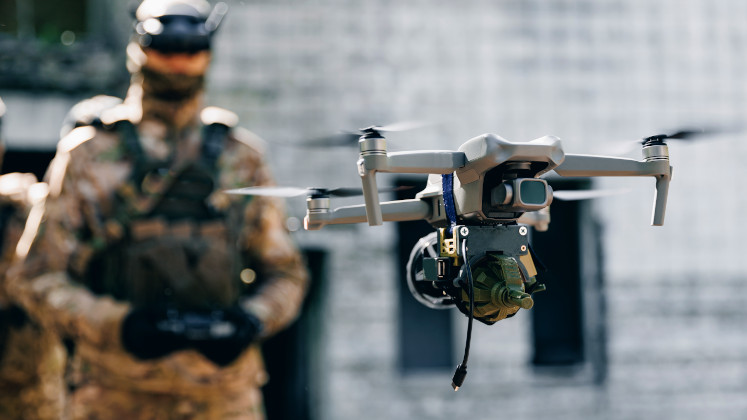
"A review of China-U.S. relations since the late 1970s shows that nearly every effort to stabilize the relationship has been vulnerable to disruption by an unexpected incident, with military encounters and unplanned maritime and aerial incidents proving particularly consequential."
The amount European allies and Canada invested in core defense requirements last year, as NATO shifts toward greater defense investment and expanded military capabilities.
Learn more in "NATO 3.0 Emerging After Ankara" by Sun Chenghao, Fellow at the Center for International Security and Strategy of Tsinghua University.
No More Tiger Leaping Gorge| Kyle Obermann
Watch VideoQuestion of the Week:
In our Focus Insights section, we feature an article by Yang Wang and Brian Wong exploring the growing challenges posed by autonomous artificial intelligence and how competition between the United States and China could shape the future of AI safety and governance.
We want to hear from you!
What areas of AI development and safety could provide opportunities for greater cooperation between the U.S. and China?
Submit your thoughts to USeditor@chinausfocus.com for a chance to be featured in next week's Focus This Week.
useditor@chinausfocus.com for more info.
Powered by
Prepared by China-US Focus editorial teams in Hong Kong and New York, this weekly newsletter offers you snap shots of latest trends and developments emerging from China and the U.S. every week. It is a community space to exchange thoughts and ideas about the China-U.S. relationship and beyond.
- 2026-07-10 Focus This Week: Strategic Signals
- 2026-06-26 Focus This Week: Bridging Dialogues
- 2026-06-18 Focus This Week: What's the Deal?
- 2026-06-12 Focus This Week: Strait Pressure
- 2026-05-29 Focus This Week: Ties and Tensions
- 2026-05-22 Focus This Week: The Aftermath
- 2026-05-15 Focus This Week: Deal or No Deal?
- 2026-05-08 Focus This Week: Beijing Bound (Take Two)
- 2026-05-01 Focus This Week: Flashpoints
- 2026-04-24 Focus This Week: Under Pressure
- 2026-04-17 Focus This Week: China’s Diplomatic Push
- 2026-04-10 Focus This Week: Uneasy Peace
- 2026-03-27 Focus This Week: Beijing Bound
- 2026-03-13 Focus This Week: Targeting Stability
- 2026-03-06 Focus This Week: Tehran Tensions
- 2026-02-27 Focus This Week: Tariff Turnaround
