
Dear Focus Reader,
China's Politburo met in Beijing this week to set economic priorities for the second half of 2026. Chaired by Chinese President Xi Jinping, the meeting acknowledged that the country's economy continues to face "difficulties and challenges" and called for faster fiscal spending, more effective implementation of existing measures, stronger countercyclical adjustments, and the introduction of "practical and effective incremental policies."
The measures point to a targeted expansion of policy support rather than a sweeping new stimulus package, with leaders emphasizing domestic demand, employment, business confidence, financial stability and the property market. The Politburo also announced that the Fifth Plenary Session of the 20th Central Committee will be held in October, and will examine major issues related to Party discipline and governance.
Meanwhile, U.S. Treasury Secretary Scott Bessent and U.S. Trade Representative Jamieson Greer held a high-level video call yesterday with Chinese Vice Premier He Lifeng ahead of a potential September meeting between Presidents Donald Trump and Xi. The discussions addressed trade commitments, including rare earths and U.S. agricultural products, as well as broader economic issues between the two countries. Bessent emphasized that the U.S. "expect[s] Beijing to fully meet its commitments," reflecting ongoing U.S. concerns over the implementation of trade agreements.
On the technology front, China continued its push to shape global artificial intelligence standards at the World Artificial Intelligence Conference (WAIC) in Shanghai earlier this month, where Xi called for greater international cooperation on AI governance and open-source AI development. During the conference, representatives from 29 countries signed an agreement to establish the World Artificial Intelligence Cooperation Organization (WAICO), which will be headquartered in Shanghai and serve as a new multilateral platform for collaboration on AI policy.
These developments come amid ongoing debates in Washington on how to respond to China's rapid AI advances. Trump administration officials recently accused Beijing-based Moonshot AI of improperly using distillation techniques involving U.S. AI systems, while Bessent said the administration could consider sanctions or Entity List designations against Chinese AI firms.
Learn more on international relations by exploring our latest Focus content, including topics on geopolitics, global energy, and more.


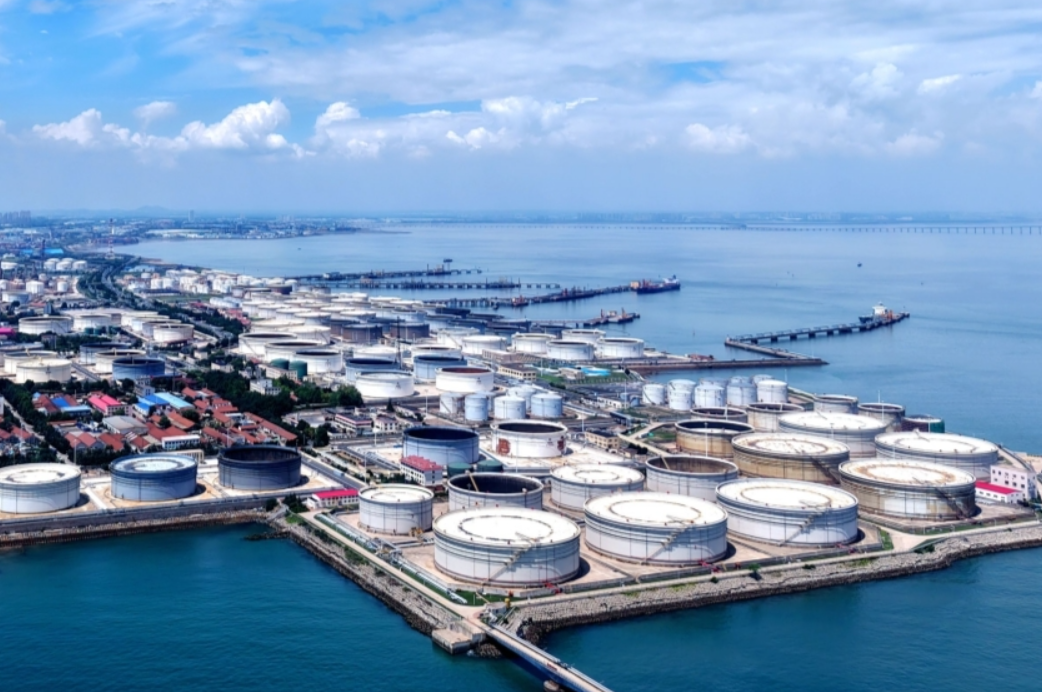
The amount of USD China says its Global Development Initiative (GDI) has mobilized since 2021, supporting more than 1,800 cooperation projects across areas including poverty reduction, food security, climate change, digital development, and health.
Learn more in "Is Washington Ceding the Post-2030 Agenda to Beijing?" by Lexi Yixuan Ma, Member of the United Nations Major Group for Children and Youth.
Deep Panda AI | Kyle Obermann
Watch VideoQuestion of the Week:
In our Focus Insights section, we feature an article by James Chau, President of the China-United States Exchange Foundation, examining how sports can offer lessons for U.S.-China relations.
We want to hear from you!
Have you ever experienced how sports can bring people together across cultures or backgrounds? Can that same spirit help improve U.S.-China relations?
Submit your thoughts to USeditor@chinausfocus.com for a chance to be featured in next week's Focus This Week.
useditor@chinausfocus.com for more info.
Powered by
Prepared by China-US Focus editorial teams in Hong Kong and New York, this weekly newsletter offers you snap shots of latest trends and developments emerging from China and the U.S. every week. It is a community space to exchange thoughts and ideas about the China-U.S. relationship and beyond.
- 2026-07-17 Focus This Week: Rising Friction
- 2026-07-10 Focus This Week: Strategic Signals
- 2026-06-26 Focus This Week: Bridging Dialogues
- 2026-06-18 Focus This Week: What's the Deal?
- 2026-06-12 Focus This Week: Strait Pressure
- 2026-05-29 Focus This Week: Ties and Tensions
- 2026-05-22 Focus This Week: The Aftermath
- 2026-05-15 Focus This Week: Deal or No Deal?
- 2026-05-08 Focus This Week: Beijing Bound (Take Two)
- 2026-05-01 Focus This Week: Flashpoints
- 2026-04-24 Focus This Week: Under Pressure
- 2026-04-17 Focus This Week: China’s Diplomatic Push
- 2026-04-10 Focus This Week: Uneasy Peace
- 2026-03-27 Focus This Week: Beijing Bound
- 2026-03-13 Focus This Week: Targeting Stability
- 2026-03-06 Focus This Week: Tehran Tensions
