
Dear Focus Reader,
This week, China and the United States agreed to establish a new trade council intended to maintain economic dialogue and manage ongoing frictions over tariffs and market access. According to China's Ministry of Commerce, the mechanism will bring together both countries' economic and trade teams for continued consultations, including discussions on reciprocal tariff reductions and cooperation in specific sectors.
The new initiative builds on agreements reached during the May Xi-Trump summit in Beijing, where both sides committed to establishing new trade and investment councils as part of a broader effort to stabilize economic relations. Its launch marks a concrete step toward institutionalizing the dialogue begun at the summit.
Even so, both governments have also continued to expand targeted trade and technology measures tied to national security. In recent weeks, Washington has tightened export controls on advanced AI chips, and on Monday, Beijing broadened export restrictions on a variety of U.S. firms and barred government procurement of products from 46 U.S. companies, including major defense contractors.
Meanwhile, global leaders gathered this week at the World Economic Forum in Dalian, where discussions reflected growing concern that emerging technologies, including artificial intelligence, are adding new layers of risk to an already competitive U.S.-China relationship. At the Forum, Harvard University Professor Graham Allison, known for his "Thucydides Trap" framework, warned that intensifying U.S.-China rivalry increases the risk of miscalculation, even as interdependence and communication channels continue to provide space for stability.
Learn more on international relations by exploring our latest Focus content, including topics on U.S.-China relations, global governance, and more.
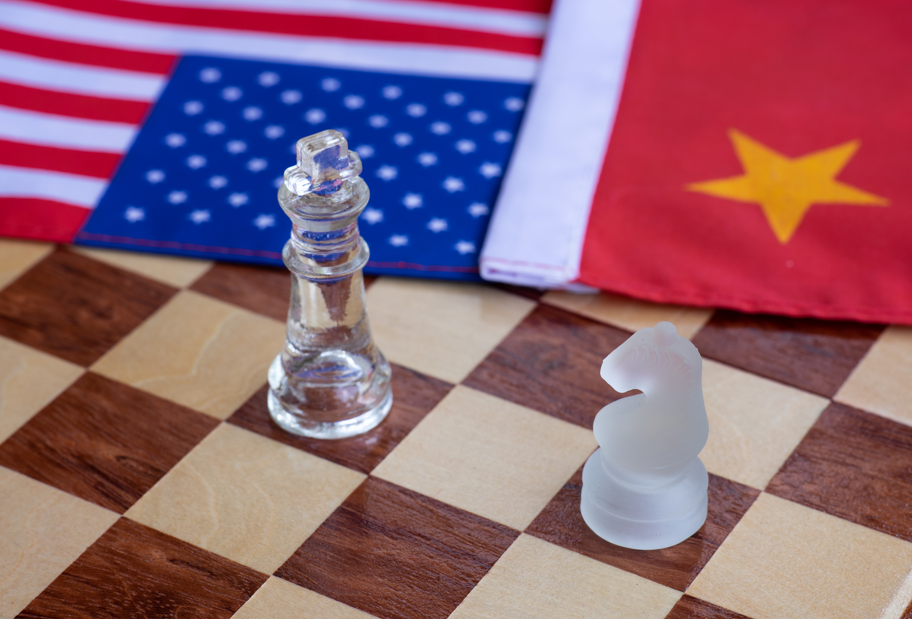


"At a pivotal moment marked by shifts in the global landscape and the respective development trajectories of both countries, emerging changes and new dynamics in China-U.S. relations are expected to produce a positive and significant impact on the overall bilateral relationship, strategic nuclear relations, and the broader regional strategic environment."
The estimated size of China's trade surplus, marking a milestone that has renewed concerns over global economic imbalances and their growing geopolitical framing.
Learn more in "Global Economic Imbalances Amid Geopolitical Competition," by Zhang Monan, Deputy Director of the Institute of American and European Studies at CCIEE.
Rural China Side Quest | Jack Mullinkosson
Watch VideoIn this episode of the China Current, U.S. content creator Jack Mullinkosson, an American in China, did a sidequest challenging a local pool shark in rural Guizhou, China. Jack left some pu'er tea, but they were quick to parry, gifting Jack tea leaves in return.
Question of the Week:
In our Focus Insights section, we feature an article by Sun Chenghao examining the emerging "constructive relationship of strategic stability" between China and the United States and what it could mean for efforts to manage intensifying competition across technology, security, and trade.
We want to hear from you!
Can "strategic stability" realistically contain rising China-U.S. competition across technology, security, and trade?
Submit your thoughts to USeditor@chinausfocus.com for a chance to be featured in next week's Focus This Week.
useditor@chinausfocus.com for more info.
Powered by
Prepared by China-US Focus editorial teams in Hong Kong and New York, this weekly newsletter offers you snap shots of latest trends and developments emerging from China and the U.S. every week. It is a community space to exchange thoughts and ideas about the China-U.S. relationship and beyond.
- 2026-06-18 Focus This Week: What's the Deal?
- 2026-06-12 Focus This Week: Strait Pressure
- 2026-05-29 Focus This Week: Ties and Tensions
- 2026-05-22 Focus This Week: The Aftermath
- 2026-05-15 Focus This Week: Deal or No Deal?
- 2026-05-08 Focus This Week: Beijing Bound (Take Two)
- 2026-05-01 Focus This Week: Flashpoints
- 2026-04-24 Focus This Week: Under Pressure
- 2026-04-17 Focus This Week: China’s Diplomatic Push
- 2026-04-10 Focus This Week: Uneasy Peace
- 2026-03-27 Focus This Week: Beijing Bound
- 2026-03-13 Focus This Week: Targeting Stability
- 2026-03-06 Focus This Week: Tehran Tensions
- 2026-02-27 Focus This Week: Tariff Turnaround
- 2026-02-13 Focus This Week: A Critical Period
- 2026-02-06 Focus This Week: The Telephone Hour
- 2026-01-30 Focus This Week: Balancing Acts
