Wang Honggang, Deputy Directorof Institute of American Studies, China Institutes of Contemporary International Relations
Jan 02, 2015
China and US should deepen their cooperation and coordination in helping other countries to find a more sustainable development model, thus showing the world that their ideological differences can be mutually complementary rather than only contradictory.
Chen Xiangyang, Director and Research Professor, CICIR
Dec 31, 2014
Speaking at the recent Central Conference on Work Relating to Foreign Affairs, Xi Jinping spelled out China’s new foreign-policy vision, which many have characterized as a diplomatic manifesto to secure the “Chinese dream”.
Wu Jianmin, Former President, China Foreign Affairs University
Dec 23, 2014
Wu Jianmin relays his concluding remarks from the Second China-U.S. Policy Forum in Beijing on December 13th – 15th, reiterating the history of China’s opening up to the West, and more recent phases of China-U.S. cooperation. Wu believes the U.S. and China can identify convergent interests, and make the foundation of the China-U.S. relationship stronger and stronger.
Zhao Weibin, Researcher, PLA Academy of Military Science
Dec 22, 2014
The recently concluded Xiangshan Forum addressed the prospect of a New Asian Security Concept, suggesting that strong political leadership will be necessary for building a community of common interests.
Wu Zurong, Research Fellow, China Foundation for Int'l Studies
Dec 17, 2014
Internal causes in China are the basis of changes and developments in Asia, while external causes, such as relations with the other parts of the world, are secondary, and become operative through internal causes in Asia. Through this logic, Wu Zurong argues that the U.S. should consider its own development path before concerning itself with lost influence in Asia.
Stewart Taggart, Founder & Principal, Grenatec
Dec 17, 2014
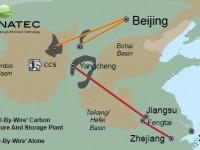
China’s decision to ban coal-fired power plants in Beijing by 2020 marks a big advance in battling climate change. Stewart Taggard argues that this is the first step in a long march toward wider application of ‘energy by wire.’
Nathan Gardels, Editor-in-chief, THEWORLDPOST
Dec 15, 2014
China has two key challenges in the years ahead. The first is to build a new, global rules-based system with the other major world power, the United States, that supplants the post-WWII order.
Dec 10, 2014
Jin Ying warns the U.S. to be weary of Japan, citing their history of “running away with the bone” as the U.S. and China jostle for influence in the Pacific. Ying agrees with Democratic advisor Zbigniew Brzezinski that the U.S. should sign a major charter with China, just as it did with Britain during WWII.
Dec 09, 2014
There are several scenarios for military regional order in the Pacific, but “collective security” would be the most desirable strategic choice for regional countries. Existing organizations and communications platforms, such as the Shanghai Cooperation Organization, provide a good foundation for this military order and continued economic integration in the Pacific.
Han Liqun, Researcher, China Institutes of Contemporary International Relations
Nov 26, 2014
The initiatives and enormous investments turned the APEC meeting in Beijing from a “talk shop” to one of action. Han Liqun stresses that all APEC member economies should be fully confident in building an open and liberal economic and trade environment in the Asia-Pacific.
Back to Top

- China-US Focus builds trust and understanding between the U.S. and China through open dialogue among thought leaders.