

The multi-centered geographical distribution of UN agencies has been a reality, yet there is no comprehensive UN hub in East Asia. A two-step approach—pilot first, followed by institutional integration—could be adopted to leverage the region’s strengths in innovation and market, thereby building a new node of international governance.
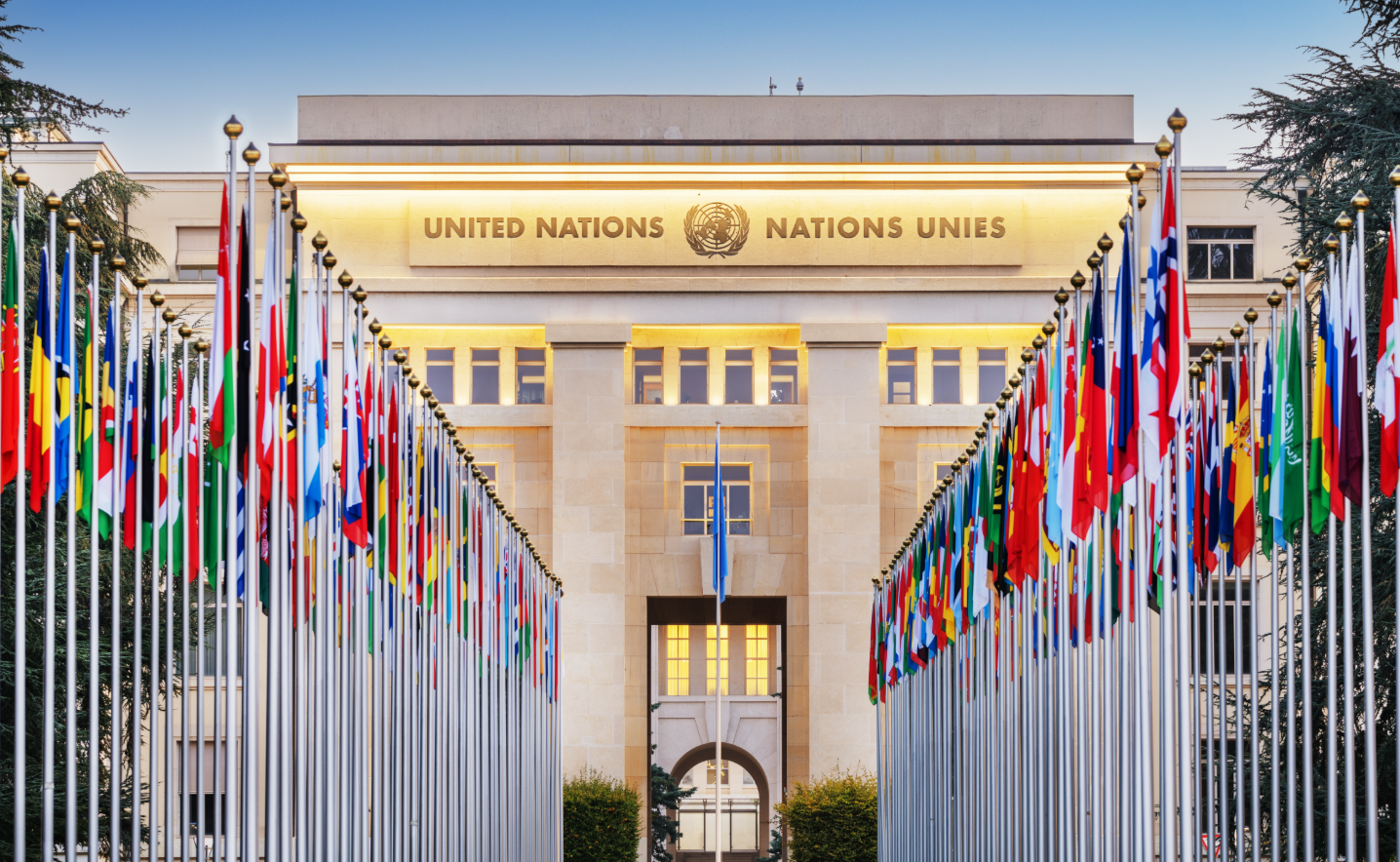
The United Nations is undergoing a profound transformation. The United States has withdrawn from more than 30 UN agencies and signaled its intention to replace some of their functions with a so-called Board of Peace, and the UN80 Initiative has promoted the relocation of UN bodies. In this context, the geographical decentralization of UN agencies is accelerating, requiring the international organization to develop a more resilient, effective and consensus-driven institutional framework in a multipolar world. The key to this transformation lies in its ability to move beyond the traditional paradigm of setting up headquarters in the United States or Europe and consider ways to nurture a future-oriented hub in Asia that can adapt to change, build consensus, and face the future.
The multi-centered geographical distribution of UN agencies is a fait accompli
It is a common misconception that the United Nations functions as an administrative system, with New York and Geneva as its absolute geographical centers and dominated by Western powers. In reality, it has long since evolved into a global, multi-centered network organized around functions and mandates.
For example, the United Nations Environment Program (UNEP) is headquartered in Nairobi, Kenya—not by chance, but as a result of a decision following the 1972 UN Conference on the Human Environment in Stockholm. By situating the center of global environmental governance closer to developing countries and ecological front lines, this move marked a historic rebalancing of North-South discourse power on environmental issues. Similarly, the United Nations Economic and Social Commission for Asia and the Pacific (ESCAP), based in Bangkok, Thailand, was officially designated as a permanent headquarters in 1970 because of its geographical accessibility to East Asia, Southeast Asia, South Asia, Central Asia and Pacific Island countries, along with the supportive institutional environment across the region.
A large number of UN agencies are concentrated in major European cities. For example, Geneva, Switzerland, is home to numerous specialized agencies, such as the International Labour Organization, the World Intellectual Property Organization, the World Meteorological Organization, the International Telecommunication Union and the World Health Organization, alongside numerous UN bodies at the Palace of Nations in the city. Bonn, Germany, hosts the secretariat of the United Nations Framework Convention on Climate Change and the Intergovernmental Science-Policy Platform on Biodiversity and Ecosystem Services; Paris, France, is home to the United Nations Educational, Scientific and Cultural Organization; Vienna, Austria, hosts the United Nations Industrial Development Organization; and Rome, Italy, serves as the seat of the Food and Agriculture Organization of the United Nations.
This geographically dispersed yet functionally interconnected structure facilitates knowledge synergy and policy integration and underpins a decision-making mechanism characterized by risk buffering and collective consultation. It prevents a single member state from dominating the agenda to effectively prevent the UN from becoming overly dependent on the political environment of a single host country.
New York and Geneva remain indispensable hubs for multilateral diplomacy, global agenda-setting and the formulation of international rules, yet a wide range of operational, technical and regional functions have long been distributed globally. UN reform is not about starting from scratch but identifying key gaps in this established network and embedding new nodes of strategic value. This approach is also consistent with the UN’s pragmatic principle that function determines location.
A potential comprehensive hub in Asia
Despite the considerable scale already achieved by the institutional network of the United Nations, a notable structural gap persists in the Asia-Pacific region, especially in East Asia, the world’s most economically dynamic region. The region lacks a comprehensive strategic hub that transcends single-sector or subregional functions and that is equipped with a global perspective and a forward-looking mandate. Currently, global governance stands at a critical juncture marked by two historic opportunities: the collective rise of the Global South and the accelerating penetration of disruptive technological revolutions. Together, these dynamics provide the driving force to address the aforementioned structural gap.
On one hand, although the Global South still lags far behind Western countries in terms of economic and social development, it is closely intertwined with major global issues, such as political stability, regional integration, social equity, environmental protection, technology governance and sustainable growth, and thus urgently needs to sustain a trajectory of rapid yet orderly development. On the other hand, East Asia—particularly China, Japan, the Republic of Korea and the Association of Southeast Asian Nations (ASEAN)—is not only a global hub for R&D and manufacturing and a major market but also a vast market fostering emerging cities and mega-city clusters.
However, the current geographical distribution of UN agencies is unable to meet the defining trends of the era: the deep integration of development and innovation. Although ESCAP has been operating in Bangkok for decades and excels in macro-level policy coordination and normative functions, it faces functional and institutional constraints in advancing the technological transformation of cutting-edge fields, such as artificial intelligence, the low-altitude economy and aerospace engineering. In Asia, a region with the world’s greatest economic vitality and technological innovation potential, the absence of a strong, integrated central platform within the UN system that can drive innovation, respond to market needs and provide oversight and evaluation will ultimately undermine the inclusiveness of its decision-making, the relevance of its operations and its capacity to adapt to future challenges.
Building a comprehensive hub in East Asia is a crucial step needed to enhance the resilience, effectiveness and consensus-building capacity of the UN system. It is expected to provide the Global South with a bigger platform for knowledge sharing and resource mobilization, one that is distinct from those in New York or Geneva. At the same time, it should not be detached from local realities; it needs to be deeply rooted in conditions on the ground. Here, emerging technologies and integrated solutions would be directed toward addressing specific challenges such as climate change, urban governance, public health and the digital divide, thereby enabling the Global South to substantially obtain the right to participate the global governance, agenda-setting and outcome sharing.
Therefore, this initiative is a crucial functional upgrade and future investment for the UN’s global network, rather than a weakening or replacement of existing hubs such as Nairobi, Bangkok and Bonn. It will enable the international organization to evolve into an international platform committed to fostering driving forces for change and adaptive capacity, ensuring that the world’s most important multilateral institution can effectively navigate an increasingly complex international landscape.

Candidate cities in Asia
Selecting an Asian city capable of hosting the UN’s comprehensive new hub is a forward-looking and strategically nuanced decision. Each candidate city, by virtue of its unique historical trajectory, resource endowments and development model, demonstrates distinct potential.
Singapore boasts exceptional capabilities in managing international affairs. Its core strengths lie in a stable, efficient and internationalized political, legal and administrative system, complemented by a well-established expat community, a strong talent pool and a diplomatic network at the intersection of East and West, making it a model of globalization and professionalism. However, it faces insurmountable obstacles such as high operational costs, limited geographical depth and insufficient technological reserves. In particular, its elite-driven development model may create a perceptual disconnect with many developing economies, thus posing challenges in fulfilling the mandate of deeply integrating the Global South with frontier technologies.
Bangkok embodies the advantages of regional integration and cost-effectiveness. As the seat of ESCAP, it has unique experience in operating UN agencies, along with a well-established regional cooperation network and strong local support. Its low living and operational costs and its inclusive cultural traditions make it a natural gateway to the heart of Southeast Asia and the broader Asia-Pacific region. Key constraints include limited modern urban infrastructure, relatively modest technological capacity and domestic political uncertainties.
Developed cities in Northeast Asia, represented by Tokyo and Seoul, are at the forefront of technology and international norms. They possess first-class R&D facilities, advanced digital societies and sophisticated credit systems, making them ideal locations for cutting-edge domains, such as smart cities and space science. However, their high operational costs and lack of practical proximity to the realities in meeting the diverse and non-standard developmental needs of the Global South remain key constraints.
Cities in the Persian Gulf region, such as Dubai, Abu Dhabi, Doha and Riyadh, also harbor ambitions to become hubs of global development. They hold a competitive edge thanks to their strategic location connecting three continents, abundant financial resources, modern infrastructure and expertise in organizing large-scale international events. Their challenges, however, stem from climatic conditions, social and cultural structures, and the stability of the regional political and security landscape.
China, with a strong track record in political, economic, social and security fields, is also a candidate for an international hub. Among its cities, Shenzhen and Hangzhou stand out with unique potential. They possess ultra large-scale digital application scenarios, world-leading ecosystems for manufacturing and services, a cost-effective land supply and practical experience in poverty alleviation and sustainable development. By leveraging the strengths of the Guangdong-Hong Kong-Macao Greater Bay Area and the Hangzhou Bay Area, these cities bridge China’s huge and affluent domestic market with international rules, talent pools and efficient transportation hubs in Hong Kong, Macao and Shanghai, thus fostering global growth drivers.
The northern metropolis of Hong Kong in South China, which is adjacent to Shenzhen, features outstanding internationalization and facilitation capacity. It could be developed into a super special zone that is inside Hong Kong but outside its customs boundary and outside Shenzhen but within its customs boundary. This would allow foreign nationals, Chinese residents and officials to move freely within the zone, fully leveraging the institutional advantages of China’s “One Country, Two Systems” structure to align international rules with domestic practices. Such a framework could provide efficient and compliant solutions for the cross-border flow of people and data and fund utilization by international organizations.
A similar approach could be applied to Hangzhou in East China. Its Shangcheng District and Binjiang District—on both sides of the Qiantang River—serve as the cultural, technological and commercial centers of the modern city. Its rich cultural and natural heritage, coupled with outstanding ideas of governance, make this millennium-old city—the capital of the Wuyue Kingdom from 907 to 978 AD and the Southern Song Dynasty from 1138 to 1279 AD—one of China’s most innovative and highly competitive as an international hub.
Compared with Beijing and Shanghai, which have saturated functions, Shenzhen and Hangzhou exhibit greater enthusiasm for participating in international affairs. Why? Because they not only have physical space and the institutional flexibility to accommodate incremental functions, but are also ready to accelerate their engagement with the wider world. In China, they are the leading engines of the Yangtze River and Pearl River economic belts, and they are expected to receive more incentives from central and local governments.
For the international community, the key concern regarding site selection lies in whether an extraordinary institutional design can build a trustworthy and communication-friendly hub for decision-making, operation, knowledge-sharing and data governance within international organizations. For Shenzhen and Hangzhou, the challenge is to build up capacity for integrating and providing global solutions, and then transform them into global public goods required by the UN system through reliable international institutions and channels.
A two-step strategy
The development of a comprehensive new hub does not depend on grand political declarations; it requires a pragmatic approach characterized by meticulous design and gradual implementation. Such an initiative must be launched within a delicately balanced political environment and achieve integration with the global network based on demonstrable effectiveness.
Phase 1: Small-scale piloting
Efforts should begin with small-scale pilot projects led by the UN. For example, Shenzhen could establish a partnership with the United Nations Human Settlements Program (UN-Habitat) for developing a smart city cluster that integrates climate adaptation, low-altitude planning and ecological livability, targeting Central Asia, Southeast Asia and Pacific island countries. Hangzhou could cooperate with the United Nations Development Program (UNDP) to launch a small-scale blockchain-based financial inclusion project for South Asia, Southeast Asia and Central Asia. The tangible outcomes are not just large institutions, but measurable technical solutions, policy tools and capacity-building modules. These pilots will test the cities’ operational resilience, effectiveness and consensus-building capacity and accumulate international credibility in the process.
Phase 2: Institutional integration
Once Shenzhen and Hangzhou demonstrate their value as indispensable “solution workshops” under the UN system, the process can advance to the phase of institutional integration. The goal at this stage is to ensure mutual empowerment and seamless coordination between the two cities and the regular works of policy formulation, normative negotiation and on-the-ground operations in New York, Geneva, Nairobi and Bangkok. They could be incorporated into the UN system’s training, operation and rotation mechanisms, with their work outputs and data systems connected to the UN information system. Their proven concepts, tools and models could be transformed into policy options, operational standards and capacity-building resources for the UN’s global operational system, systematically enhancing its ability to address complex challenges.
A function-driven and more resilient global governance structure
The current transformation pressure on the UN stems not only from the short-term trend of some functions relocating outside the United States and seeking alternative partners but also from the deeper issue that the Western-centric governance structure established after World War II can no longer meet the practical needs of a multipolar world and “re-regionalization.”
The future of the UN does not depend on a binary choice between the status quo and radical reconstruction but on its ability to pursue strategic functional upgrading and optimization within its current multi-centered global network and to foster a new comprehensive hub in East Asia.
The strategic rationality for this choice is robust. First, it fills functional gaps in the UN system. The existing network lacks a physical platform capable of deeply integrating the development needs of the Global South with disruptive technological innovation, leading to a relative disconnect between the UN’s capacity for knowledge production and problem-solving on one hand and the world’s most economically and innovatively dynamic regions on the other. Second, it enhances systemic resilience and operational effectiveness. A successfully operated new Asian hub in China could create a more balanced and complementary functional distribution alongside existing hubs, structurally reducing the UN system’s overreliance on the political environment of a single region and enhancing its overall resilience in addressing geopolitical challenges through tangible results. Third, it reshapes development consensus. The hub would provide all countries, including those in the Global South, with a more inclusive platform for decision-making and action based on specific development issues and shared outcomes, helping to forge broad consensus on sustainable development and global governance.
However, the implementation of this initiative requires exceptional political acumen and professional capacity. No perfect answer can be found, whether we cast our eyes to the well-established Singapore and Bangkok, the technologically leading Tokyo and Seoul or the high-potential Shenzhen and Hangzhou. Any choice entails a series of complex tradeoffs and strategic considerations regarding operational costs, political trust, cultural adaptability and institutional guarantees. The two-phase strategy proposed here offers a pragmatic and feasible path. It abandons the illusion of political dependence on superpowers and a wholesale relocation from New York; instead, it argues for a gradual path to establishing status by demonstrating effectiveness and accumulating trust through specific projects. If Shenzhen and Hangzhou emerge as global hubs, they are expected to face challenges from the international community’s foremost concerns regarding global public goods and governance capacity.
Ultimately, with the joint efforts of China and the wider international community, a new UN hub that places greater emphasis on problem-solving, knowledge-sharing and institution-building will be established. The creation of this functional center represents both an institutional innovation and an administrative endeavor capable of re-anchoring the fragmented global landscape around an agenda of cooperation and development.
