
The recent visit by U.S. President Donald Trump and by Russian President Vladimir Putin can be seen as a limited buffer in current major-power dynamics.
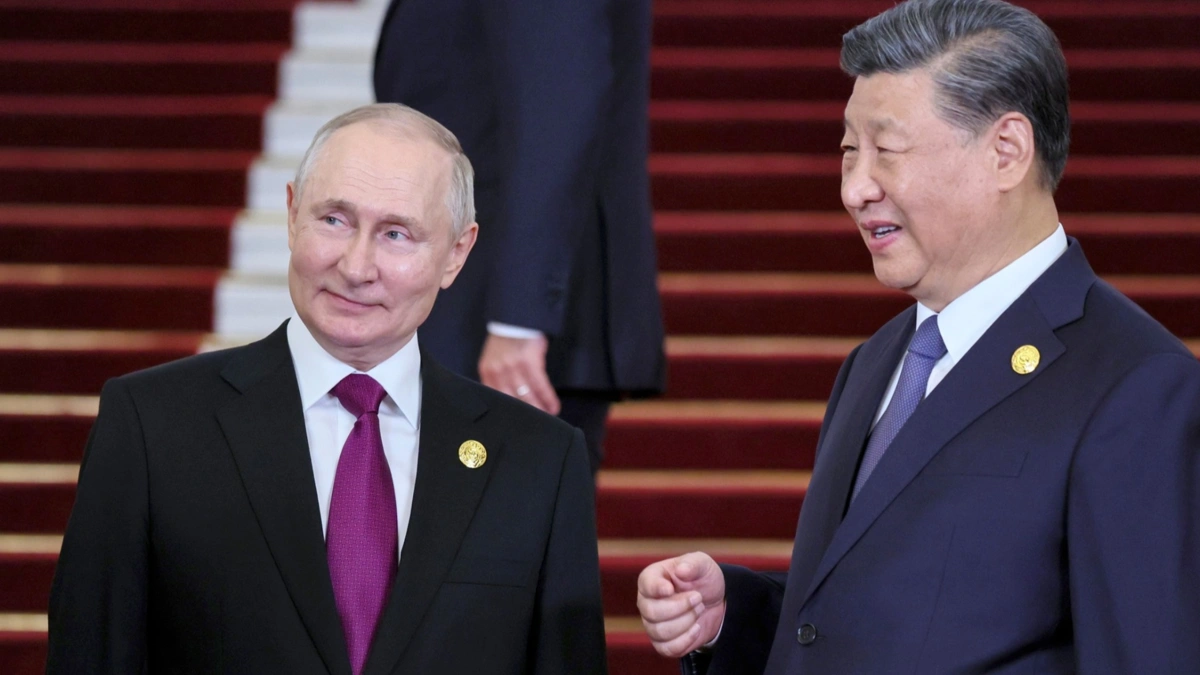
U.S. President Donald Trump’s recent visit to China and Russian President Vladimir Putin’s current one provide critical opportunities to assess the trajectory of major-power relations. This form of “back-to-back diplomacy sends a clear strategic signal to the international community: Despite seemingly irreconcilable structural contradictions between major powers, all sides remain willing to preserve minimum strategic communication to reduce the risk of miscalculation.
From a broader strategic perspective, the two visits reflect a classic exercise of time management. Rather than seeking to reshape the existing balance of competition, the major powers are regulating the pace of rivalry within the existing framework, thereby preserving room for strategic maneuver.
As Wess Mitchell, an American strategist, historian and former diplomat, argues in his 2025 book “Great Power Diplomacy,” one important function of diplomacy during competition is to help countries recalibrate the balance of power across time and space to avoid direct conflict that is beyond their capacity to sustain.
Against this backdrop, Trump’s visit and Putin’s trip to China appear aimed at creating a brief but carefully managed window of stability ahead of major multilateral engagements such as APEC and the G20 summits.
Political reality
Although the two leaders will have visited China at roughly the same time, neither Washington nor Moscow appears to be planning a bilateral meeting. Trump was expected to shorten his stay in Beijing, effectively ruling out the possibility of talks with Putin. Meanwhile, Kremlin spokesperson Dmitry Peskov stated explicitly that there are “no such plans” for a Trump-Putin meeting.
The White House places greater emphasis on the China-U.S. relationship. U.S. Trade Representative Jamieson Greer said that the central objective of Trump’s trip is to stabilize two-way economic ties and prevent large-scale confrontation. Discussions focused primarily on trade, technology (especially artificial intelligence) and broader geopolitical issues—with an emphasis on risk control rather than any substantive expansion of relations.
The strategic objectives of the United States and Russia toward China are clearly divergent. Washington hopes to stabilize relations through limited cooperation and, in so doing buy time for its own strategic adjustments. Moscow, by contrast, prioritizes the long-term stability of its ties with Beijing, viewing them as a vital pillar for managing external pressure and expanding strategic room for maneuver. Putin’s visit is expected to focus on consolidating and deepening the comprehensive strategic cooperative partnership with China.
This arrangement clearly underscores the divergent strategic approaches adopted by the United States and Russia toward China. Against this backdrop, China is acting as a unique stabilizing anchor through head-of-state diplomacy, providing a degree of predictability and buffer space for interactions with competing major powers.
Areas of cooperation, competition
Relations between China, the United States and Russia are now complex. The nature of China-U.S. cooperation has changed markedly: The primary function is no longer to promote substantial improvement in relations but to mitigate systemic risks. As Ryan Hass, a senior fellow at the Brookings Institution, has observed, China-U.S. cooperation is not likely expand to the strategic level at present.
Meanwhile, the areas of competition continue to expand. America’s security commitments to its allies are having increasingly greater influence on relations with China. For instance, the U.S. defense commitment to the Philippines has become a prominent variable in great-power competition, and Japan’s military expansion has significantly raised the risk of direct China-U.S. confrontation along the first island chain. As strategic sensitivities intensify on all sides, China-U.S. relations are increasingly dependent on effective communication to prevent miscalculation.
In sharp contrast, U.S.-Russia relations remain locked in a traditional zero-sum confrontation, with strong cross-domain spillover effects. Geopolitical crises, such as the Iran conflict, have absorbed considerable U.S. strategic resources, inadvertently providing valuable breathing room for Russia.
Following the expiration of the New START Treaty in 2026, U.S.-Russia nuclear arms control has reached an impasse, exposing both sides to the risk of unintended escalation. Russia maintains pressure on the battlefield in Ukraine, while the United States responds with sanctions and closer coordination with its allies. The zero-sum rivalry has not only reinforced Western perceptions of China-Russia coordination as a systemic threat but also narrowed the already limited space for broader major-power cooperation.
Although China and Russia have repeatedly stressed that their strategic coordination “targets no third party,” the United States and its allies still regard the partnership as a systemic strategic threat.
Notably, in his 2025 work “The Trump Revolution,” Russian geopolitical scholar Alexander Dugin frames China and Russia as core pillars of a “dual heartland.” This description largely reflects Dugin’s deliberately amplified geopolitical imagination, designed to win greater diplomatic space for Russia. In reality, however, it downplays both the stated principle that China-Russia coordination “targets no third party” and the inherent complexity of trilateral dynamics involving China, Russia and the United States. As a result, such narratives risk reinforcing heightened perceptions of geopolitical threat within U.S. and in wider Western strategic circles.
Toward “managed competition”
The visits by U.S. and Russian leaders to China can be regarded as a limited stabilizing buffer in current major-power dynamics. At its core, this arrangement aims to keep strategic competition within manageable boundaries and prevent uncontrolled spillover into broader geopolitical instability.
Yet the limitations of such a buffer are evident. It is unlikely to resolve the fundamental structural contradictions in major-power relations. For example, intensifying zero-sum thinking has squeezed the space for cooperation; the relative weakening of the United Nations has raised the cost of coordination; and the rising strategic autonomy of middle powers has fueled regional fragmentation. Together, these factors have made major-power relations more complex and significantly more difficult to repair.
Over the longer term, the May visits suggest that great-power competition is heading neither toward chaos nor full detente but gradually evolving into a new form of managed competition. As John Mearsheimer, an American political scientist and international relations scholar, has argued, in a multipolar world great-power competition has become the new normal. Under such conditions, international stability can only be maintained through a return to a pragmatic balance of power, strategic restraint and interest bargaining, rather than ideological confrontation and unlimited expansion. Only through these mechanisms can the breakdown of the international system be avoided and a form of “dynamic coexistence amid competition” potentially sustained. For China, the United States and Russia, the key question is whether this limited buffer can withstand mounting pressures and prevent competitive dynamics from escalating into direct confrontation. Ultimately, the answer will depend on whether all the three countries are willing and able to exercise sufficient strategic restraint.
