
Donald Trump’s foreign policy is either following a disruptive logic to reshape the global power landscape, or it is merely a series of impulsive actions that undermine the foundation of American diplomacy carefully constructed through the postwar decades.
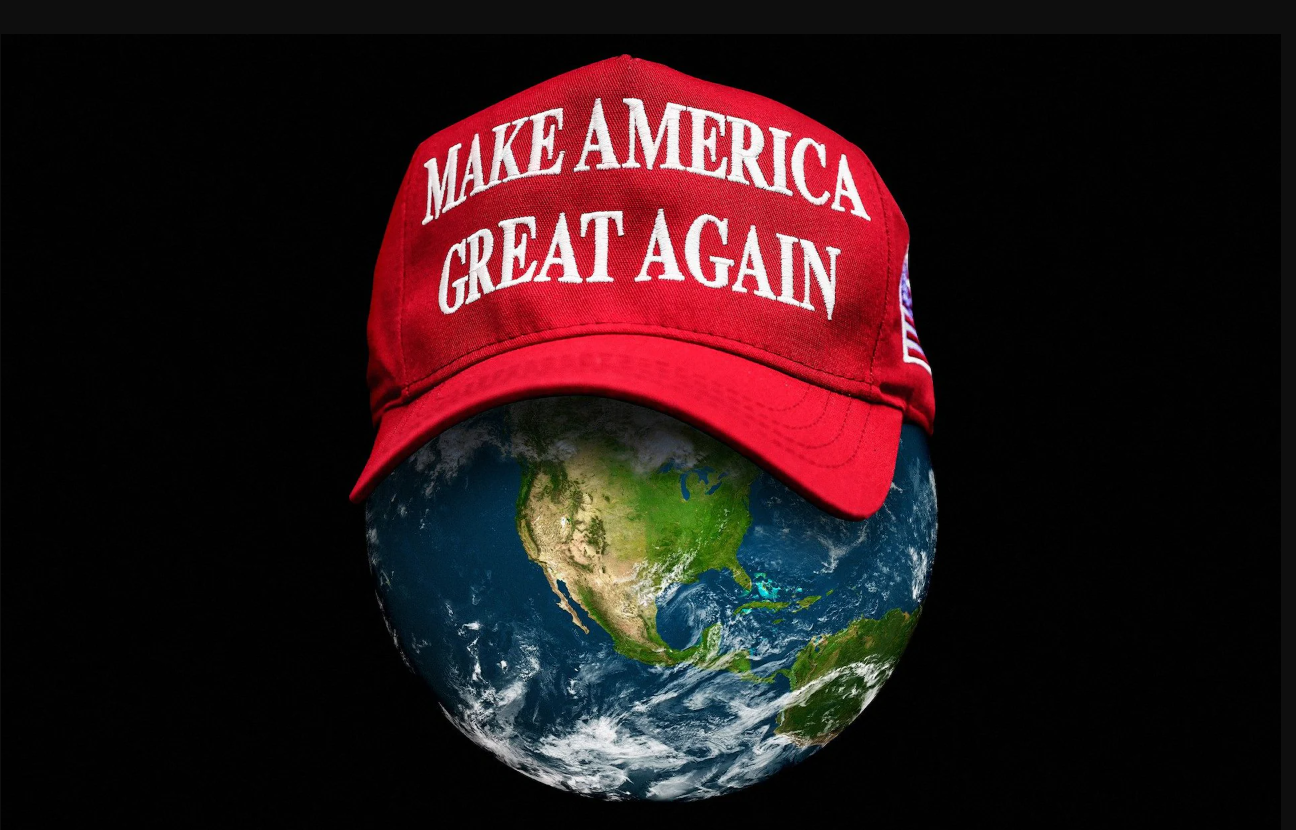
Donald Trump’s foreign policy so far in his second term has been characterized by his volatile and transactional application of the four pillars of his “America first” doctrine—aggressive use of tariffs, targeted military interventions, a strategic reorientation of the Western Hemisphere and an unexpected restructuring of the U.S. alliance system.
Obviously, China is not the only strategic focus of this administration but is always included whenever the United States considers foreign policy. To large extent, the foreign policy decisions of this administration are not driven by a coherent theory or long-term goals but rather by the president’s personal relationships, instincts and preference for making “deals.”
The first pillar of Trump’s 2025 foreign policy is the weaponization of tariffs as a primary tool of coercive diplomacy. This includes a baseline 10 percent tariff on imports from nearly every country and additional Section 232 tariffs on goods such as steel, aluminum and automobiles. According to research by the American nonprofit Tax Foundation, these tariffs represent the largest U.S. tax increase as a percentage of GDP since 1993. By imposing tariffs equivalent to those levied on American goods, Trump has sought to pressure trading partners into renegotiating the terms of agreements, reduce deficits and revive domestic industry.
Additionally, Trump considers tariff revenue to be a potential offset for his tax-cutting proposals, though economists noted a conflicted with using tariffs as a temporary bargaining tool. This strategy was prominently used in the trade war with China and in disputes with Canada, Mexico and the European Union. For example, the administration announced 25 percent tariffs on many imports from Mexico and Canada to pressure them on issues such fentanyl smuggling and trade deficits.
As a result, the tariffs triggered a global market crash, with significant disruptions to supply chains and increased costs for businesses that rely on imports. Many countries including China and the EU as a whole retaliated or threatened to retaliate with their own tariffs, further escalating trade tensions and creating uncertainty in global markets. The long-term implication of the tariffs might be even more destructive. As former U.S. trade official Michael Beeman observed, “America is walking out on the very trading system it helped establish, shape and promote.”
The second pillar of Trump’s policy is a "peace through strength" posture that has seen direct U.S. military strikes on Iranian nuclear facilities and a significant military buildup aimed at Venezuela. This coercive approach emphasizes precision and speed to avoid prolonged conflicts while achieving specific objectives. In June, the U.S. made targeted airstrikes on Iranian nuclear facilities, using advanced weaponry such asa bunker-buster bombs. The strikes were coordinated with Israel and were intended to delay Iran’s nuclear program without escalating the action to a full-scale war.
After the strikes, Trump announced a cease-fire between Israel and Iran within 48 hours, showcasing his preference for swift action followed by diplomacy. Similarly, the Trump administration recently threatened military action against Venezuela ostensibly to combat drug cartels and destabilizing activities. This aligns with the administration’s broader Western Hemisphere strategy.
Susie Wiles, Trump’s chief of staff, said in an interview in Vanity Fair that Trump believes Venezuelan President Nicolas Maduro heads a powerful drug cartel, and he wants to keep on blowing up boats until Maduro cries uncle. Such bold, even reckless, military actions and coercive diplomatic tactics aim to demonstrate American resolve and force the country’s adversaries to submit, but the legal basis and strategic objectives are often vague and have sparked widespread controversy both domestically and internationally. Representative Gregory Meeks, a leading Democrat on the House Foreign Affairs Committee, argued that Trump had not provided sufficient legal justification for his military strikes. He emphasized that the actions could be seen as unauthorized warfare, which would be a violation of the U.S. Constitution.
The Trump administration’s actions also drew criticism from global powers like Russia and China, which view the U.S. as overstepping international law. Russian Foreign Minister Sergei Lavrov cautioned that the U.S. should not make a “fatal mistake” in its dealings with Venezuela, suggesting that aggressive actions could lead to severe consequences.
The third pillar is the Trump administration’s pivot toward the Americas, viewing the region as the primary sphere of U.S. strategic interest and a key battleground against so-called Chinese and Russian influence. According to the newly released National Security Strategy report, Washington’s core interests are in the Western Hemisphere, the Indo-Pacific, Europe, the Middle East and “all crucial sea lanes.” This rhetoric reflects a shift toward prioritizing regional stability and U.S. interests over broader global engagements.
The core objectives of this shift are combating illegal immigration, securing the border and enhancing economic integration. The NSS prioritizes ending mass migration and securing the country’s borders. Meanwhile, it aims to prevent non-Western powers from gaining a foothold in the Americas.
Trump also pursued deeper economic ties with Latin American nations, emphasizing mutual benefits and reducing dependency on external actors. However, critics of the pivot highlight the difficulty of maintaining influence in a region where states are increasingly seeking autonomy and diversification of partnerships. What’s more, when the NSS says the U.S. will deny non-Hemispheric competitors the ability to position forces, to establish other threats or to own or control strategically vital assets in the Western Hemisphere. This reminds people of Trump’s territorial claims — Greenland and the Panama Canal — which are both imperialistic and unrealistic. While Trump’s foreign policy is often thinking the unthinkable, how his administration will reshape the Western Hemisphere and realize his ambition is worth close observation.
Trump’s fourth pillar is restructuring the U.S. alliance system. While the administration has touted successes, such as forcing NATO allies to commit to 5 percent of GDP defense spending and brokering the release of hostages in Gaza. But this methodology, disdain for multilateral institutions and the alienation of traditional partners have eroded U.S. credibility and introduced a new era of global unpredictability.
In Asia, the NSS calls for allies such as Japan and South Korea to increase their defense spending and take on greater responsibility for their own security. This shift is framed as a move away from the U.S. shouldering the primary burden of defense in the region. Of particular note is Japan’s new Prime Minister Sanae Takaichi, who provoked China on the Taiwan question.
The Trump administration took a firm stance in reshaping the regional power balance—even warning Japan not to cause trouble. In Europe, the NSS says that European countries’ activities undermine political liberty and sovereignty. Moreover, it claims that EU immigration policies are “transforming the continent and creating strife, censorship and the suppression of political opposition, along with birthrates. They undermine national self-confidence, the NSS said.
The report warns that “should present trends continue, the continent will be unrecognizable in 20 years or less.” Such harsh criticism was never expected before by America’s European allies. It serves as both an alarm and a reminder that the U.S. is departing from the post-World War II transatlantic alliance regime, and those countries now have to take greater responsibility for their own security.
What made the European countries more nervous was when Trump pressured Ukraine to accept a peace deal with Russia when the conditions were more favorable to Vladimir Putin. European countries never would have imagined that, somehow, when they were not at the negotiating table, they could end up on the menu.
The assessment of the Trump administration’s 2025 foreign policy reveals polarized views: One side sees it as chaotic and lacking strategic foresight, undermining the U.S.-led global order; the other views it as a pragmatic, unconventional new paradigm that better aligns with current American national interests.
Ultimately, Trump’s foreign policy legacy will depend on whether a truly disruptive logic capable of reshaping the global power landscape lies behind his chaotic strategies, or if they amount to a mere series of impulsive actions undermining the foundation of American diplomacy carefully constructed through the postwar decades. The world stands at a turning point brimming with uncertainty, and the United States is leading the transformation in unprecedented ways.
