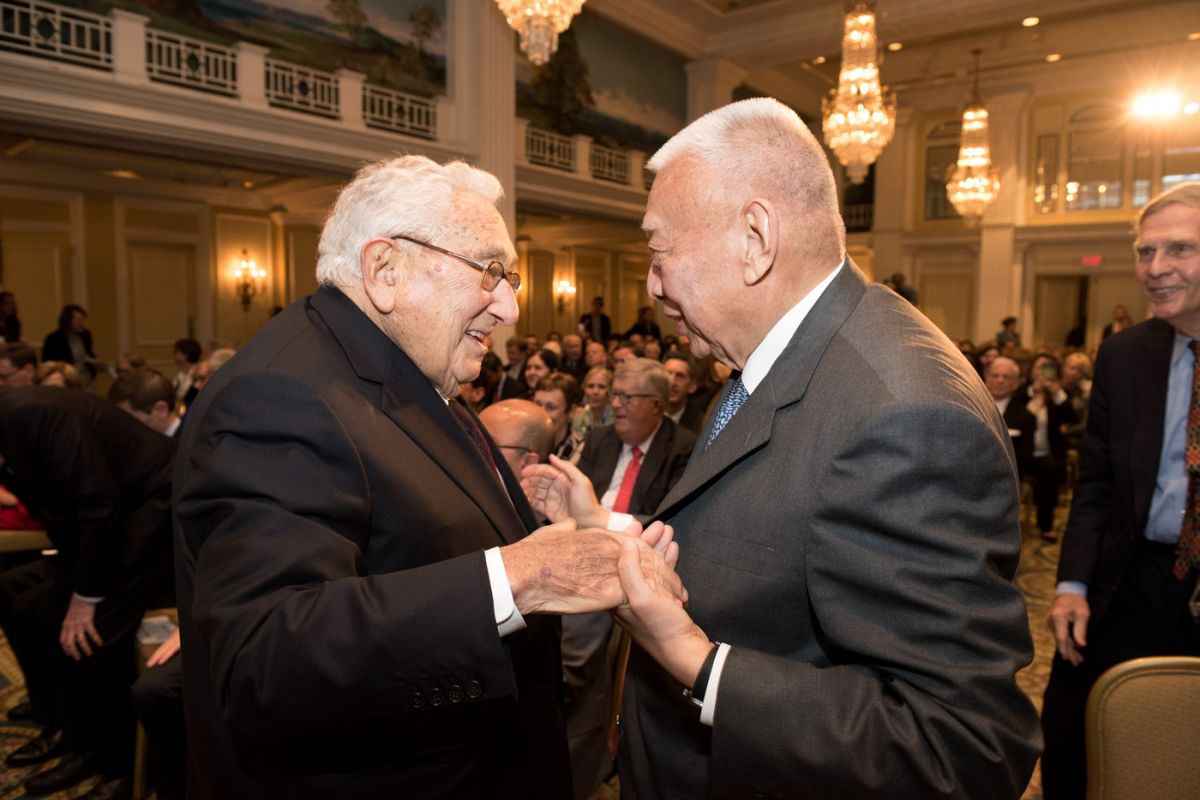
On October 6, 2016, Mr. Tung Chee-hwa shakes hands with Dr. Kissinger at the founding ceremony of Henry A. Kissinger Center for Global Affairs at the Johns Hopkins University School of Advanced International Studies (SAIS). (Photo credit: CUSEF)
The news of the passing of Mr. Tung Chee Hwa — former Vice Chairman of the National Committee of the Chinese People's Political Consultative Conference (CPPCC), the first Chief Executive of the Hong Kong Special Administrative Region (HKSAR), and Founding Chairman of the China-US Exchange Foundation — reached me on September 8. Although I knew that Mr. Tung was very ill for quite some time, yet I was sadly struck by this grievous news. With his departure, I have forever lost a respected leader, mentor and trusted friend. My mind is flooded with reflections on his contributions to think tank development, international exchange and national service, and I find myself unable to contain my grief while writing these lines to recall my days with him personally in the past 20 years.
My first one-on-one meeting with Mr. Tung was about our exchanges on how to improve China’s think tank building. Having worked in think tanks for many years, I was often troubled by three questions: how to better serve China's overall diplomatic agenda, how to cultivate high-caliber think tank professionals, and how to conduct in-depth research on international issues. These were precisely the questions I raised when I first met Mr. Tung in the summer of 2005. At that time, Mr. Tung was a state leader serving as Vice Chairman of the CPPCC National Committee. Yet in his characteristically plain and pragmatic tone, he shared these words with me: Born on July 7, 1937 — the day that marked the outbreak of China's all-out War of Resistance against Japanese Aggression — he emphasized that loving the motherland and upholding peace are the foremost missions of Chinese think tanks. What is more, we should not only build "think tanks", but also become "do tanks". As scholars, they must of course pursue theoretical research, but theory is rooted in practice and must ultimately be tested by practice.
Later, Mr. Tung founded the China-US Exchange Foundation, which has supported many think tanks and universities on the Chinese mainland in carrying out both basic and applied research. The foundation has hosted multiple high-level Track One and Half and Track Two dialogues in the mainland, Hong Kong and the United States, and organized more American students to study in China, breaking new ground for China-US exchanges.
Second, Mr. Tung embodied an unyielding spirit of pursuing excellence. He often said to me, "If we undertake a task, we must strive to be the very best at it."
In 2011, he launched China-US Focus, the world's first English-language commentary website dedicated exclusively to China-US relations. In 2015, the Chinese edition of China-US Focus — the first Chinese think tank media platform focused on China-US relations — was officially launched. In 2019, he began co-hosting the Hong Kong Forum on US-China Relations with the China Center for International Economic Exchanges. Under his meticulous guidance and rigorous standards, all three initiatives have attained first-class standards and earned widespread acclaim both at home and abroad.
These achievements bear witness to Mr. Tung's extraordinarily earnest and responsible work ethic. Despite his immense responsibilities and packed schedule, he made every minute count. Shanghai was his birthplace and his preferred destination for vacations, yet even there and then he never paused his work. On many occasions he invited me to his residence to discuss work matters. Once, when he was transferring at Shanghai Pudong International Airport during an overseas visit, he even asked me to meet him in the airport VIP lounge to deliberate on issues. How can one not admire and emulate such a powerful example of leading by example?
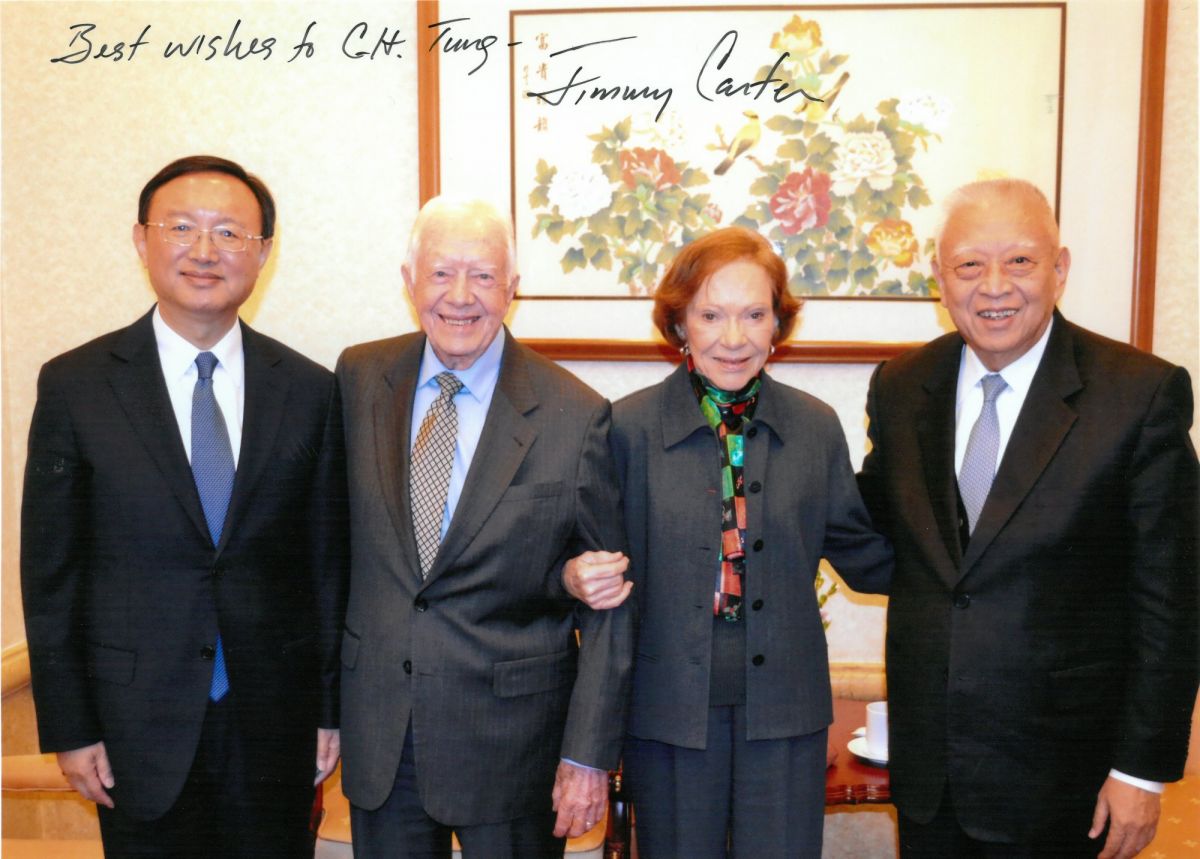
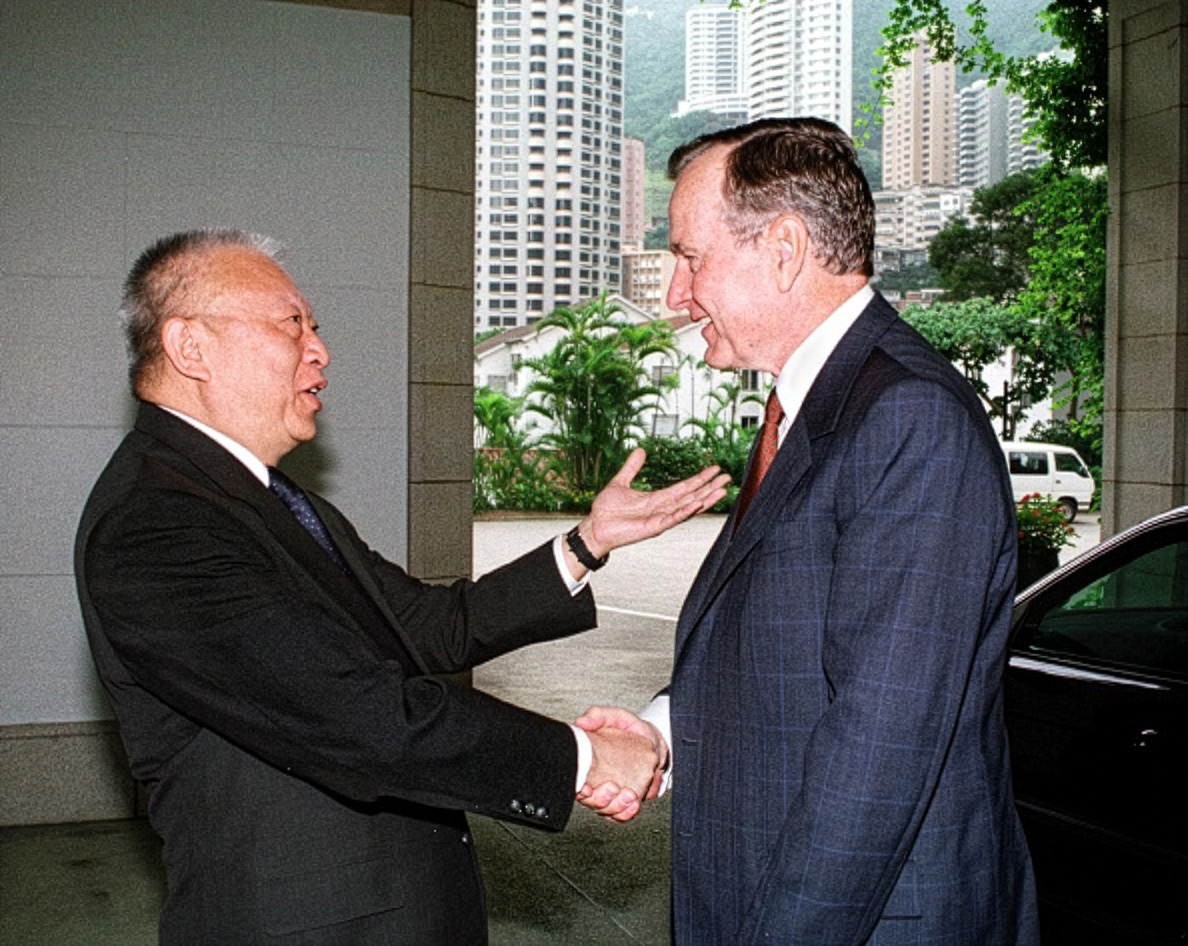
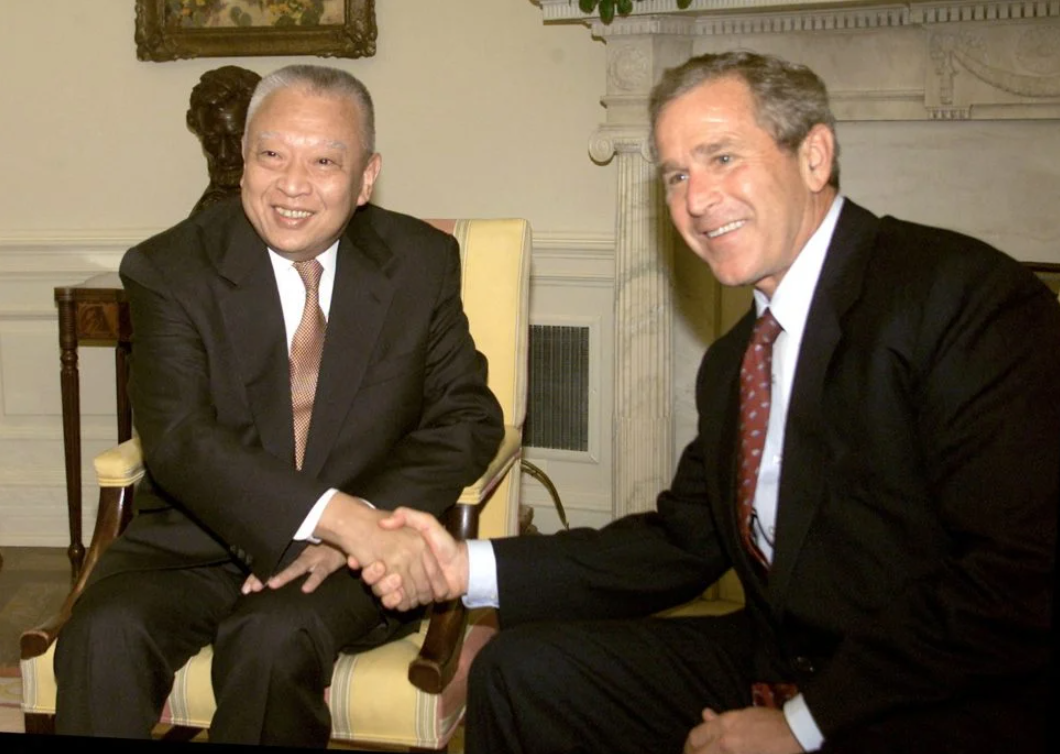
Mr. Tung Chee Hwa is a longtime family friend of President Carter, as well as Presidents George H.W. Bush and George W. Bush. (File Photo. Credit: CUSEF)
Third, Mr. Tung carried forward the fine Chinese tradition of respecting scholars and remaining humble and eager to learn. Despite his eminent position, he always treated me, a scholar of modest standing, with the utmost respect and courtesy.
During our discussions, he would always present several influential articles from China and abroad, share his own observations and analysis first, and then pose carefully prepared questions. As he listened intently to my views, he took constant notes and offered thoughtful comments. These equal exchanges helped me refine and deepen my thinking, and I always looked forward to our one-on-one conversations with great anticipation. Mr. Tung commanded English at a near-native level, yet he still regularly discussed English texts and phrasing with me, truly living out the principle of constant self-improvement.
Finally, Mr. Tung spared no effort in telling China's story well and advancing international communication. He valued foreign-related work and excelled at outreach to the world. He possessed a thorough grasp of China's major policies and principles, and always did thorough homework on the needs of his audiences in advance. When engaging with foreign counterparts, he spoke gently but persuasively, never imposing his views on others.
It is worth noting that most of the people he engaged with were leading figures from all sectors of the global community, many with strong convictions of their own. Yet Mr. Tung always presented facts and reasoned arguments calmly and evenly. Even when the two sides could not reach immediate consensus, he left room and goodwill for continued dialogue.
Having worked in international exchange for many years myself, I always gained invaluable insights from observing Mr. Tung's diplomatic interactions. Effective international communication has long been a priority — and a challenge — in our work. That is why we must all the more earnestly learn and carry forward Mr. Tung's steadfast spirit, unassuming manner and pragmatic style, to foster greater international consensus and understanding.
Today, though Mr. Tung Chee Hwa has left us forever, his spirit, words and deeds will be passed down by generations to come, and will only grow more enduring with time.
(Late evening, September 11, 2026)
