
After decades of development and growth, Vietnam seems poised to enter a new chapter of dynamic economic growth, but at a time when the U.S. is teetering on losing global standing, how will Vietnam’s future play out?
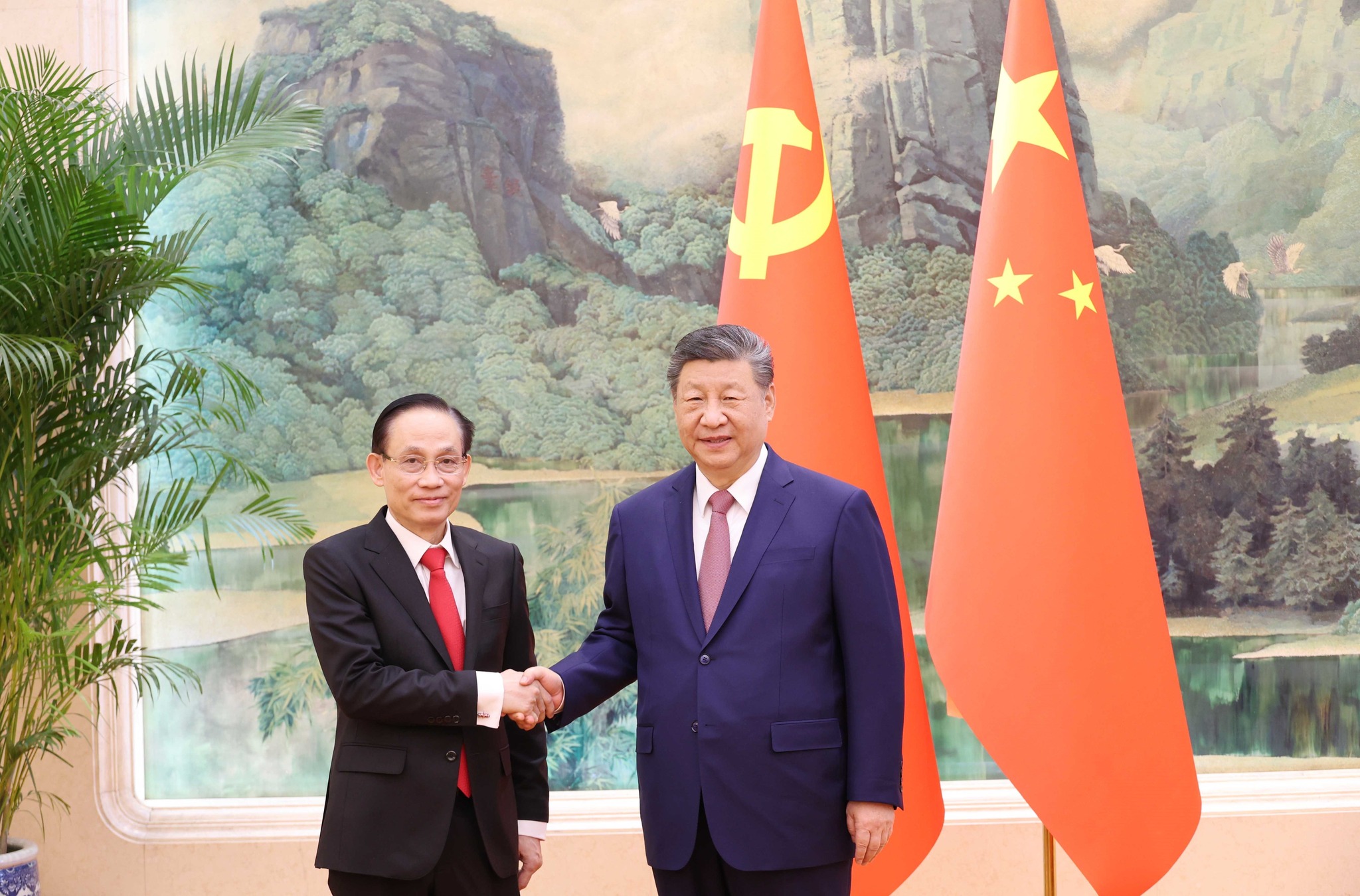
On February 4th, Lê Hoài Trung, the Special Envoy of the General Secretary of the Communist Party of Vietnam (CPV) and the Vietnamese Minister of Foreign Affairs, paid a visit to Chinese President Xi Jinping. The Chinese leader affirmed the “great importance” China attached to the “development of China-Vietnam relations.”
This visit came at an extremely interesting time for both Beijing and Hanoi. On the same day, Xi held phone calls with Russian President Vladimir Putin and U.S. President Donald Trump. The latter conversation reportedly featured a warning from Xi concerning the U.S. sale of weapons to Taiwan. Both Russia and the U.S. are, to varying degrees, important partners to Vietnam.
On the other hand, the 14th National Congress of the CPVC had just concluded in Hanoi from January 19th to 23th, 2026, culminating in the re-election of Tô Lâm as General Secretary. Nine out of the nineteen elected Politburo members were fresh faces to the country’s top decision-making body. With both incumbent President Lương Cường and Prime Minister Phạm Minh Chính making way for a younger generation of cadres, Tô is also expected to serve as the country’s President, cementing his status as amongst the country’s most bureaucratically and institutionally powerful leaders since Hồ Chí Minh.
The Pressure to Deliver for Tô Lâm
Yet Tô is under significant pressure to deliver – after all, with great offices come great expectations. Tô has staked out ambitious claims for domestic economic developments – not only as a means of signaling openness and commitment to foreign investors, but also to assuage worries on the part of domestic critics and skeptics concerning his ability to deliver upon the long-standing social compact that had sustained the Vietnamese state subsequent to the initiation of đổi mới: high, material growth rates with dividends felt by a majority of Vietnamese citizens.
For this reason, there are likely three core priorities that will come to shape the incumbent leadership’s domestic and foreign policy regimes.
Firstly and explicitly, the advancement of a 10% annual economic growth over the next five years, to be accomplished through moving the country’s manufacturing sector up the value chain. With “innovation, digital transformation, and green growth” identified as vital engines of development, Hanoi is keen to leverage technology-enabled productivity growth as a means of creating employment and opportunities for attracting more foreign direct investment.
Secondly, the continued consolidation of Vietnam’s strategic autonomy on the world stage. Whilst Vietnam has long enjoyed significant economic, industrial, and financial ties with the U.S., Trump’s return to the White House and escalating protectionism have thrown a proverbial spanner into the works. The tariffs slapped onto the country – amongst the ASEAN members most dependent upon exports to the U.S. – by Trump, with a perceived snub in the negotiation process, have prompted Vietnamese producers to turn elsewhere, engaging with blocs and powers including China, the European Union, and India.
Thirdly and most fundamentally, the resolution of long-standing factionalist struggles between the pro-business and more ideologically austere groups within the CPV. Whilst Tô rose to power as a flag-bearing member of the public security apparatus – which had long served as a balancing and mediating force in domestic politics between the military establishment and the technocratic civil service – he had deftly benefited from the momentum of his predecessor Nguyễn Phú Trọng’s anti-corruption campaign (đốt lò), and built up an inner circle of loyalists that cut across a wide cross-section of the establishment. Even despite his institutional prowess, keeping all sides happy remains a foremost political objective, as he sets himself up for his first complete term as General Secretary (Tô took over in 2024, upon Nguyễn’s death).
Why Deepening Engagement with China Could Prove Conducive
Tô’s economically centered instrumentalism and transactional pragmatism render him less susceptible to both historically rooted attitudes of animosity towards China, Chinese as well as the ideologically informed skepticism towards the US.
Given the afore-discussed priorities, there are three reasons why Tô would likely prize shoring up ties with China. Firstly, with the advent of Chinese enterprises seeking to “venture into the open seas” (chuhai), the time is ripe for Vietnam to step up as a primary destination for Chinese enterprises seeking reliable, robust overseas manufacturing bases. Yet any further agreements successfully concluded in the future would likely come with a twist – with Hanoi seeking to build and prop up domestic champions of its own in sectors ranging from electric/hybrid vehicles to solar panels, its politicians and administrators will likely press Chinese corporations for more technological transfer and joint ventures with domestic players whilst further removing barriers to investment and regional headquarter establishment. This nuanced approach would thereby render the country more appealing for individual Chinese enterprises whilst reducing the country’s medium- to long-term dependence upon China. For this delicate balancing act to succeed requires a shrewd and keen sense of understanding of perceptions in the eyes of the Chinese – which the incumbent administration has managed to maintain over the past two years.
Secondly, the dominant development strategy for Hanoi appears anchored in “developing growth hubs, strategic infrastructure, logistics networks and high-value services”. 234 infrastructural projects, worth a combined total of approximately $130bn USD, have been positioned as the primary pillars of a sizeable spending plan aimed at delivering upon the double-digit annual growth rates above. These are domains in which Beijing, as compared with even Washington and other Global North states, has developed a distinctive lead in terms of both technologies and best practices. Whilst Japan has been a long-standing infrastructural partner to Vietnam, recent signs suggest a rapidly growing appetite and interest in Chinese (both public and private) participation in key connectivity projects in the country. For a recent example, private enterprise China Pacific Construction Group (CPCG) has committed to three investment projects in Hanoi – spanning bridges and railway construction.
Thirdly, just as the Vietnamese establishment would perennially eye the U.S. as a necessary counterbalance to China, with which the maintenance of security partnership is of vital importance, elements of the military-security apparatus remain innately skeptical of what they perceive to be attempts at regime destabilisation. A recently leaked internal document from the military revealed deeply seated fears that the U.S., as a “belligerent” power, would seek to heavily punish – and even topple – regimes that “deviate from its orbit.” To the extent the military remains at least somewhat relevant in influencing the decisions and calculus of the Hanoi leadership, we should expect a deepening of coordination between the ideological and propaganda branches of the Communist Party of China (CPC) and CPV, as they forge a coalition of convenience in defiance of purported “Western” influences.
The “Eagle” in the Room?
Of course, none of this is to be mistaken for the erroneous prognosis that Vietnam is embarking upon a structural shift towards China – unlike, perhaps, some of its neighbours within ASEAN.
Trump’s family business has commenced construction of a $1.5bn USD golf and luxury real estate project in Hung Yen province. Tô also agreed, in principle, to join Trump’s “Board of Peace” – an organisation with a declared purpose of facilitating global peacekeeping. The sitting U.S. president does have a soft spot for pomp and circumstance.
In any case, whilst Trump’s erratic and self-serving tendencies have alarmed conservatives within the Vietnamese establishment, others within the system clearly hold a more optimistic view of the incumbent American presidency. Trump’s brutish, brash, and myopic, self-interest-fueled approach to public policy offers Hanoi the prime opportunity to strike more business, investment, and strategic deals, and to deepen its leverage against its northern neighbour.
The “eagle” in the room, then, is not at all bad news for Vietnam. Yet nor does it pose an innate obstacle to warmer Sino-Vietnamese ties. Indeed, perhaps the real key to bamboo diplomacy lies with the ability to dance with both the dragon and the eagle alike. In this tradition, Vietnam is certainly the definitive maestro.
