
Will it be sovereign development or a return to the “backyard” viewpoint? The Western Hemisphere’s future will not be secured by returning to the logic of exclusive spheres of influence but by embracing a genuinely plural rules-based order.
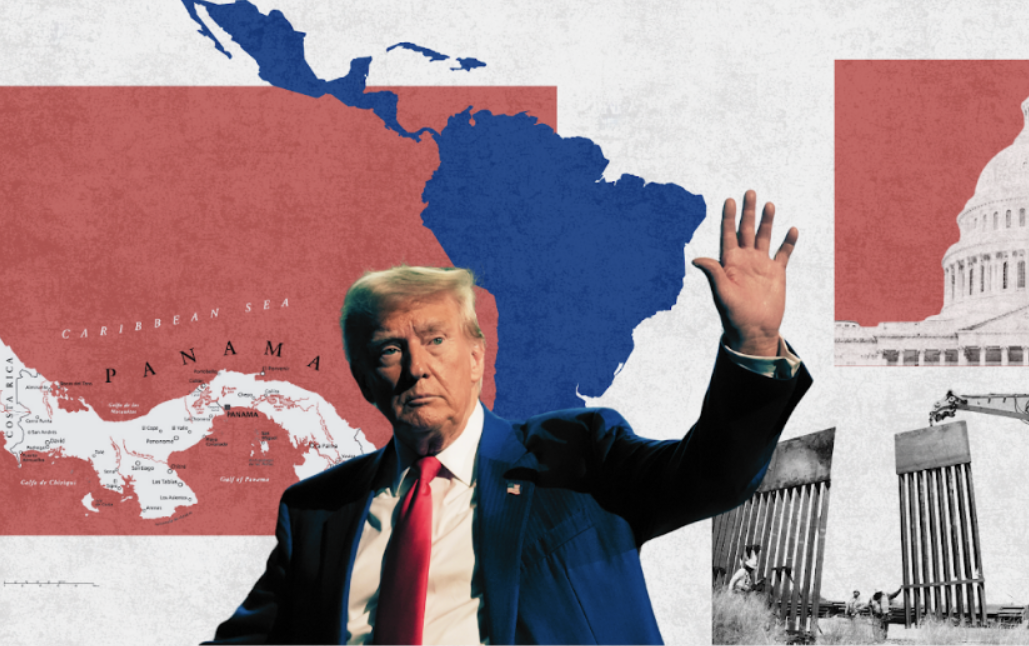
As U.S. President Donald Trump prepares to host a regional summit in Florida this month, the Western Hemisphere once again finds itself at a historical inflection point. What Washington frames as a mission to “restore order” and counter “predatory” Chinese influence is increasingly viewed across Latin America as something far more familiar: the revival—if not in name, then in spirit—of America’s 19th century Monroe Doctrine.
For nearly two centuries, that doctrine has cast a long shadow over inter-American relations. Though often couched in the language of protection and stability, it actually entrenched a hierarchy in which Latin America’s sovereignty became conditional and its strategic choices were circumscribed. Today, critics argue that a new iteration is taking shape—one adapted to the realities of great-power competition in the 21st century. The recent “Panama precedent”—where judicial rulings effectively displaced Chinese-linked port operators—alongside intensifying scrutiny of Peru’s Chancay mega port, reveals a clear shift in U.S. strategy. Washington is no longer merely competing with Beijing for contracts and influence. It is increasingly securitizing the region’s logistics, digital networks and critical infrastructure. And it is pressing Latin American governments to prioritize U.S. strategic anxieties over their own developmental imperatives.
The “Trump corollary”
The current administration’s national security posture has formalized what some analysts describe as the “Trump corollary” to the Monroe Doctrine. By asserting that the Western Hemisphere must remain insulated from powers outside the region—particularly China—Washington has signaled a move away from multilateral engagement and toward a more assertive and transactional model of influence.
This shift is not purely rhetorical. Under banners such as anti-narcotics cooperation, migration control and maritime security, the United States has expanded its diplomatic and naval footprint. The U.S. State Department’s Bureau of Western Hemisphere Affairs has intensified its activity, and maritime deployments in the Caribbean and Pacific corridors have grown more frequent.
Yet the cumulative message is strategic, not merely technical: Infrastructure is now national security. Ports, fiber-optic cables and energy grids are viewed less as commercial assets and more as nodes in a geopolitical contest. The January 2026 capture of a Venezuelan political figure—hailed in Washington as a victory for accountability—was interpreted in parts of the region as a demonstration of how swiftly sovereignty can become negotiable when security narratives prevail.
For Latin American policymakers, this presents a dilemma. Aligning fully with Washington may bring short-term diplomatic favor, but it risks reintroducing an asymmetry in which domestic economic planning is subordinated to U.S. threat perceptions.
Credibility deficit
Washington’s effort to rally the region around a defense of sovereignty and a “rules-based order” faces a growing credibility gap. It is difficult to advocate strict adherence to international norms while simultaneously entertaining discussions of territorial annexation elsewhere or publicly musing about intervention in neighbors’ domestic governance.
Moreover, the strategic communication playbook that once proved effective appears to be losing traction. From the politicization of pandemic narratives to selective invocations of human rights, many in Latin America perceive a pattern in which principles are applied unevenly. The rules-based order is often interpreted less as a shared framework and more as an instrument wielded to exclude competitors.
This perception is especially pronounced when infrastructure projects become politicized. The Chancay port in Peru, for instance, promises to dramatically reduce transpacific shipping times and reposition South America within global supply chains. When such projects are portrayed primarily through a security lens, regional leaders are left to question whether development concerns are being eclipsed by geopolitical rivalry.
The core issue is not whether scrutiny is legitimate—sovereign states have every right to assess the strategic implications of foreign investment—but whether the scrutiny is even-handed and respectful of local agency. When pressure campaigns appear designed to foreclose options rather than expand them, resistance is a predictable outcome.
Developmental contrast
Against this backdrop, China’s engagement—largely facilitated through the Belt and Road Initiative—has resonated with many Latin American governments. Beijing’s approach has been characterized by an infrastructure-first logic: ports, highways, rail links, power plants and digital connectivity.
For countries such as Peru, Brazil and Colombia, the attraction lies in tangible deliverables. Chinese-funded projects promise reduced logistics costs, enhanced export capacity and integration into Asian markets. They are framed around “sovereign equality” and non-interference, principles that carry particular weight in a region with a long memory of external intervention.
Critics rightly point to the need for transparency, debt sustainability and environmental safeguards in any major investment. Yet from the perspective of many regional leaders, Chinese engagement offers diversification. It provides leverage in negotiations with traditional partners and broadens the menu of developmental choices.
Importantly, this is not a matter of ideological alignment. Latin America’s largest economies have shown little appetite for exclusive blocs. Rather, they seek strategic autonomy—the capacity to cultivate multiple partnerships without surrendering independent foreign policy. In a multipolar environment, diversification is not defiance; it is prudence.
Crossroads in Florida
The upcoming Florida summit will thus serve as a litmus test. While a “coalition of the willing” may echo Washington’s “America first” priorities, the absence or cautious positioning of major economies—including Brazil, Mexico and Colombia—signals unease with being cast as a theater of containment.
Latin America is not seeking a new patron. Nor is it blind to the complexities of engaging China. What it resists is a binary framing that reduces its future to a choice between superpowers. The region’s historical experience has taught it about the costs of dependency—whether economic, political or strategic.
To follow Washington unquestioningly would risk resurrecting the “backyard” paradigm, in which development trajectories are shaped externally and dissent is equated with disloyalty. Yet to rely exclusively on Beijing would merely invert the asymmetry.
The more sustainable path lies elsewhere: in strengthening regional institutions, enhancing regulatory standards and negotiating from a position of collective confidence. Latin America’s leverage increases when it speaks with greater unity and articulates clear developmental priorities.
The choice before the region, therefore, is not between Washington and Beijing. It is between accepting a renewed hierarchy or asserting sovereign agency in a contested world. Inspired by a long tradition of resisting external dictation, from independence movements to 20th-century non-alignment, Latin America stands at a decisive moment.
At this crossroads, the imperative is clear: Development must serve the people of the region, not the strategic map of any superpower. The hemisphere’s future will not be secured by returning to the logic of exclusive spheres of influence, but by embracing a genuinely plural and rules-based order—one in which sovereignty is respected, partnerships are diversified and growth is defined locally rather than imposed from abroad.
